Your guide to business car leasing eligibility

TL;DR: Am I eligible for a business car lease?

Sole traders, limited companies, partnerships, LLPs, and PLCs can all apply for a business lease.

Finance providers generally prefer at least two years of trading history and full accounts, but newer businesses can still qualify – usually with extra documents like recent bank statements, management accounts, or a director’s guarantee.

A weaker credit history doesn’t rule you out either; it might just mean a larger initial payment or a guarantor attached to the deal.

Thinking about getting your business a new set of wheels?

Good news: Almost every type of business can take out a car lease, whatever stage you’re at.

The slightly less good news? 'Almost every type of business' still comes with a few conditions attached, and that’s what we’re here to clear up.

Whether you’re a sole trader with one van and a big plan, or a limited company about to order your third fleet vehicle, this guide walks through exactly who qualifies, what finance providers are actually looking for, and what to do if your business is newer than some lenders would like.

CUPRA Born

EVs, like the CUPRA Born, make excellent company cars

Who can take out a business lease?

Pretty much any type of business qualifies for a business lease – otherwise known as Business Contract Hire (BCH).  

That includes sole traders, limited companies, partnerships, Limited Liability Partnerships (LLPs), and Public Limited Company (PLCs).

We work with a wide range of finance providers and dealerships to source the best lease deals and vehicles for you, which means there’s usually a route through even if you or your business doesn’t fit the standard mould.

That said, mainstream finance providers usually prefer businesses that have been established for at least two years and can provide a full set of accounts. A solid trading history can significantly boost your chances of approval too.

But – and it’s a big but – that’s a preference, not a rule. We’ll go through what that means for newer businesses below.

What are the requirements to qualify for a business lease?

Finance providers are assessing a handful of things when your application lands on their pile, and understanding what they’re looking for before you start makes the process easier.

Basically, they want to see that your business is trading, that it can comfortably afford the monthly payments, and that there’s a reasonable paper trail proving both.

Whether you’re VAT-registered or not doesn’t rule you out either way, though VAT registration can open up a host of extra benefits.

In practice, this comes down to:

  • A registered business, trading under its own name
  • Evidence of income, whether that’s accounts, bank statements, or a cash-flow forecast
  • A director, owner, or partner willing to be named on the agreement

None of this is designed to catch you out.

It’s how a finance provider satisfies itself that it’s lending to a business that can pay it back.

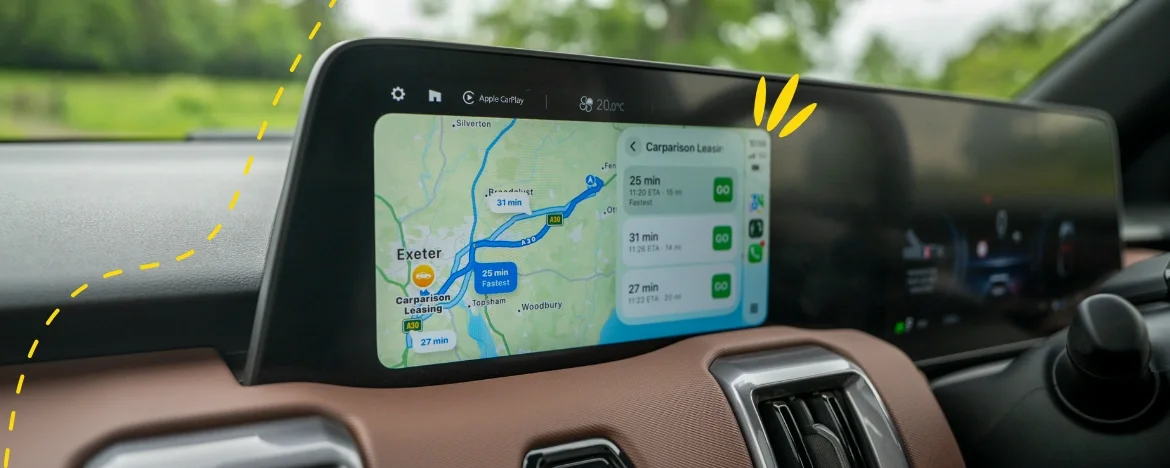
Apple CarPlay on infotainment screen

Leasing gets you access to the latest tech

Credit requirements, and how to improve your chances

Credit comes up a lot, and understandably so; nobody enjoys the idea of a credit check standing between them and their dream new car.

But a less-than-perfect credit history doesn’t automatically rule you out.

It can mean a larger initial payment, a personal guarantee from a director, or a shorter lease term, but it’s rarely a flat no.

Building a strong credit score for a newer business takes time – often a couple of years of consistent, well-managed trading.  

In the meantime, a few habits make a difference: Paying suppliers on time, keeping any personal accounts clear, staying within agreed overdraft limits, and using a dedicated bank account rather than a personal one.

It’s not glamorous, but it paints you in a good light when a finance provider checks your history.

Which businesses aren’t eligible for a business lease?

We don’t refuse to help any business looking for a lease, even if it can be trickier for newer companies with a limited credit history.

This often means directors or owners need to provide personal guarantees, putting personal assets on the line.

New businesses under two years might face a knock-back or two, but it’s not always game over – it’s a sign to try a different route, which we can help you with.

But we’re also not in the game of making promises we can’t keep.

If we truly think you’re not going to be able to lease a car through your business, we’ll have that conversation with you before you’ve spent too much of your time and cash on the process.

How old does your business have to be to lease a car?

Most finance providers prefer businesses that have been trading for two years or more.

They like to see company accounts, director guarantors, and a solid trading history, because it’s the quickest way for them to judge risk.

But it’s not set in stone.

Finance providers assess each application on a case-by-case basis, and plenty of businesses under two years old successfully lease vehicles. The key is being upfront and ready to hand over whatever information is asked for.

XPENG G6 logo

Leasing is a lower commitment way to test new-to-market brands, like XPENG

What documents do you need?

A business lease follows the same basic application process as any lease car, with a few extra bits on top. You’ll need to provide:

  • Company registration number
  • Years of trading
  • VAT number, if applicable
  • Trading address
  • Directors’ details
  • Company bank details

If you’ve been trading for over two years, that’s usually enough. If your business is newer, finance providers will typically want to see three months of bank statements, management accounts or up-to-date financial statements, and – for limited companies – a director’s guarantee.

If you’re a start-up without accounts yet, a realistic cash-flow forecast can stand in their stead.

Applications normally take 24 to 48 hours for approval, though it can take longer if a provider comes back asking for more information.  

How can you get a business car lease for your employees?

Business owners or directors take out the lease on behalf of their employees – that’s how you unlock the tax benefits in the first place.

Once that’s sorted, employees can pay towards their car through their salary, including through salary sacrifice schemes, where monthly lease payments get deducted from their gross salary.

It reduces their taxable income, while your employee/s still get to drive something new.

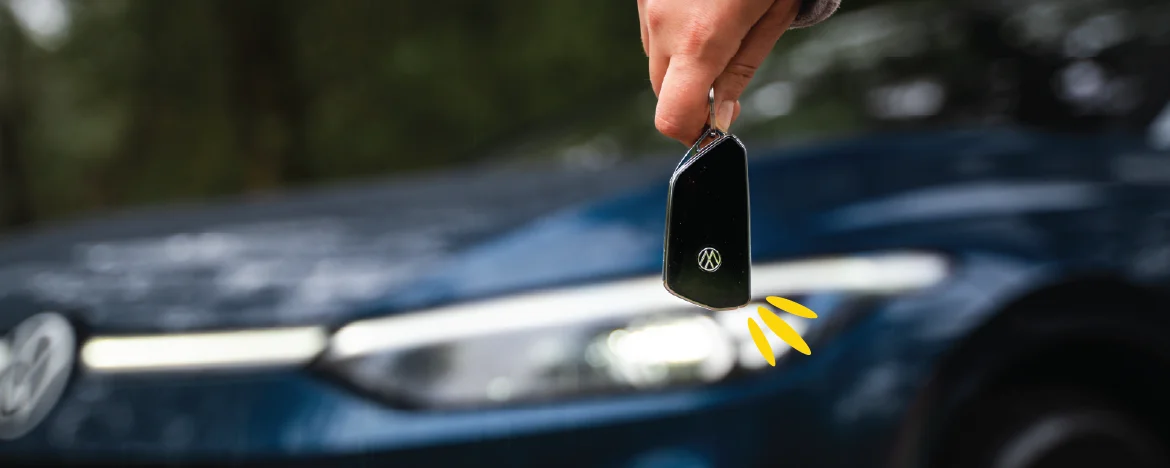
Hand holding key in front of VW ID.5

Enquire today, and it won't be long until the new car's in your car park

Why should you take out a business car lease?

There’s a long list of reasons why businesses choose to lease rather than buy, from the tax position to simply not having to think about depreciation ever again.

If your business is VAT-registered, you can reclaim 100% of the VAT on the car’s finance element where it’s used exclusively for work. This might be something like a pool car with a written no-private-use policy, kept at your premises overnight.

If the car is used for business and personal journeys, including the daily commute, you can only reclaim 50% of the VAT.

Maintenance packages sit outside of this: VAT on a maintenance package is 100% recoverable regardless of how the car itself is used.

There’s a separate tax rule worth knowing about too, called the Lease Rental Restriction, which affects how much of your monthly payment counts as a tax-deductible business expense.

Lease a car with CO2 emissions of 50g/km or below – full electric cars and a handful of long-range plug-in hybrids – and the whole payment is deductible. Above that threshold, 15% of the rental is disallowed, so you can deduct 85%.

It’s a separate rule from the VAT one above, which trips a lot of people up, so it’s worth keeping the two straight when you’re doing the sums.

Beyond the tax position, leasing frees up capital that would otherwise sit tied up in a depreciating asset.

A smaller initial payment followed by fixed monthly instalments is cheaper upfront than buying outright, and when the contract ends, so does your involvement – no reselling, no haggling, no surprise dip in resale value to absorb.

Ready to see what’s out there?

FAQs

What are the requirements for a limited company to lease a vehicle?

A limited company needs to provide its registration number, trading address, VAT number (if applicable), director details and company bank details.  

Can a sole trader qualify for a business car lease?

Yes. Plenty of sole traders lease their vehicles through their businesses, though you might be asked for personal ID or additional financial information alongside the standard business details.

What credit score do I need for a business lease?

There’s no magic number that guarantees success, and a weaker credit history doesn’t rule you out – it might just mean a larger initial payment or a director’s guarantee.

Can you use a business lease car for personal journeys?

Yes, though it affects the VAT position. A car used for both business and personal journeys can only reclaim 50% of the VAT, while a business-use only vehicle can reclaim 100%.

Tori Edmonds

Tori Edmonds

Tori is one of our Digital Marketing Executives, tasked with keeping you entertained across our blog and socials. With her sparkling wit and eye for a pun, she's the girl for the task.