
Whether you run a limited company, act as a sole trader, or work for a Partnership, this is everything you can claim back on tax during your business lease

TL;DR: What can you claim back on your business lease?

Business leasing has loads of perks, including the ability to claim back some tax costs.

But there are different rules for limited companies, partnerships, and sole traders depending on whether or not a business is VAT-registered.

How much VAT you claim back on your monthly lease payments is determined by whether your lease car is limited to business use only.

But you can claim back 100% of the VAT in other areas like maintenance packages and excess mileage charges; reduce Corporation Tax bills by leasing zero emission cars; and (if you are an employee) get reimbursed for fuel and charge on a company car.

Benefit in Kind (BiK) is one item on your books you can’t claim back.

Knowing what you can and can’t claim back is the key to getting the most value out of your business lease.
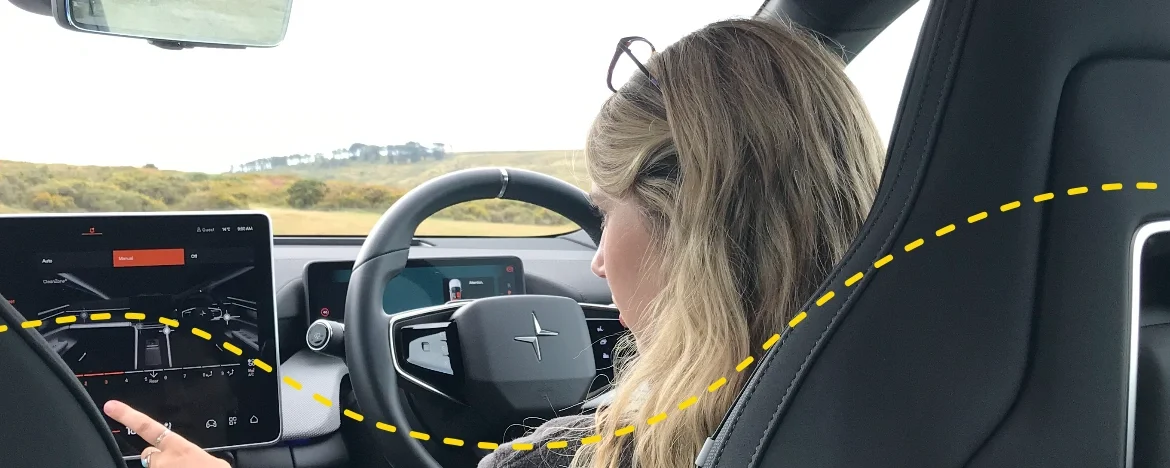
 

Young woman in driving seat

Take control of your business lease

If you've ever typed "can I claim tax back on my car lease” into Google and come out more confused than when you started, you're not alone.

Because let’s be honest. Unless you’re an accountant who knows all the ins-and-outs, doing your own research usually throws up articles full of jargon, and legislation wrapped up in a layer of technical waffle most people would struggle to decipher.

The language is inaccessible. And the rules are rarely simple.  What you can and can’t claim back comes down to more than what type of lease agreement you have. Your business structure matters too.

But with our guidance, claiming back tax on your business lease doesn’t have to be complicated.

Whether you’re behind a Limited Company, act as a Sole Trader, or have a Partnership, you’ll never be left scouring Google for answers again.

We’re breaking down everything you can – and can’t – claim back on your business car lease, no matter what kind of business you’re part of.

Let’s pop the bonnet on it.

Does business structure affect your tax benefits? 

Yes – and the differences are significant depending on whether your business is VAT-registered, and/or a separate legal entity. 

  • A limited company: A separate legal entity where the owner's assets aren't personally at risk
  • A limited liability partnership (LLP): A separate legal entity where the owner’s assets aren’t personally at risk
  • Sole traders: No legal distinction between the business and the owner
  • A traditional partnership: The owners collaborate and share all profits, losses and responsibilities, with personal assets at risk

So how does this affect a business lease?

Limited Companies and Partnerships pay Corporation Tax as separate legal entities. A lease car then becomes a company expense to be offset.

Tax treatment will sit with the company first, and then any directors if there is any personal use of the car. Where a lease car has mixed business and personal use, it’s the business proportion that matters.

Sole traders don’t pay Corporation Tax because they aren’t separate legal entities; business and personal finances can often be intertwined, so the lease car isn’t simply deductible.

And this affects what can be claimed back, and how.

Corporation tax relief on lease costs

Businesses can deduct the costs of the lease rental from any taxable profits, which reduces the Corporation Tax bill.

But there’s a catch: The reduction will depend completely on the CO2 emissions of the lease car. High emission cars (over 50g/km) come with a 15% disallowance.

In other words, only 85% of the rental is actually deductible.

Low and zero emission (hybrid and electric) are where things get really interesting as the deduction here rises from 85% to 100%.

You’ll get more back choosing an electric vehicle (EV) like the Polestar 4, BMW iX3, or BYD SEAL than you would opting for a Land Rover Defender (V8 variant), or Ineos Grenadier; another compelling reason to consider choosing electric for your next business lease.

Sole traders and traditional (not LLP) partnerships don’t pay Corporation Tax, unlike limited companies.

But it’s still possible to offset lease costs against annual taxation self-assessments and claim them back this way.

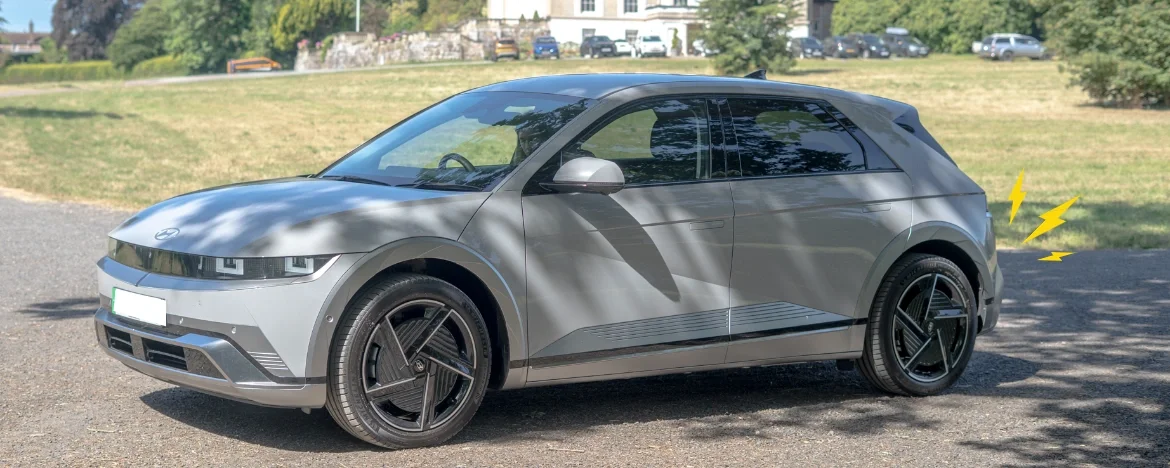
Hyundai IONIQ 5

Electric cars have a 100% disallowance

VAT on your monthly rental

VAT-registered companies can reclaim 50% of the VAT on lease payments for a car that's available for private use (which, for most company cars, it will be). That’s relevant for Limited Companies, VAT-registered Sole Traders, and Limited Liability Partnerships.

If the car is used exclusively for business purposes — that means no personal trips in it whatsoever — you can reclaim 100% of the VAT on your monthly rental.

But HMRC's definition of "exclusively for business" is strict, so 50% is the realistic starting point for most businesses.

This is why you’ll find most business leases are advertised with VAT excluded from the price.

VAT on maintenance costs

If you’ve taken out a maintenance package with your lease, this added cost can either be added into your monthly payment, or set up as a separate Direct Debit depending on your provider.

Easy to manage either way, but if you’re not paying attention, a little detail could slip past you; just like the cost of the rental, your maintenance payment attracts VAT.

And it might not be immediately obvious, but this portion is 100% reclaimable by the company when treated as a ‘service charge’ – regardless of any private use of the lease vehicle.

Sole traders and partnerships can also claim this back if they are VAT-registered.

VAT on excess mileage charges

Another one that slips by unnoticed and unclaimed: VAT on excess mileage charges.

Yes, if you go over your agreed mileage allowance, the company is liable to pay pre-agreed excess mileage charges to the funder.

But did you know that, just like maintenance, the company can classify this as a ‘service charge’ and claim back 100% of the associated VAT? As long as it’s a VAT-registered business (whether limited company, sole trader, or LLP), it can be reclaimed.

Pay per mile schemes

There are two different pay-per-mile schemes floating about and it’s important to know which one applies to a business lease.

The Approved Mileage Allowance Payment (AMAP) scheme is relevant only in that it’s a benefit employers pay to their employees. When an employee uses their own personal car for business travel, the company must repay the flat pay-per-mile rate to them.

A director (or even employee) using a company car isn’t eligible to claim AMAPs, so there is no scope to reclaim it through tax. You can basically write that one off when it comes to your lease.

The Advisory Fuel Rates (AFR) scheme, on the other hand, has been set up with businesses in mind.

It’s basically to simplify tax compliance for company-owned vehicles, through use of a fixed per-mile amount. This is based on engine size, fuel type, and charging location (where the car in question is an EV).

And the scheme has two purposes:

  • Reimbursement: When an employee drives a company car for business purposes, employers use these rates to reimburse them for the fuel or charge used
  • Repayment: When an employee uses a company car for personal driving and the company doesn't provide free fuel, the employee uses these rates to pay back the cost of that fuel to the employer, preventing a 'car fuel benefit' tax charge

When a company reimburses an employee for fuel or charge, the VAT element of that fuel rate can be reclaimed as long as there’s a valid VAT receipt attached.

Three cars lined up in a car park

Choosing the right car can make or break your business lease

What you can't claim back: Benefit in Kind

Those are the reliefs; now for the other side of the ledger.

If you run a limited company or LLP and the leased car is available for personal use, there's a tax charge you can't claim back, offset or avoid. HMRC calls it Benefit in Kind (BiK), and it's the cost of providing a car that doubles as a personal perk.

Sole traders don't need to worry about this one, though: BiK applies where a business provides a benefit to a director or employee, and without that legal separation it doesn't apply in the same way.

But BiK creates two separate, non-reclaimable obligations:

  • The person driving the car pays income tax on the value of the benefit
  • The company pays Class 1A National Insurance Contributions (NICs)

And neither of these can be reclaimed. But that doesn’t mean it’s not worth thinking about when you choose your lease car.

The BiK rate is set by taking both the list price of the car and a CO2 linked percentage set by HMRC into account, and high emissions will end up costing you more in the long run.

High emission petrol cars have a BiK rate of 30%.

EVs sit at just 2% - a stark difference.

And when it comes to a taxable benefit, that difference works out in the thousands. 

So BiK? It’s not a reason to avoid choosing a company car. But it’s a very big reason to make sure you choose the right one.

And combined with any Corporation Tax relief, it makes the case for going electric on your next business lease an act of plain common sense.

The bottom line

The tax picture on a business car lease is genuinely in your favour if you know where to look.

Between VAT reclaims on monthly lease payments, maintenance costs, excess mileage charges, and Corporation tax relief, there’s more to claim back than you may realise.

And while you can’t claim back on BiK, the rates are so low for EV’s right now that electric driving is still the sensible tax choice.

Now you understand the rules, there’s nothing to stop you from making the absolute most of your business car lease. Leave nothing unclaimed, and you can be sure that every penny spent is worth the value.

Our Local Business Development Manager, Ant agrees; “The ability to potentially claim back some or all of the VAT on payments, and offset lease costs is a huge benefit for businesses - and it can often be overlooked.

“Knowing exactly what you can and can’t claim back is going to really help you get the absolute most value out of your business lease. Getting expert advice can prove invaluable.”

So, if you’re ever unsure about a tax benefit and how the rules apply, check with your accountant and see how the numbers could add up in your favour.

It’s important to find the right car for your company – and your tax bill. Fortunately, we’ve got many options to choose from.

Chloe Allen

Chloe Allen

Our Digital Marketing Executive Chloe is in charge of our e-newsletter. There's no one better placed to inform and delight you every month, so keep your eyes peeled for her newsletter hitting an email inbox near you soon.