Join us as we take a closer look at the Ford Fiesta, the nation's favourite small car — and one of the greatest hatchbacks ever made 

Let's face it, the Ford Fiesta needs no introduction. It was Britain's most beloved hatchback, though some would say Britain's most beloved car, full stop.

First launched in 1976, the Fiesta became a fixture on UK roads like no other car before or since. Generation after generation, it found its way onto driveways, into car parks, and up and down the nation's roads without ever really putting a wheel wrong.

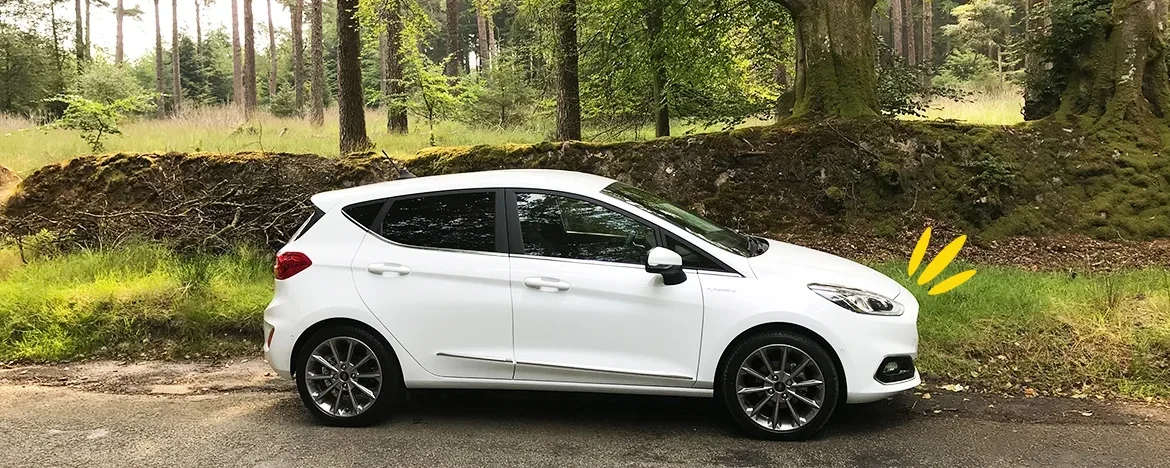
We drove the 2020 Vignale edition — the range-topping, most luxurious Fiesta money could buy. A 1.0-litre EcoBoost 125PS engine, 6-speed manual gearbox and Frozen White paint. 

The premium end of a very well-loved family.

Competing with the Vauxhall Corsa, SEAT Ibiza, Volkswagen Polo and Renault Clio, it rarely had to try too hard. The badge alone did a lot of the work.

Sadly, all good things must come to an end. The Fiesta was discontinued in 2023 after nearly 50 years of production. In that time, over 4.7 million were sold in the UK alone. 

A staggering number. 

Ford has since shifted their focus toward electric vehicles and SUVs, with no direct replacement planned.

But was the Fiesta truly legendary? Or was it just the familiarity, the comfort of what we knew? Let's find out.
What we drove:

Model: Ford Fiesta Vignale

Fuel type: Petrol

Engine: 1.0-litre EcoBoost 125PS

Transmission: 6-speed manual

Colour: Frozen White

Upholstery: Vignale Black Quilted Leather Seats

Or watch our video review over on YouTube:

Ford Fiesta side

The legend itself

The face of a nation

See one driving past and you instantly know what it is just by its shape. There was nothing quite like a Fiesta.

The 2020 facelift gave it a more aggressive, modern edge. 

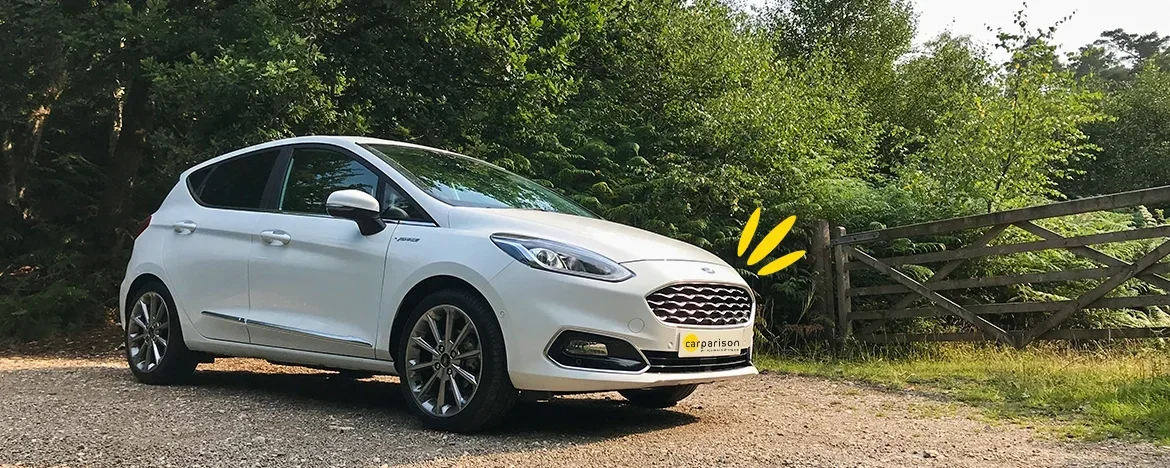
Slimmer headlights with bracket-like LED running lights, a reprofiled bonnet and the Ford badge moved from the bonnet ridge down into the grille. These small changes added up to a noticeably sharper look than the generation before it.

Our Vignale in Frozen White looked clean, classic and genuinely premium. 

Chrome detailing, a unique Vignale front grille and 17-inch 10-spoke alloys gave it a sophistication you wouldn't necessarily expect from a small hatchback at this price point. It looked the part without ever trying too hard.

From the rear, the Fiesta was more angular than you might remember from older generations — less bubbly, more grown up. It suited it well.

It wasn’t, however, the most dramatic looking small car on the market. 

The SEAT Ibiza and Volkswagen Polo both offered sharper, more contemporary styling. But the Fiesta was never about drama. It was about being exactly what it needed to be, and doing it with quiet, unpretentious confidence.

For those wanting more visual impact, the ST-Line brought a sporty body kit and rear spoiler, while the Active added chunky body cladding for a more rugged, adventurous look. 

There really was a Fiesta for everyone.

Ford Fiesta interior

Genuinely comfortable inside

A cabin that punches above its weight

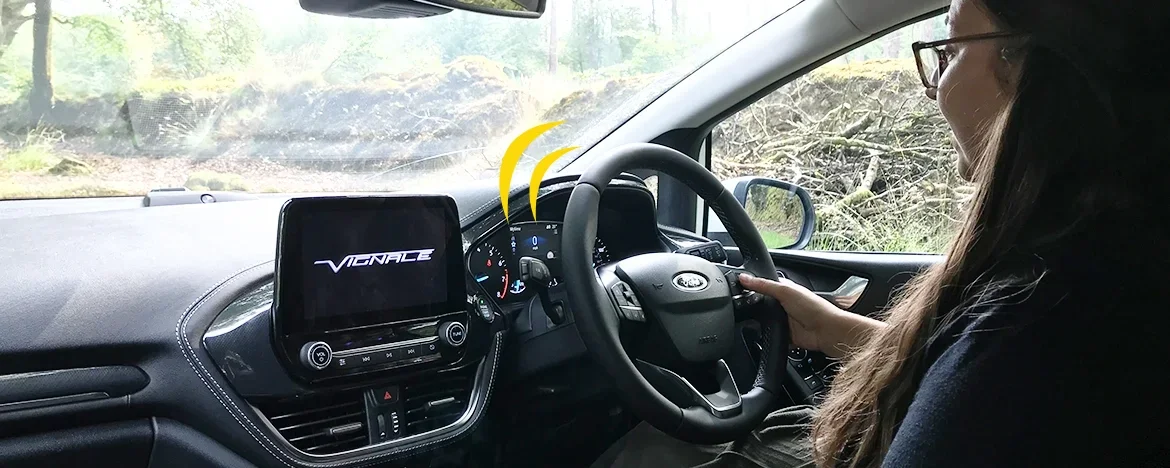
Step inside and the 8-inch touchscreen dominated the dashboard — a real step forward compared to older models where a touchscreen wasn't even on the agenda.

The cabin was a mix of soft-touch materials, chrome surrounds and high-gloss black finishes throughout.

It looked great, though the high-gloss black did scratch incredibly easily, particularly around the storage compartment next to the gear lever. 

The Vignale's black quilted leather seats were the real highlight. 

Genuinely comfortable, with a honeycomb-like design that felt far more premium than anything you'd expect to find in a small hatchback at this price point. Sitting in them, it was easy to forget you were in a Fiesta.

The cockpit had an angular, driver-focused feel that wrapped around you nicely, and the driving position was set fairly high,giving good visibility and making it easy to get comfortable. 

The optional panoramic roof was available for just under £1,000, a significant addition but one that transformed the cabin with light and a sense of space that the Fiesta's compact dimensions might otherwise have lacked.

In the rear, two adults were perfectly comfortable. Three was possible for shorter journeys, but a squeeze. 

The ISOFIX points were present but not the easiest to access. 

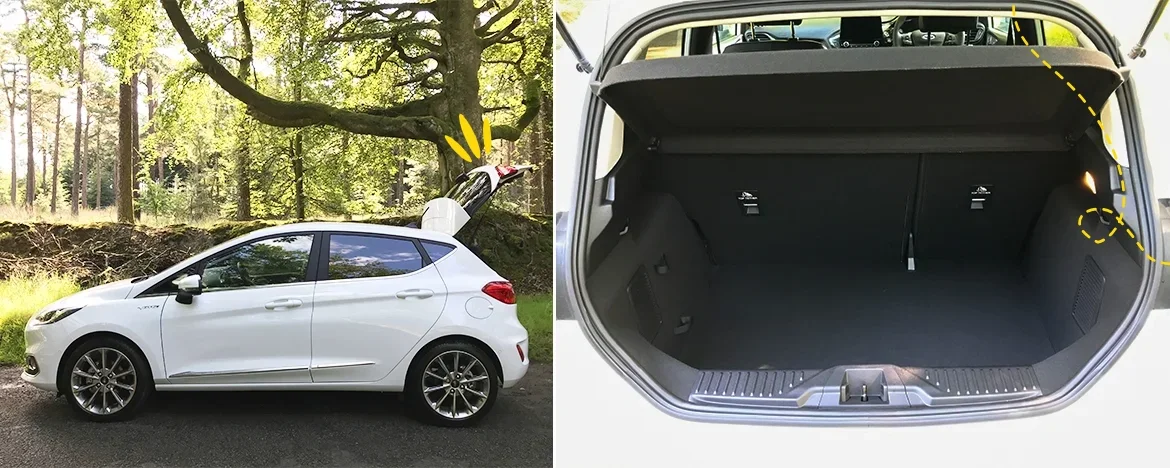
The 60/40 split folding rear seats did the job well though, opening up around 300 litres of boot space — competitive enough for most needs, though the Renault Clio and SEAT Ibiza offered more.

And then there were the pop-out door edge protectors. 

Standard on the Vignale, and genuinely one of the best small car features ever fitted to a production car. Anyone who's ever caught a door on a kerb or a car park wall will understand immediately.

Some cheaper plastics lower down stopped it from matching the Volkswagen Polo or SEAT Ibiza for overall quality, but as an everyday cabin for everyday life? The Fiesta Vignale delivered well above its station.

Ford Fiesta person driving

Not just any supermini

The drive that made it legendary

Hop in, put your foot down and it felt like you were driving something much bigger.

The 1.0-litre EcoBoost 125PS engine was punchy and eager, accelerating quickly and enjoyably without ever feeling strained. 

A good middle ground too — more than enough power for everyday driving without the neck-snapping intensity of the 155PS or 200PS ST variants. 

The 6-speed manual gearbox was a real pleasure to use. Precise, satisfying and a genuine step above what you'd find in the Peugeot 208 or Renault Clio.

It was easy and intuitive from the off. 

Normal, Eco and Sport driving modes meant it could adapt to however you were feeling, and features like blind spot monitoring, lane keeping aids and cruise control made it effortless on longer runs without ever feeling like they were taking over.

But the real magic was in the way it drove. 

Precise, well-weighted steering gave you genuine confidence through corners. This was a car that genuinely enjoyed being thrown into bends, rewarding the driver in a way that few small cars at this price ever managed. 

It had a poise and agility that made it feel more sports car than supermini on the right road.

And yet it never compromised on comfort. 

The ride was beautifully judged, dealing with speed bumps and potholes just as capably as it handled motorway cruising. Suspension noise was well suppressed throughout, giving the Fiesta a solidity and refinement that made it feel genuinely premium on the move.

This was the drive that made the Fiesta legendary. 

Not through drama or headline figures — but through sheer, everyday brilliance.

Ford Fiesta side and boot

Pros and cons

What's good, and what's not

The Fiesta was a great little hatchback, but it still had its flaws:

The good bits:

  • Instantly recognisable — one of the most iconic shapes in British motoring history
  • Punchy 1.0-litre EcoBoost engine — eager, refined and more than enough for everyday driving
  • Precise, well-weighted steering — genuinely fun to throw into corners
  • Pop-out door edge protectors — one of the best small car features ever made
  • Impressively refined for a supermini — felt like a much bigger car on the move

The not-so-good bits:

  • Some cheaper plastics lower down — Volkswagen Polo and SEAT Ibiza felt more solidly built
  • ISOFIX points not the easiest to access
  • Boot at around 300 litres — smaller than the Renault Clio and SEAT Ibiza
  • Panoramic roof nearly £1,000 as an option — expensive addition
Ford Fiesta parked up

What's the verdict on the Ford Fiesta?

What's the verdict?

The Ford Fiesta was more than just a car. 

It was an institution. 

A rite of passage. 

For millions of British drivers, it was the first car they ever owned, the car they learned to drive in, or the car they kept coming back to time and again.

And for good reason. The drive was genuinely brilliant — precise, refined and more enjoyable than anything in its class had any right to be. 

The Vignale proved that a Fiesta could be genuinely luxurious too, with a cabin and level of equipment that surprised at every turn.

It wasn't perfect. The boot was on the small side, some plastics disappointed and the reliability of the EcoBoost engine gave some owners cause for concern. 

But as an overall package, a car that combined fun, practicality and accessibility in a way nobody else could quite replicate? The Fiesta was a lone wolf.

Discontinued in 2023 after nearly 50 years and over 4.7 million UK sales, it leaves behind a legacy that no successor has yet filled. 

Ford have moved on. But British drivers? We haven't quite let go yet.

Top five reasons the Ford Fiesta was worth leasing:

  1. One of the most enjoyable small cars ever made — precise, refined and genuinely fun
  2. Vignale trim delivered genuine luxury at an accessible price point
  3. Well equipped across the range — even entry-level models impressed
  4. Beautifully judged ride that worked as well in town as on the motorway
  5. An icon — there's something special about leasing a piece of British motoring history

Would we recommend leasing a Ford Fiesta?

The Fiesta has since been discontinued and is no longer available as a new lease. But if you'd asked us at the time? Without a single hesitation.

It was a car that earned its legendary status honestly — through brilliant driving dynamics, everyday practicality and a character that no rival could replicate. 

Nearly 50 years. Over 4.7 million UK sales. 

The Fiesta might be gone, but it will never be forgotten.

Does a Ford lease sound like your cup of tea?

Alice Poole

Alice Poole

Alice applies her extensive test drive experience and her passion for motors to bring you informed and characterful articles and vehicle reviews.