
Author: Finley Vile | Reading Time: 6 minutes | Published 18/03/2026
Author: Finley Vile
Reading Time: 6 minutes
Published 18/03/2026
TL;DR - What’s the difference between E10 and E5 fuel?
E10 replaced E5 as the UK's standard unleaded petrol in September 2021. Here's what you need to know:
- E10 contains 10% ethanol — slightly greener than E5's 5%
- Around 97% of petrol cars are compatible
- If yours isn't, Super Unleaded (E5) is still available at most filling stations
- One accidental tank won't cause damage — just switch back next time
- It has no impact on Clean Air Zone eligibility
What is E10 fuel?
In September 2021, the standard unleaded petrol at UK filling stations changed from E5 to E10.
This switch was part of the government's ongoing commitment to reduce carbon emissions and meet climate change targets.
But what exactly is E10 fuel? How does it affect your vehicle? And what should you do if your car isn't compatible?
Here's everything you need to know about E10 and E5 fuel.
E10 vs E5
E10 vs E5 fuel: What’s the difference?
The standard unleaded petrol that used to fuel our journeys contained up to 5% ethanol – hence the name E5 (also now known as Super Unleaded). As you've probably guessed, E10 bumped that ethanol content up to 10%.
But what exactly is ethanol?
Well, it's a type of alcohol that's manufactured entirely from plants. Think low-grade grains, sugars, and waste wood. This plant-based origin is what makes it a form of renewable energy, and helps us steer away from our dependence on fossil fuels.
By increasing the green content in our standard fuel, E10 helps put the brakes on carbon emissions, reducing them by approximately 750,000 tonnes per year.
That's the equivalent of taking 350,000 cars off the road.
Miles better for the environment, wouldn't you say?
The UK wasn't the first to use this greener fuel. We were actually a tad late to the party, joining the likes of Belgium, France, Germany, Finland and the United States.
And here's a fun fact: E10 has been the reference fuel for all new car emissions and performance testing since 2016.
Yet, the standard unleaded petrol at UK filling stations didn’t change from E5 to E10 until September 2021.
With the impending 2030 ban on petrol and diesel cars, the Government now plans on moving away from all fossil fuels to further lower emissions.
Things to consider with E10 vs E5 fuel
When E10 was introduced, there were several factors to consider:
- Fuel economy: E10 petrol can slightly reduce fuel economy by around 1%, meaning you might get fewer miles per tank. However, other factors like driving style, tyre pressure, or carrying a roof rack have a much more significant impact on fuel economy
- Super unleaded cost: For those who need to use E5 super unleaded, there's a premium price. Super unleaded typically costs 10-15p more per litre than standard unleaded
- Environmental cost: The environmental benefits of E10 fuel include reduced CO2 emissions and less dependence on fossil fuels
More eco?
Is E10 really better for the environment?
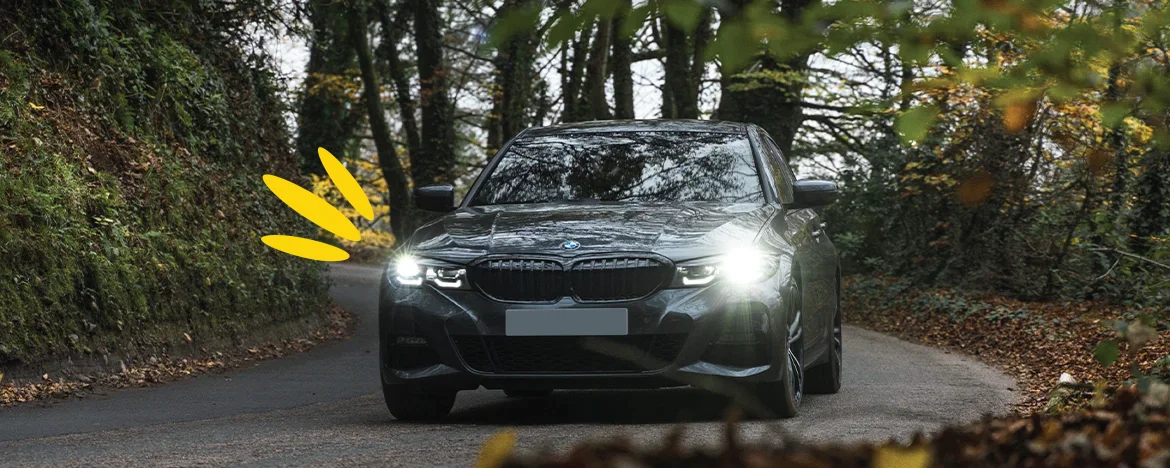
But is it really better for the environment? Well, slightly.
The environmental benefits of E10 fuel have been debated, but the consensus points to several advantages:
- Reduced CO2 emissions: The higher ethanol content results in lower CO2 emissions
- Less fossil fuel consumption: More renewable sources mean less reliance on finite resources
- Valuable by-products: Ethanol production creates useful by-products including animal feed and stored CO2
- Non-toxic and renewable: Ethanol is biodegradable and produced from renewable plant materials
Some experts suggest the ethanol in E10 fuel is carbon-neutral because the CO2 that plants absorb during growth offsets what's produced when the fuel is burned.
However, it's worth noting that the slight reduction in fuel efficiency (around 1%) means slightly more fuel may be needed for the same journey. But the overall environmental impact remains positive when balanced against the higher renewable content.
Are all cars compatible with E10 fuel?
Simply put, not all cars are compatible with E10 fuel. Especially with electric vehicles (EVs) on the scene now, but there are also some petrol cars that aren’t compatible.
The good news, however, is that almost all petrol-powered vehicles on UK roads can use E10 fuel without any issues.
According to data from 2024, approximately 97% of petrol cars were E10-compatible, with only 3% of vehicles (around 600,000 cars) unable to use it.
As a general rule, you should be in the clear if your vehicle is:
- Any car or motorcycle registered after 2002
- A car manufactured from 2011 (these were specifically designed to run on E10)
The small percentage of vehicles that typically aren't compatible with E10 petrol include:
- Classic and vintage vehicles
- Cars registered before 2002 (though many of these can still use E10)
- Specific models from the early 2000s with known incompatibility issues
- Some mopeds, particularly those with engines of 50cc or under
To check whether your vehicle can use E10 fuel, you can use the government's E10 vehicle checker. If your car isn't listed, it's worth checking your vehicle handbook or contacting the manufacturer directly.
This guidance also applies to petrol-powered equipment such as:
- Boats
- Lawnmowers and garden equipment
- Chainsaws and other power tools
Diesel vehicles remain completely unaffected by the introduction of E10, as diesel fuel hasn't changed.
What if my vehicle isn't compatible with E10?
If your vehicle is among the 3% that can't use E10 petrol, you'll need to use 'super' grade (97+ octane) unleaded petrol, which remains available at most larger filling stations. This higher-grade fuel still contains up to 5% ethanol (E5), making it suitable for those that aren’t compatible with E10.
All petrol pumps are clearly labelled to show whether they are dispensing E10 or E5 fuel, so it's important to check before filling up.
It’s often referred to as ‘Unleaded’ or ‘Super Unleaded’.
What happens if I use E10 in an incompatible vehicle?
If you accidentally fill up with E10 petrol in a vehicle that's not compatible, don't panic.
Using a single tank of E10 fuel in an incompatible vehicle should not cause immediate damage.
Simply make sure you fill up with the correct E5 (97+ octane) petrol grade next time. Unlike putting petrol into a diesel engine, you shouldn't need to drain the tank.
However, prolonged use of E10 petrol in a non-compatible vehicle could potentially cause damage.
This is because bioethanol can be corrosive to certain seals, plastics, and metals in older vehicles if used exclusively over longer periods.
It's also hygroscopic, which means it absorbs water from the atmosphere, potentially leading to condensation in fuel tanks if the car remains unused for long periods.
It's perfectly fine to mix E10 and E5 petrol, so there's no need to worry about your first top-up after switching between fuel types.
Can I drive through a low emissions zone with E10 fuel?
Using E10 fuel will not affect whether you can drive in, or have to pay to enter, a Clean Air Zone (CAZ), Low Emission Zone (LEZ), or Ultra-Low Emission Zone (ULEZ).
These restrictions are determined by your car's Euro emissions standard rather than the type of fuel used.
Meaning, you’ll need to know the emissions for your car and whether that meets the restrictions of the area you’re entering.
Fuel vs electric
How does the 2030 ban affect things?
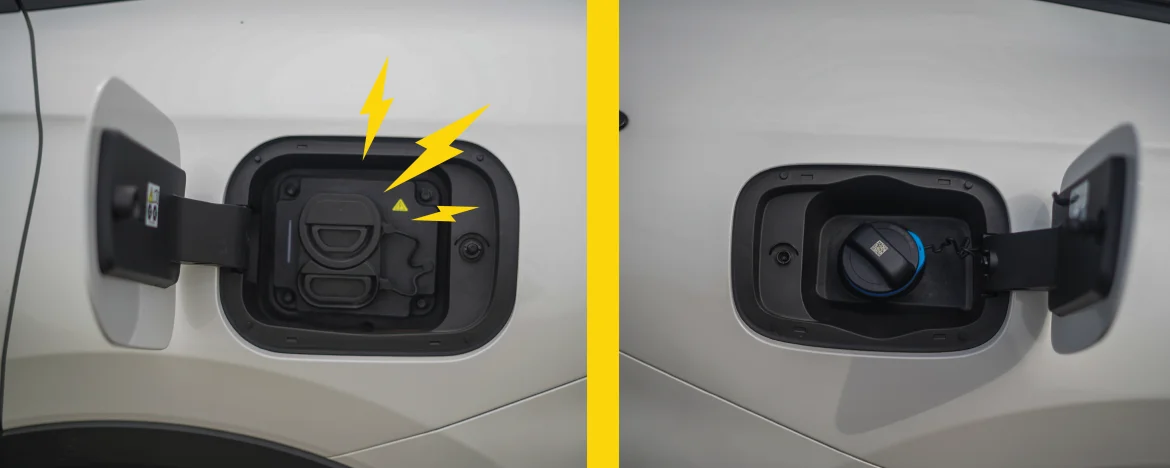
The Government introduced a ban on the sale of new petrol and diesel cars from 2030.
This won’t mean you have to give up your combustion engine just like that. The second-hand ICE (internal combustion engine) market will remain active, you just won’t be able to buy a new one.
With this switch to electric, and the government investing in the infrastructure to make this change as seamless as possible, we might see fewer petrol stations, or a bigger presence for EV charging.
The bottom line on E10 fuel
E10 has been the UK's standard unleaded petrol since September 2021, and for most drivers, very little has changed day-to-day. Here's what's worth remembering:
- Almost all petrol cars on UK roads are compatible; around 97% can run on E10 without any issues
- If your vehicle isn't compatible, Super Unleaded (E5) remains available at most larger filling stations
- E10 is slightly better for the environment, reducing CO2 emissions by approximately 750,000 tonnes per year
- Using E10 once in an incompatible vehicle won't cause immediate damage, just switch back to E5 at your next fill-up
- E10 fuel has no bearing on whether you can drive in a Clean Air Zone or ULEZ, this is down to the emissions of your car
With the 2030 ban on new petrol and diesel cars on the horizon, E10 is very much a transitional fuel – a small step toward greener roads while the UK builds out the infrastructure for a fully electric future.
Thinking about making the switch?