Join us as we take a closer look at the Polestar 2, the fastback showing that bigger doesn’t always mean better.

The Polestar 2 rolled into Carparison HQ looking sharp, angular, and ready to prove it's more than just the Polestar 4's little sibling.

This electric fastback has got its own distinct personality. The cabin feels snug in a good way, more cockpit than cramped, with that characteristic Scandinavian minimalism dialled up to eleven.

Originally launched back in 2020 as Polestar's answer to the Tesla Model 3, the 2 has been through quite the journey. A substantial facelift arrived in 2023, and the 2025 model year brought even more improvements – most notably, a significant bump in electric range.

Back then, the competition was fairly sparse. Now? The electric fastback segment has become rather crowded, with the Hyundai IONIQ 6 and BMW i4 muscling in alongside the ever-present Tesla Model 3.

But here's the thing: by mid-2024 Polestar had already shifted over 160,000 of these distinctive fastbacks worldwide. That's not an accident.

So the real question is, with all these newer rivals snapping at its heels, does the Polestar 2 still have what it takes?

We took it for a proper spin to find out.
What we drove

Model: Polestar 2 Long Range Single Motor RWD 82kWh Auto
Body Style: Fastback
Power: Electric (220 kW / 300 PS)
Battery: 82 kWh

Range: Up to 409 miles (WLTP Comb)
Acceleration: 0-60 mph in 6.2 seconds
Colour: Snow 
Price from: £45,160
Specifications correct at the time of publication

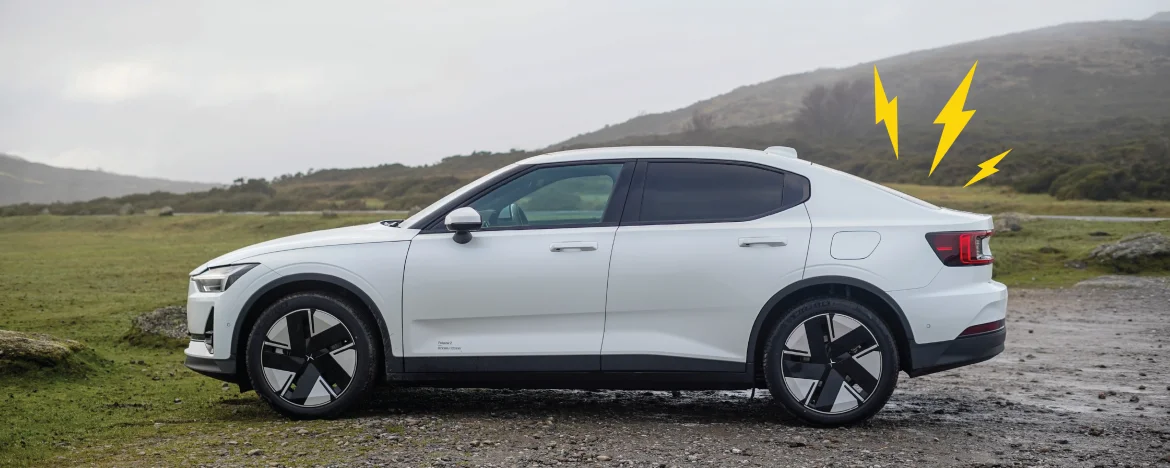
Polestar 2 side view

Sleek and angular design

Angular design that demands attention

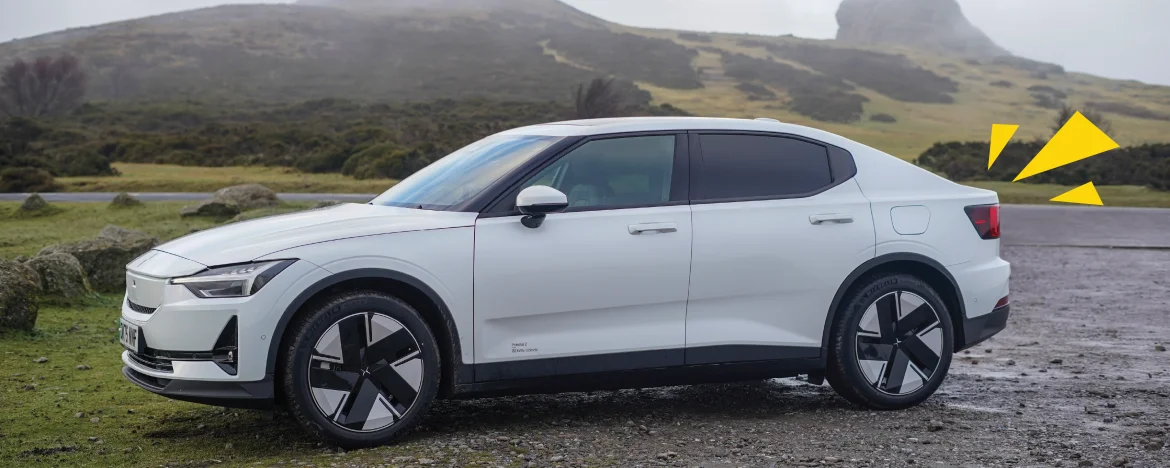
The Polestar 2's design is one of its strongest cards, standing out in a market increasingly dominated by samey-looking EVs.

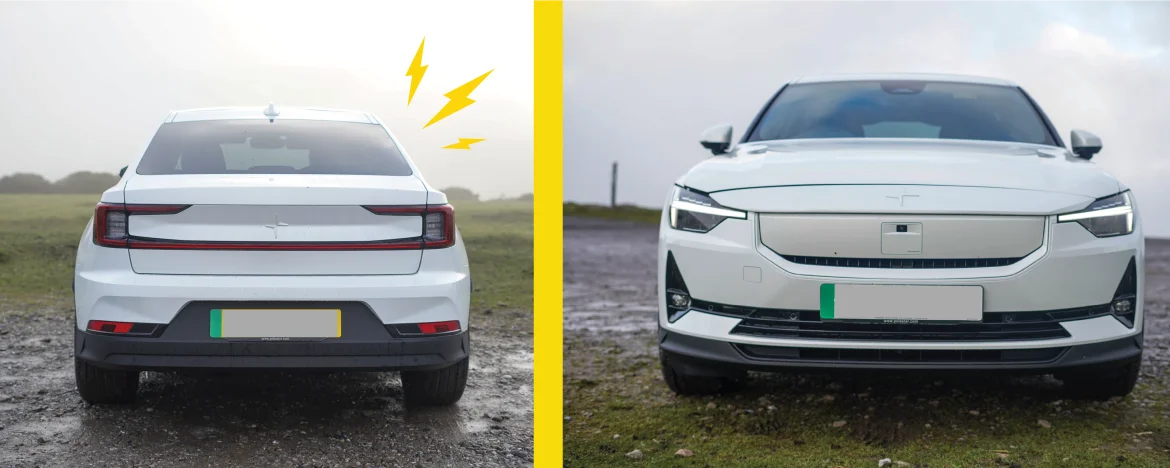
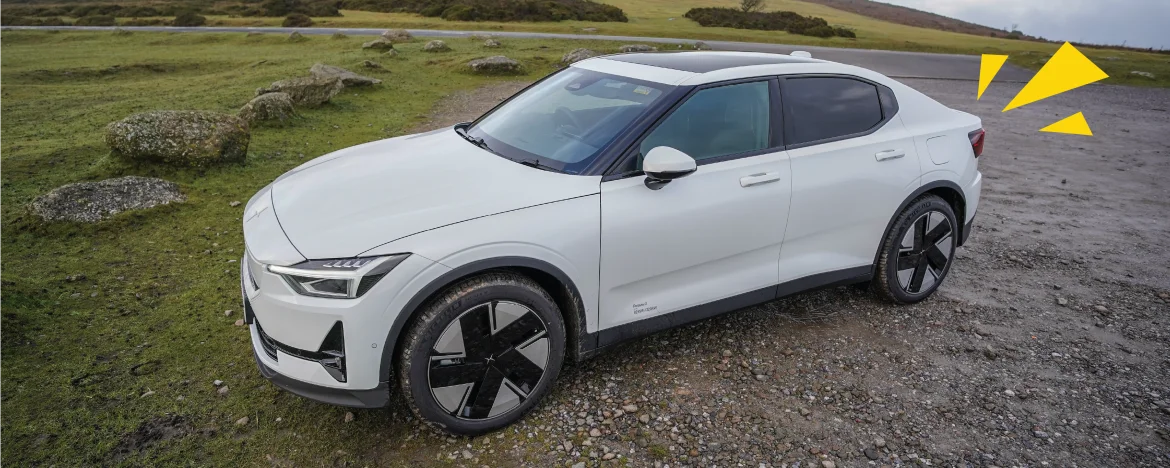
The Polestar 2 has serious presence. That fastback silhouette is sharp and angular rather than soft and rounded, giving it an almost aggressive stance that's quite different from the bubble-like shapes filling electric car parks.

At 4.6 metres long, it sits somewhere between a traditional hatchback and a compact saloon, but the raised height and commanding front end give it more road presence than either.

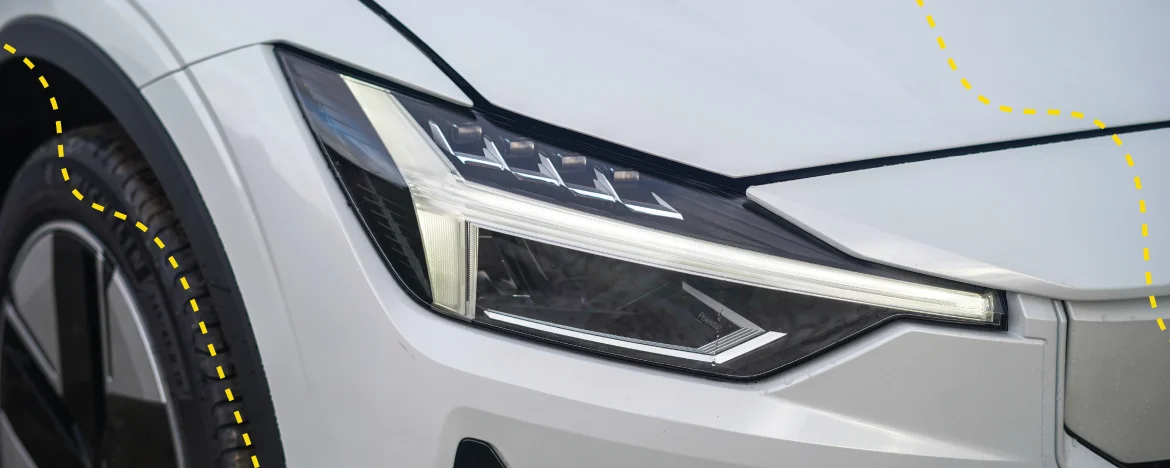
Polestar 2 headlights

Thor's hammer headlights

Those Thor's hammer headlights – a Volvo family trait that Polestar has made its own – add to the purposeful look. They're distinctive without being gimmicky, and genuinely stand out in your rear-view mirror.

Around the back, a full-width light bar stretches across the tailgate, looking properly premium when lit up at night. It's become something of a Polestar signature, and we're big fans.

Flush door handles sit seamlessly into the bodywork, reducing drag while looking clean and modern. They're not the pop-out type that can freeze in winter or fail electronically either – these are simple, mechanical, and reliable.

The overall shape has clearly been wind-tunnel tested, with smooth surfaces and minimal disruption to airflow. It's efficient without being try-hard about it.

Polestar 2 front and rear

Facelifted and updated

Polestar hasn't gone mad with the 2025 updates, which is actually refreshing.

Vapour – a contemporary light metallic inspired by modern city architecture – replaces Magnesium as the standard paint option.

Storm, the dark aluminium colour first seen on the Polestar 4, joins the palette too. Our demo came in Snow, highlighting those sharp body lines beautifully.

These might seem like small tweaks, but they keep the range feeling fresh without needing a radical redesign.

Standard 19-inch Aero alloy wheels feature aero inserts and a diamond-cut finish. They fill the arches nicely without looking over styled, and those aero inserts genuinely help with efficiency rather than just being for show. Step up to the Pro Pack and you'll get 20-inch Pro graphite alloys instead, which add a bit more visual impact.

But honesty is the best policy, so we have to talk about its flaws too.

That steeply sloped rear window? It looks brilliant from outside, but it does compromise rear visibility when you're behind the wheel.

It's not a deal-breaker by any means – you've got a rear-view camera and parking sensors to help out. Checking your blind spots and reversing will just require a bit more attention than in a car with a more traditional rear window.

But it still offers more visibility than its bigger sibling, the Polestar 4, where you won’t find any rear window at all – simply a rear-view camera rather than a mirror.

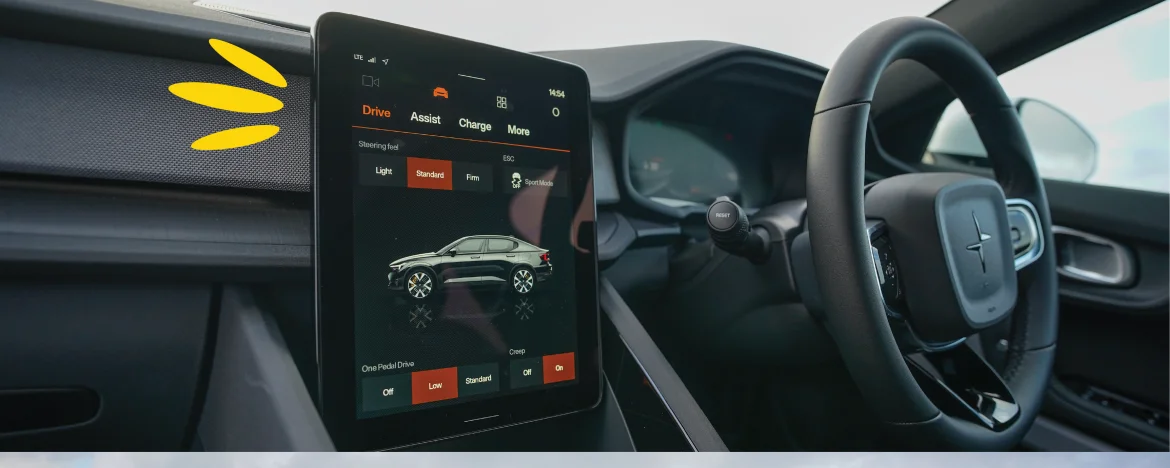
Polestar 2 dashboard

Scandi minimalism

Cockpit-like cabin with Scandinavian minimalism

The Polestar 2's interior is where that Swedish design philosophy really shines. Let's break down what you actually get in this attractive package.

The Polestar 2 immediately feels different from its bigger sibling, the Polestar 4. It's more intimate, more focused – you sit lower and everything feels closer around you in that sporty, cockpit-like way.

But here's the thing: it never feels cramped. There's a distinction between snug and claustrophobic, and the Polestar 2 firmly lands in the snug category.

Polestar hasn't skimped on materials, and the sustainable options actually feel premium rather than a gimmick just to be more eco-friendly.

Our car featured Bio-attributed MicroTech upholstery in Charcoal with Black Ash deco, a sustainable material that looks and feels far better than its eco-friendly credentials might suggest.

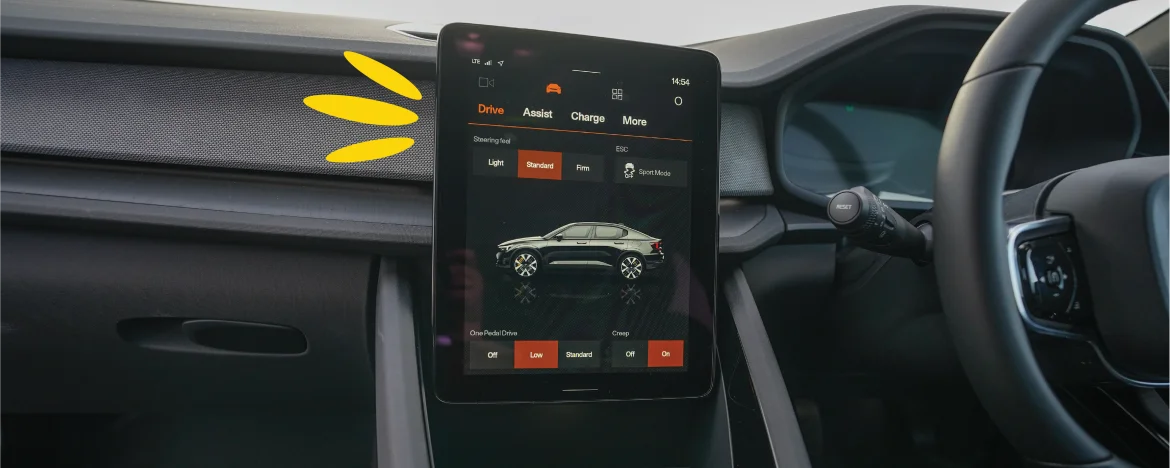
It's soft to touch, hardwearing, and fits the minimalist aesthetic perfectly. The dashboard is uncluttered, dominated by that portrait-oriented 11.2-inch touchscreen.

Physical buttons are kept to a minimum, but the important stuff (climate controls, hazard lights) remains easily accessible without diving through menus.

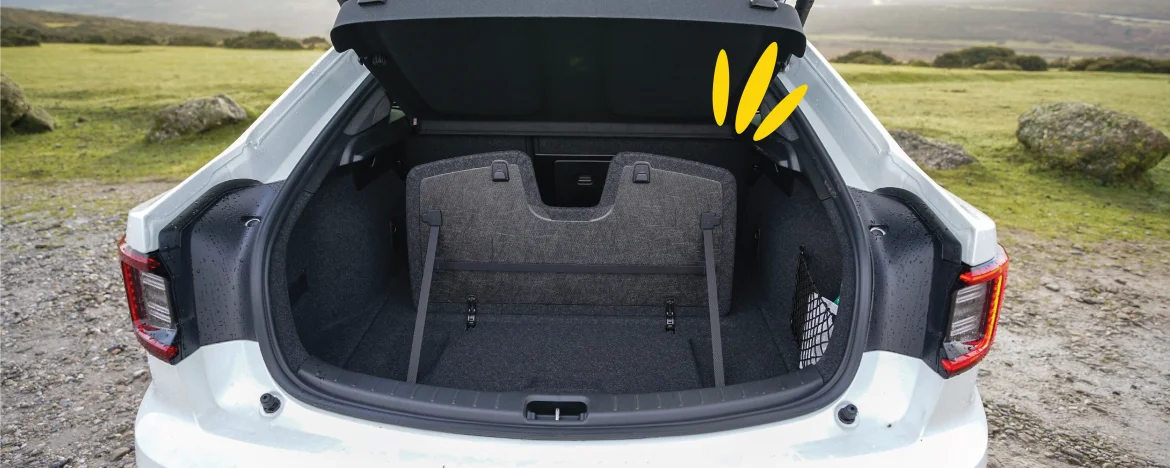
Polestar 2 boot

Spacious boot with clever storage

Pop the boot and you've got 405 litres of space. That's not huge – the BMW i4 offers more – but it's perfectly adequate for the weekly shop, sports kit, or a weekend away.

Fold the rear seats down and capacity expands to 1,095 litres – enough for flat-pack furniture runs or taking the mountain bikes away for the weekend.

There's also useful underfloor storage for keeping charging cables out of sight (plus a small frunk up front that's another perfect spot for charging cables if the under-boot storage isn't quite right for you). But what makes the Polestar 2's boot genuinely clever is that pop-up bag holder. It's a simple but brilliant feature: a sturdy divider that rises laterally across the boot, stopping heavier items from sliding around as you drive.

It's the same feature you'll find in many Volvos, and it's one of those details that makes you wonder why every car doesn't have one.

Up front, space is good for most. Taller drivers might find headroom a touch tight – especially if you spec the panoramic glass roof, which eats into vertical space.

Without it, headroom improves noticeably.

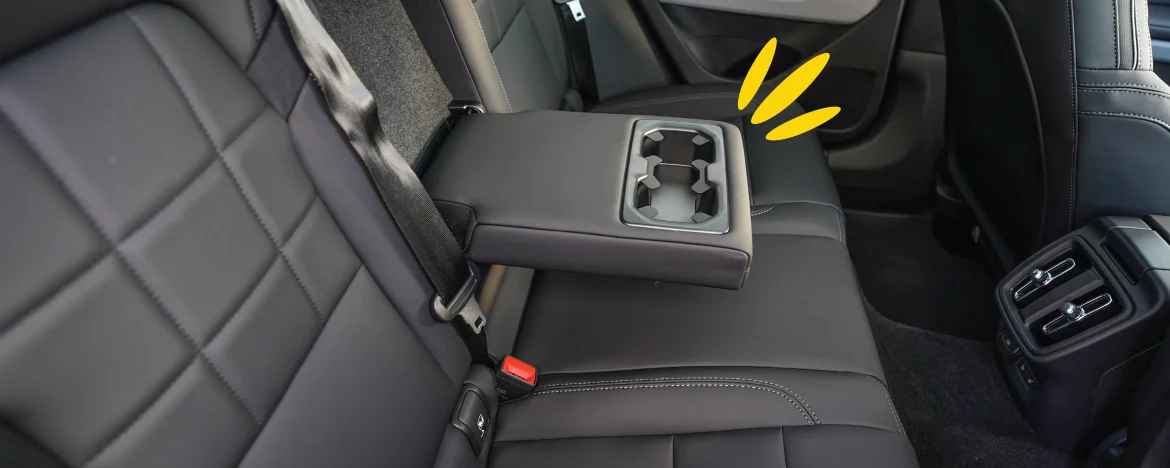
Rear seats in the Polestar 2

Plenty of space in the back

In the back, things get tighter. Legroom is adequate for smaller adults and growing kids, but taller passengers will find their knees getting friendly with the front seats.

And then there's the oddity: a raised centre rear floor. This is unusual for an EV, where you'd normally expect a flat floor throughout. It means the middle rear passenger sits less comfortably than those in the outer seats. Not a deal-breaker for occasional use, but worth knowing if you regularly carry three adults in the back.

The Polestar 2 is primarily a four-seater that can occasionally squeeze in five. But if you're mainly carrying yourself, maybe one passenger, and occasionally the kids? The Polestar 2's space is perfectly adequate.

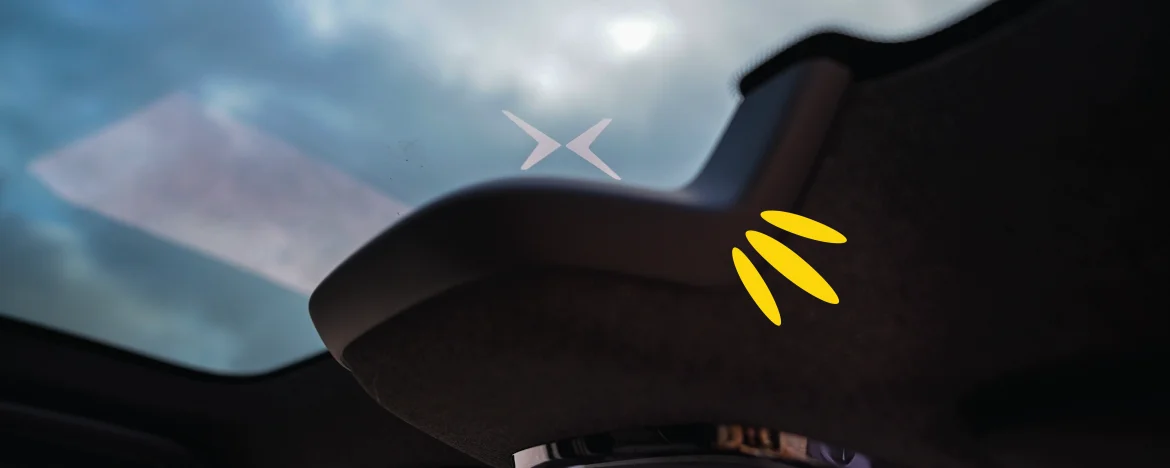
Polestar 2 logo projected onto panoramic sunroof

A premium package

Another small touch we loved was the logo projected onto the panoramic roof. Small details like these are what make a car feel properly premium.

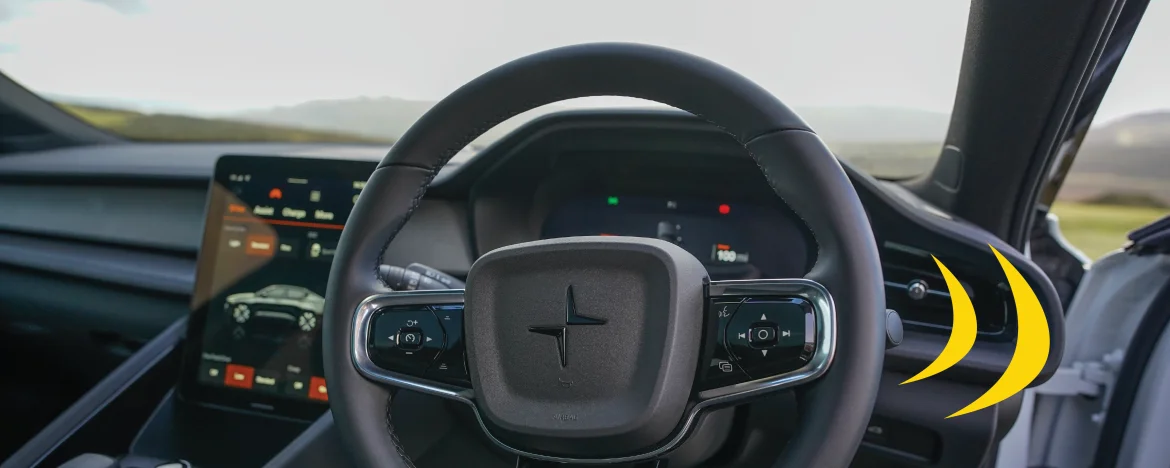
Polestar 2 steering wheel

Behind the wheel of the Polestar 2

Smooth power delivery with instant EV punch

Get behind the wheel and you'll immediately understand why electric cars have become so popular. But let's talk specifics: what is the Polestar 2 actually like to drive?

The Polestar 2 delivers that characteristic instant EV responsiveness, but it does it in a refined, measured way.

Press the accelerator from standstill and there's a split-second pause before the power arrives – almost like the car's gathering itself – then it launches forward with impressive smoothness.

It's not the neck-snapping, whiplash-inducing acceleration you might get from a Tesla in Ludicrous mode, but it's genuinely quick and feels properly effortless.

Where the Polestar 2 really shines is mid-range acceleration.

Plant your foot at 30mph and the surge to 60mph is genuinely impressive. That instant torque delivery makes overtaking or merging onto motorways completely stress-free.

You've got power on tap whenever you need it, with no waiting for gearboxes to wake up.

Our Long Range Single Motor puts out 220 kW (300 PS), which is plenty for everyday driving and then some. The 0-60mph time of 6.2 seconds tells the story on paper, but it feels quicker in real-world driving because that power arrives immediately.

Polestar 2 parked up

2023 facelift changed the drive

Here's something significant: the 2023 facelift switched the Single Motor from front-wheel drive to rear-wheel drive, and it genuinely makes a difference. The car feels more balanced, more natural through corners.

It's not a sports car – let's be clear about that – but it's definitely more entertaining to drive than most electric family cars.

The steering is nicely weighted – not too heavy, not too light, the Goldilocks – and offers just enough feedback to keep you informed about what's happening at the front wheels.

Let's address the elephant in the room: the Polestar 2's ride is firm. Not bone-jarringly harsh, but definitely on the sportier side of comfortable. Over smooth motorways and well-maintained A-roads, it's absolutely fine; composed, settled, refined. But hit a pothole or rough surface, and you'll feel it.

Rear passengers notice it more than those up front. That slightly firmer rear suspension setup means bumps and imperfections get transmitted through to the back seats more readily – not ideal for travel sickness.

The Polestar 2 is reasonably quiet, but it's not going to trouble cars like the Mercedes EQE or even the SKODA Enyaq for outright refinement.

At motorway speeds, you'll notice wind noise around the door mirrors and A-pillars, plus road noise transmitted through those Continental tyres (especially on the optional 20-inch wheels).

It's not intrusive enough to ruin long journeys, but it's noticeable enough that you might find yourself turning up the audio system a touch more than you'd expect.

The Polestar 2 offers regenerative braking in two settings: standard and One Pedal Drive mode. Standard mode gives you moderate regeneration when you lift off the accelerator – enough to start slowing the car and recovering energy, but you'll still need to use the brake pedal for proper stopping.

One Pedal Drive ramps up the regen significantly, allowing you to drive using just the accelerator for most situations, with the car coming to a complete stop when you fully lift your foot off the pedal. Both modes work well, and you can toggle between them via the touchscreen.

Polestar 2 infotainment screen

Technology in the Polestar 2

Technology that works

The Polestar 2's tech setup genuinely enhances the driving experience rather than just adding complexity for the sake of it.

The 11.2-inch central touchscreen runs Google Android Automotive OS, and honestly? It's one of the better infotainment systems out there. It's responsive, logically laid out, and doesn't require a degree in computer science to figure out. Google Assistant voice control is built in, so you can just say "Hey Google, play some music" and it'll actually do it.

And here's a big improvement over earlier models: Apple CarPlay is now supported. Previous Polestar 2 owners had to make do with Android Automotive only, which was a proper sticking point for iPhone users. That's now sorted, giving you the choice to use whichever system you prefer.

The digital instrument cluster displays speed, range, and navigation clearly without trying to wow you with flashy graphics. Sometimes simple is better.

Standard driver assistance features include adaptive cruise control (works well on motorways), lane-keeping assist (can be overzealous), and automatic emergency braking. The parking sensors and rear-view camera are genuinely helpful given that compromised rear visibility. Spec the optional Pilot Pack for blind-spot monitoring, cross-traffic alert, and a 360-degree camera system that's particularly useful in tight spaces.

Range and charging: Proper long-distance capability

This is where the Polestar 2 makes a compelling case for itself, especially with the 2025 model year improvements.

Our Long Range Single Motor claims up to 409 miles (WLTP Combined) from its 82 kWh battery – a significant jump from earlier models.

That's comfortably enough to eliminate range anxiety; most drivers will go a week or more between charges with typical daily use.

When you do need to charge, the Polestar 2 supports DC fast charging at up to 205kW peak (up from 150kW). That means 10-80% in approximately 30 minutes at a compatible rapid charger. Ten minutes adds around 60-80 miles, which is more than enough time to grab a coffee.

For home charging, you've got standard 11kW AC charging, with up to 22kW if you spec the Plus Pack. Most home wallboxes are 7kW, which will fully charge overnight. The heat pump comes as standard (part of the Climate Pack on some trims), helping preserve range in winter by using waste heat to warm the cabin, genuinely making a difference in UK weather.

One thing to note: unlike newer EVs which come with dual charging ports, the Polestar 2 only has a single charging port on the driver's side rear. This means occasionally reversing into bays or parking awkwardly, but you get used to it.

The improved range and faster charging mean the Polestar 2 genuinely competes with the best electric cars out there. It'll handle daily commutes, weekend trips, and longer journeys without breaking a sweat.

What's good, and what's not

The Polestar 2 has plenty going for it, but it's not without its compromises. Here's the honest breakdown.

The good bits:

  • Striking, angular design – Stands out from the electric SUV crowd with that distinctive fastback silhouette
  • Impressive 2025 range improvements – Up to 409 miles (WLTP Combined) eliminates range anxiety
  • Smooth, effortless power delivery – 220 kW feels quick with instant mid-range punch
  • High-quality Scandinavian interior – High-quality materials that actually feel premium
  • Clever boot features – That pop-up bag holder is genuinely brilliant
  • Heat pump standard – Helps preserve winter range
  • Google Android Automotive works well – Intuitive infotainment with Apple CarPlay support
  • Mechanical flush door handles – Won't freeze or fail electronically

The not-so-good bits:

  • Firm ride quality – Especially harsh for rear passengers on poor roads
  • Limited rear passenger space – Tight for taller adults, raised centre floor is odd for an EV
  • Compromised rear visibility – That sloped rear window looks great but makes reversing trickier
  • Limited front storage – One cupholder and small centre console bin
  • Regenerative braking not adjustable on the fly – No steering wheel paddles like some rivals
  • Single charging port – Can mean awkward positioning at some chargers
Polestar 2

What's the verdict on the Polestar 2?

What’s the verdict?

Overall Rating: 8/10

The Polestar 2 has matured brilliantly since its 2020 launch, and the 2025 updates prove Polestar is serious about keeping it competitive.

That switch to rear-wheel drive in 2023 transformed the driving experience, while the 2025 range improvements – up to 409 miles – address early adopters' biggest concerns. Add in faster charging, distinctive Scandinavian design, and a genuinely premium interior, and you've got a compelling package.

Yes, the ride is firmer than rivals. Yes, rear space isn't generous. And yes, it gets noisy at motorway speeds. But these are compromises rather than deal-breakers, and in return you get a car with genuine character that makes most electric SUVs look anonymous.

The Polestar 2 isn't trying to be all things to all people – it's a stylish, driver-focused electric fastback that happens to be practical enough for everyday life. If you want maximum space and the softest ride, look elsewhere. But if you want something that stands out, drives well, and doesn't feel like every other electric car on the road? The Polestar 2 makes a very strong case.

With over 160,000 sold worldwide by mid-2024, clearly plenty of people agree it's got the formula right.

Top 5 reasons to consider the Polestar 2

  • Distinctive angular design stands out from the electric SUV crowd
  • Impressive 409-mile range (WLTP Combined) eliminates range anxiety
  • Clever practical features like the pop-up boot bag holder make daily life easier
  • High-quality Scandinavian interior with sustainable materials that feel premium
  • Enhanced 205kW charging and heat pump improve real-world usability

Would we recommend leasing a Polestar 2?

Absolutely – especially for those wanting an alternative to the Tesla Model 3 with more character.

The 2025 updates make it more competitive than ever. It's not perfect, but let’s face it – what is?

Does the Polestar 2 sound like your cup of tea?

Finley Vile

Finley Vile

Finley is one of our Digital Marketing Executives. She brings her keen eye for detail and wit to our blog to keep you entertained, informed, and up-to-date with the latest and greatest car news.