EV fleet charging: Everything your business needs to know

TL;DR: What is EV fleet charging?

Electric vehicle (EV) fleet charging is the infrastructure and strategy a business puts in place so its EVs, whether company cars, vans, or a mixed fleet, can be charged reliably. It usually means combining home charging for employees, with workplace or depot charging for vehicles based on site, and public charging for journeys further afield.

Getting it right means matching your charging setup to how your fleet operates, rather than fitting your fleet around whatever charging happens to be available.

Switching your fleet to electric raises one practical question fast – how will your drivers charge their vehicles?

Get the charging strategy right and everything else falls into place. Get it wrong, and your drivers end up working around the charging network instead of getting on with the job.

This guide covers the charging options open to your business, how to choose between them, and the schemes that can help offset the cost of setting up.
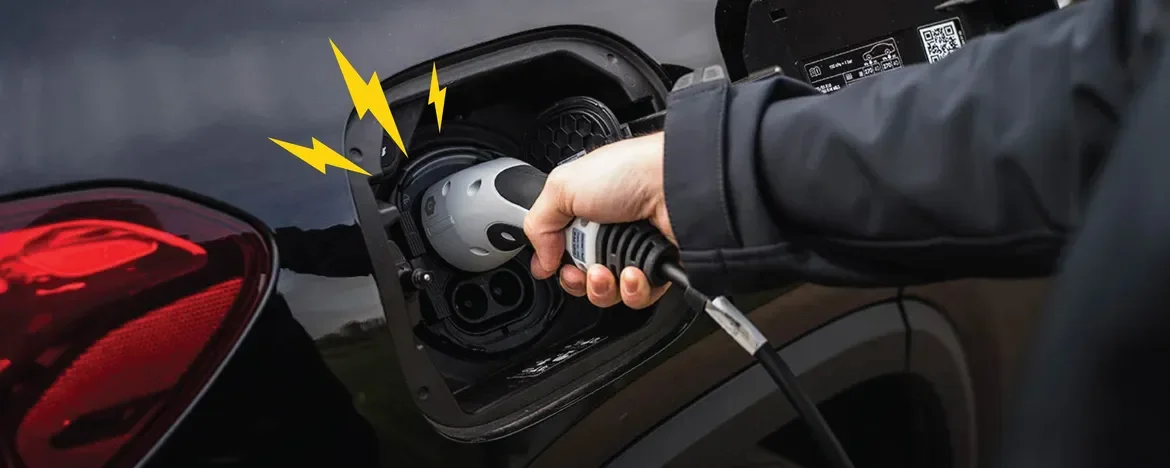
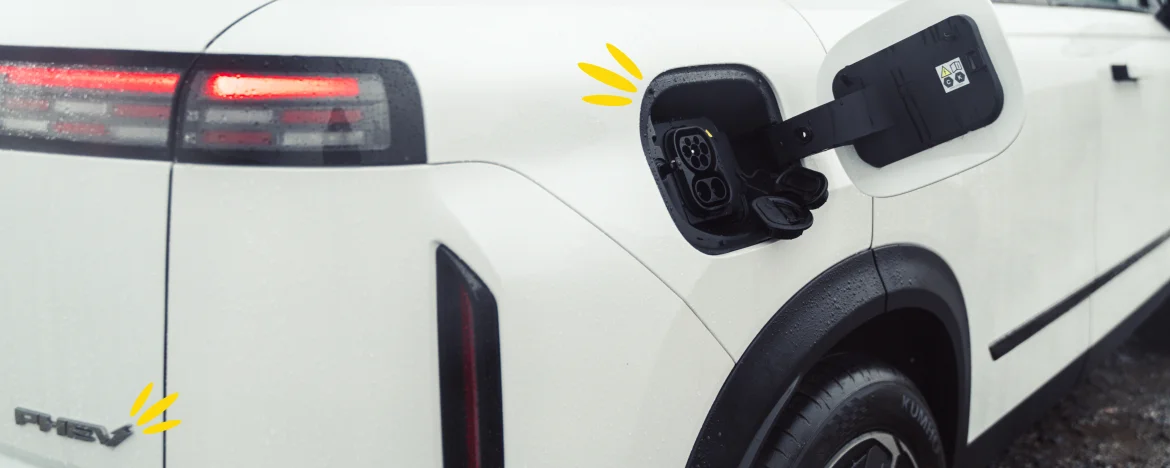
Tesla being put on charge

Sorting your EV charging strategy sooner rather than later can avoid admin headaches

Home, workplace, and public charging: Your options

There are three charging options available to your business. Most fleets end up using a combination of all three rather than just relying on one.

Home charging

If your drivers take their vehicles home each night, or use it for personal journeys as well as business ones, a home charger can make sense. It means they start the working day with a fully charged car, whatever distance they need to cover.

Your drivers can only have a charger installed at home if they have access to private, off-street parking, and either own the property or have landlord consent.

Workplace and depot charging

Workplace charging works well whether your drivers take vehicles home or leave them on site.

For company car drivers whose vehicles stay at the office for most of the day, it means plugging in while they work and driving off with a full charge.

It’s particularly useful for drivers without easy access to home or public charging, and it also means any visitors or staff with their own EVs can charge while on your premises.

If you run a depot that houses your fleet overnight, you’ll want multiple charge points installed so every vehicle is ready to go the next day.

The more sockets, the more likely it is that you’ll be able to give every vehicle its fair share of charging time. It works particularly well if your drivers work shift patterns, where some vehicles can charge while others are out on the road.

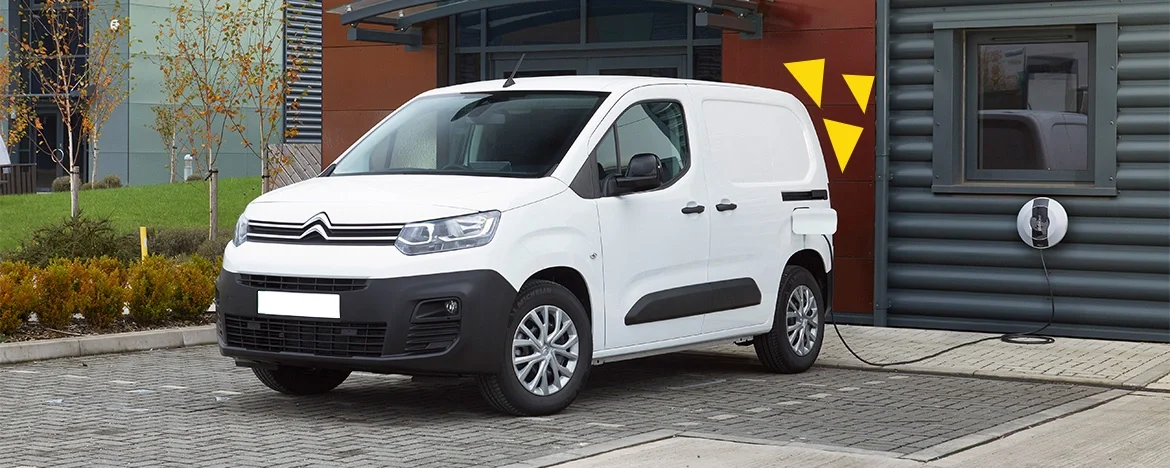
Citroen van charging

Whatever your fleet looks like, a mix of charging options is helpful for your drivers

Public charging

Your drivers might also need to use public chargers while on the move.

These are available in car parks, supermarkets, service stations, and increasingly on residential streets, with charging speeds ranging from slow to ultra-rapid depending on location.

Supermarkets sometimes offer free charging, though usually only at slower 7kW or 22kW speeds.

Service stations tend to have rapid and ultra-rapid chargers, which are better suited to a quick top-up when a driver is low on range and needs to keep moving.

How to charge your EV fleet

Implementing charging for your fleet depends on how and when you’re switching your vehicles to electric, but the practical steps are broadly the same for most businesses.

  1. Map how your fleet operates: Work out which drivers take vehicles home, which are based on site, and which cover long distances that rely on public charging
  2. Choose your charging mix: Most fleets need a combination of home, workplace, and public charging
  3. Install the right infrastructure: This might mean workplace chargers, a depot setup, or supporting drivers to install drivers at home
  4. Add a fleet charging card: This covers the public network and keeps all your charging costs on one invoice rather than relying on individual expense claims
  5. Review and adjust as your fleet grows: Charging needs change as you add more electric vehicles, so you’ll want to revisit your setup regularly

What to consider when choosing a charging solution

Your fleet is unique to your business, so there is no single right answer here. A few factors are worth working through:

Your fleet’s needs

It might be entirely cars, entirely vans, or a mix, with some vehicles permanently on site and others driven home each night.

Where your vehicles are based

This decides whether you’re prioritising home charging, workplace charging, or depot charging, or if you’re using an evenly split combination.

Your costs

The upfront cost of installation is only part of the picture.

Factor in the ongoing rise in your electricity bill, any public charging usage, and the maintenance of the chargers themselves, as well as the cost of switching your fleet to electric.

JAECOO 7 PHEV charging

Even plug-in hybrids will need a space to charge to maximise their efficiency

The Workplace Charging Scheme: What your business can claim

The Workplace Charging Scheme (WCS) helps cover the upfront cost of installing chargers for staff or fleet use, and is currently funded until 31 March 2027.

Businesses can claim up to £500 per socket, or 75% of the total purchase and installation cost, whichever is lower, for up to 40 sockets.

To be eligible, your business needs to:

  • Be a registered business, charity, or public sector organisation based in England, Wales, Scotland, or Northern Ireland
  • Have dedicated off-street parking for staff or fleet use, not customers
  • Own the property or have landlord consent for installation

Each socket needs a minimum 3kW power supply, and installation needs to be carried out by an OZEV-authorised installer using approved models, with a maximum of one socket per parking space. You apply online for a voucher code, pass it to your installer, and they claim the grant on your behalf once the work is done, leaving you to pay only the discounted balance.

EV fuel cards and pay-as-you-go charging

An EV fuel card lets your drivers charge on the go at public chargers without claiming the cost back on expenses.

It keeps your accounts team out of a pile of individual receipts and gives you oversight of every charging transaction across the fleet.

Many cards work on a pay-as-you-go basis, so there’s no need to commit to a single charging network. Several also cover petrol or diesel alongside electric, which is useful if your fleet is still mid-transition and running both fuel types side by side.

This means you can combine the cost of your combustion and EVs onto a single invoice while the switch is underway.

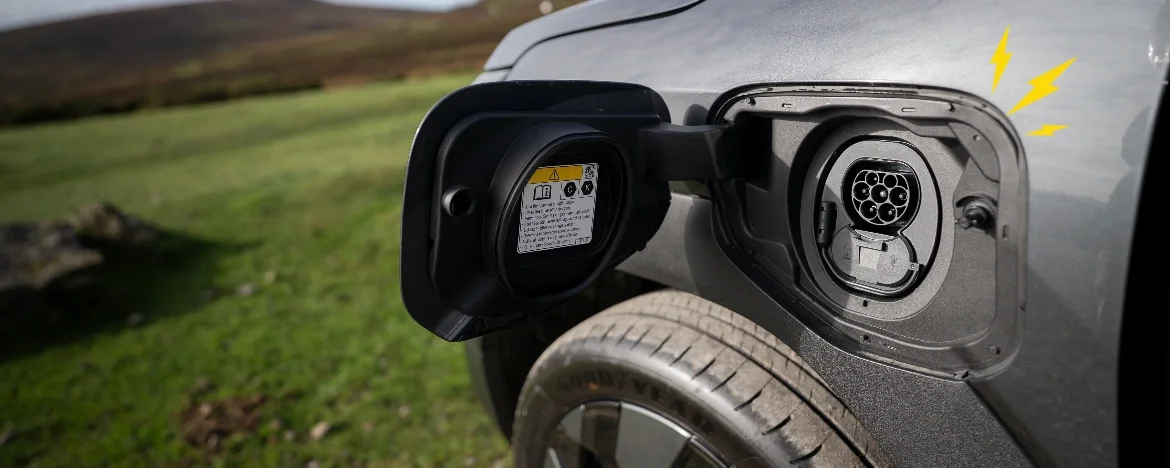
Suzuki e-Vitara charging port

Not all charging stations will come with a view of Dartmoor

The benefits of switching your fleet to electric

Electrifying your fleet brings benefits beyond the charging setup itself:

  • Lower Benefit in Kind (BiK) tax: For 2026/27, EVs sit at a 4% BiK rate, well below petrol or diesel equivalents, which can climb past 30% for higher-emission models
  • Reduced running and maintenance costs: EVs typically cost less to service and maintain than their combustion equivalents
  • Progress against sustainability targets: Fewer emissions across your fleet supports wider company commitments
  • A better driver experience: Workplace and home charging mean drivers start each day with a full charge rather than planning a route around fuel stops

What to plan for

Electrifying your fleet is not without its practical considerations.

Your business electricity bill will rise, even as your fuel costs fall, and there’s likely to be more admin in the early stages while you set up the charging infrastructure and get drivers used to the change.

Separating business and personal electricity costs can be tricky where you have drivers charging their work vehicles at home.

You won’t want to cover the cost of their personal mileage, and they won’t want to be charged for business use, so it’s worth agreeing how this is calculated and reimbursed before chargers go in.

None of the cons outweigh the benefits in the long run, but planning for it upfront makes the transition smoother for everyone involved.

Ready to electrify your fleet?

Beth Twigg

Beth Twigg

Beth is our Content Marketing Manager, tasked with creating great articles to keep you both entertained and informed. She has two years previous experience, but has been writing and scribbling for much longer.