The incentives available for electric vehicles in 2026

TL;DR: What grants can you actually get for an electric car right now?

The main one is the £650 million Electric Car Grant, worth up to £3,750 off a new EV (depending on its environmental credentials), applied directly at the dealership.

If you’re installing a home charger, the Electric Vehicle Chargepoint Grant now covers renters, flat owners and landlords for up to £500, and there’s a new version for drivers with on-street parking only. Businesses can get up to £500 per socket through the Workplace Charging Scheme.

Older schemes, like the Plug-in Car Grant, have closed, so it’s worth knowing what’s live before you plan your next move.

With the 2030 petrol and diesel ban fast approaching, the Government has introduced grants and incentives to make electric cars (EVs) more accessible

But navigating the world of electric car grants can feel like being stuck in rush hour traffic – slow, frustrating, and getting you nowhere fast.

That’s where we come in.

Join us as we dive into what grants are currently available and explore tax incentives that could save you money.

Someone charging their car

Someone charging their car

What grants are available for electric cars?

Electric Car Grant

Available until 2028/29 financial year

The government has launched a £650 million Electric Car Grant to make EVs more affordable for more drivers.

You’re eligible if:

  • You’re buying a brand-new electric car up to £37,000
  • The car is from a manufacturer with a verified Science Based Target
  • The vehicle meets technical criteria including a minimum 100-mile WLTP Comb range

The discount is applied directly at the dealership, no separate application needed. The scheme is expected to support around 173,000 new electric cars.

The amount you’ll get depends on the car’s environmental credentials.

Band 1 cars – up to £3,750

Confirmed Band 1 cars include (but aren’t limited to):

Band 2 cars – up to £1,500

Confirmed Band 2 cars include (but aren’t limited to):

It’s worth noting that the lists keep growing as manufacturers apply for approval, so it’s always worth checking whether your chosen model qualifies before you commit.

Several manufacturers, like Leapmotor and MG, have launched their own matching discounts on cars that don’t qualify for the grant.

When combined with potential fuel and running cost savings of £1,500 a year, the Electric Car Grant could help more drivers make the switch to electric driving.

Electric Vehicle Chargepoint Grant

The Electric Vehicle Chargepoint Grant is actually a family of grants – so it’s worth checking if one applies to you.

If you own or rent a flat

You can get 75% off the cost to buy and install a home charger, up to a maximum of £500 (up from £350 previously).

You can apply if you:

  • Live in a flat you own or rent a residential property
  • Have private off-street parking
  • Own, lease, or are the named user of an eligible electric vehicle

Unfortunately, you can’t apply if you:

  • Live in a house you own (unless it’s converted into flats)
  • Are a lodger
  • Have already claimed the grant or a predecessor scheme
  • Are moving house

If you only have on-street parking

There’s a dedicated grant for drivers without a driveway/garage/private off-road parking, but with access to on-street parking.

It covers 75% of the cost of a charger and a cross-pavement charging solution, such as a cable channel, up to £500, provided your local highways authority gives permission for the installation.

If you’re a landlord

Residential landlords can claim up to £500 per socket for chargers installed at their properties, for up to 200 sockets a year.

All three schemes are now running until March 2027, and in each case your installer applies on your behalf – you just pay the remaining cost once approved.

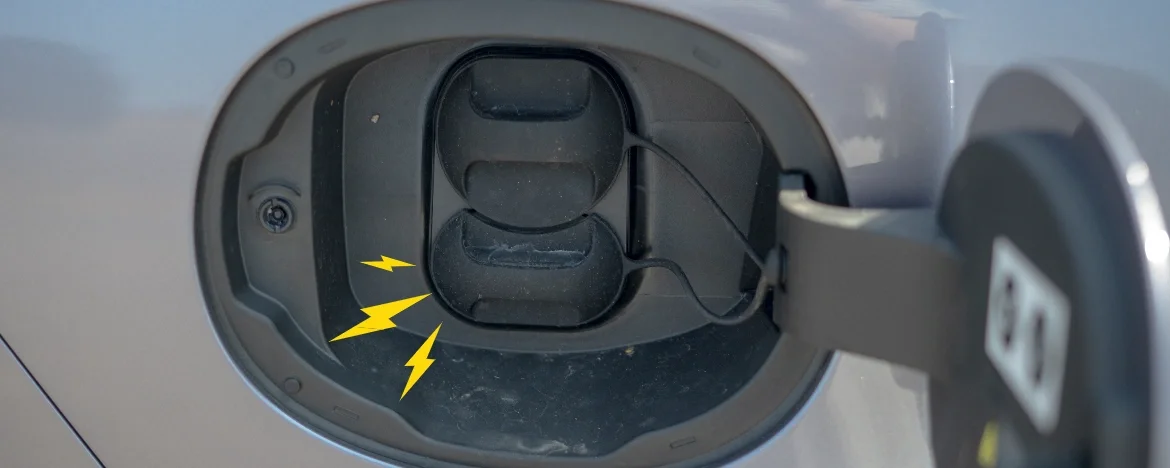
BYD SEAL charging port

BYD SEAL charging port

Workplace Charging Scheme (WCS)

Available until 31 March 2027

If you’re a business looking to support your staff’s switch to electric cars or need charging for your company fleet, the Workplace Charging Scheme could be just the ticket.

You can get up to £500 per socket, up from £350, or 75% of the total purchase and installation costs, whichever is lower, with a maximum of 40 sockets per business.

You can apply if you:

  • Are a registered business, charity, or public sector organisation
  • Are located in England, Wales, Scotland, or Northern Ireland
  • Have dedicated off-street parking for staff and/or fleet use
  • Own the property or have landlord consent for installation

Key requirements:

  • Parking must be for staff/fleet use only (not customers)
  • Each socket needs a minimum 3kW power supply
  • Maximum one socket per parking space
  • Must use OZEV-authorised installers and approved models

You’ll simply need to apply online for a voucher code, then give it to any OZEV-authorised installer. Once they’ve completed the installation, they’ll claim the grant on your behalf, and you just pay the discounted amount.

The scheme is now funded until 31 March 2027, so there’s more time to take advantage of it than previously thought.

You also have six months from the voucher being issued to complete installation, and you can apply for additional sockets later until you hit the 40-socket limit.

Local Electric Vehicle Infrastructure (LEVI) Funding

For local authorities in England

The Local EV Infrastructure Fund isn’t one you can apply for directly as an individual – this one’s for local authorities.

Simply put, the fund supports local authorities in England to plan and deliver charging infrastructure for residents without off-street parking.

It’s worth knowing about, especially if you’re one of the many people who park on the street and have been wondering how you’ll manage with an electric car.

It’s split into two types of funding:

  • Capital funding to support charge point delivery
  • Capability funding to ensure local authorities have the staff and expertise to plan and deliver charging infrastructure

The fund aims to deliver a step-change in local, primarily low-power, on-street charging infrastructure across England. Basically, more charging points on your street.

While you can’t apply for this directly, it means your local council might be getting funding to install more charging points near you. Perfect if you’re thinking about going electric, but don’t have a driveway.

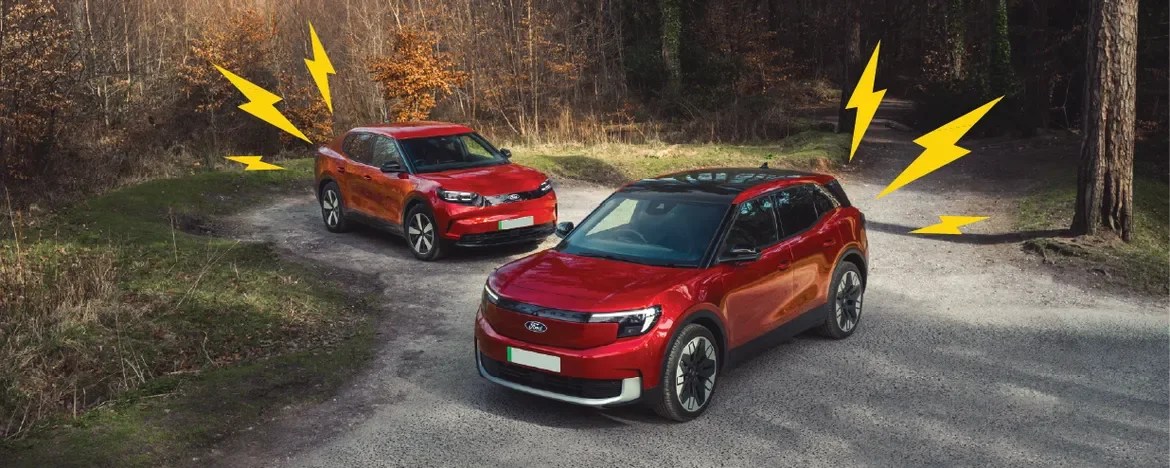
Ford Explorer and Capri

Ford Explorer and Capri

What tax incentives are there for EVs?

While not grants, tax incentives are well worth noting.

Vehicle Excise Duty (VED)

Vehicle Excise Duty, also known as road tax, is a tax based on your car’s emissions that all drivers have to pay.

Originally, EVs were exempt.

But this changed in April 2025 – electric cars now pay £10 for the first year, and the standard £195 for the following years. So, rather than an exemption, it’s now a discount.

Benefit in Kind rates

If you’ve got a company car you use for personal journeys, you’ll need to pay Benefit in Kind (BiK) tax on it. But the beauty of driving electric is that you’ll be paying the lowest rates.

The rates for 2026/27:

  • Electric vehicles: 4%, rising to 5% in April 2027, then by two percentage points a year, hitting 9% in April 2029
  • Plug-in hybrids: Banded by electric range, from 4% for the longest-range models up to 16% for those under 30 miles, moving to a flat 18% for all PHEVs from April 2028
  • Petrol/diesel: Upwards of 17% depending on emissions, climbing past 30% for higher-emission models

Quick example: An electric company car with a P11D value of £45,000:

  • BiK value: £45,000 x 4% = £1,800
  • 20% taxpayer: £1,800 x 20% = £360 per year
  • 40% taxpayer: £1,800 x 40% = £720 per year

To put that into context – if you were leasing a petrol car with the same P11D value and CO2 emissions of 120g/km (with a 30% Benefit in Kind rate):

  • BiK value: £45,000 x 30% = £13,500
  • 20% taxpayer: £13,500 x 20% = £2,700 per year
  • 40% taxpayer: £13,500 x 40% = £5,400 per year

The key takeaway?

Even as rates rise year on year, electric company cars remain cheaper to run than petrol, diesel, or plug-in hybrid alternatives.

Salary sacrifice

The UK government introduced an electric car salary sacrifice scheme to help drivers access better savings on EVs. It’s an employee benefit where your company leases an electric car on your behalf.

How does it work? Instead of paying a finance provider with your net salary (after tax), you pay from your gross salary (before tax), leading to bigger savings.

Salary sacrifice can save you 20 to 50% on the cost of an EV – so if it’s a benefit your employer offers, it’s worth looking into.

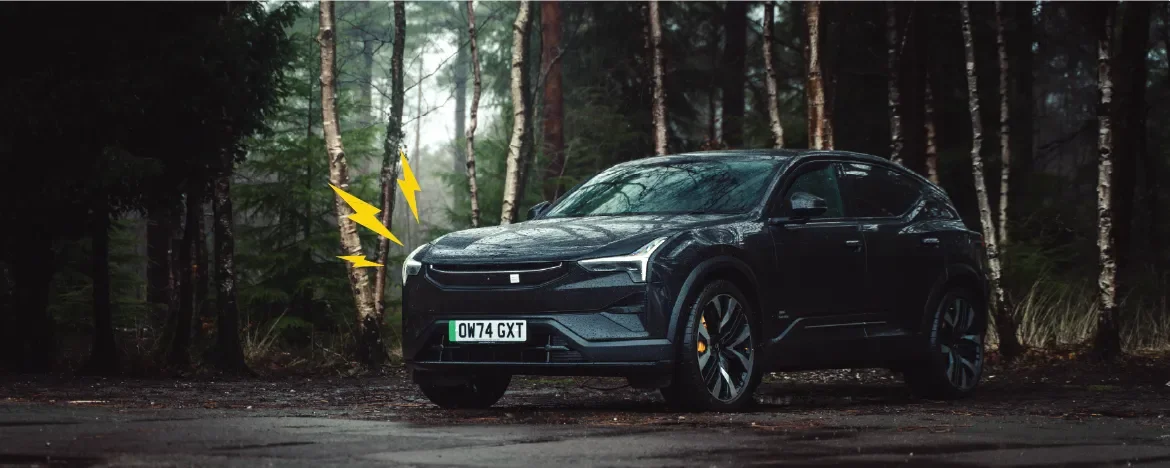
Polestar 3

Polestar 3

Which EV grants have expired?

There have been several electric vehicle grants over the years that have since expired.

Plug-in Car Grant

Ended: June 2022

This was the big one, offering up to £1,500 (35% of the car’s purchase price) towards buying an electric vehicle.

And it had been more substantial in the past – in March 2021, the government reduced the discount from £3,000 to £2,500, and lowered the price cap from £50,000 to £35,000, a sign the scheme was already winding down before its full closure the following year.

Over the 11 years the scheme ran for, it supported nearly half a million EVs and helped sales surge from less than 1,000 in 2011 to almost 100,000 in early 2022.

The government ended it to focus funding on expanding the public charge point network instead.

On-street Residential Chargepoint Scheme (ORCS)

Ended: March 2025

This scheme allowed local authorities to get up to 75% funding (maximum £13,000) for installing EV chargers on residential streets.

It funded 8,354 public charging devices across 146 councils, representing £31.1 million of grant funding.

This scheme has since been replaced by the LEVI fund and the Electric Vehicle Chargepoint Grant.

Electric Vehicle Homecharge Scheme (EVHS)

Ended: April 2022

This gave homeowners up to £350 towards installing EV charging devices at domestic properties. It installed 340,222 domestic charging devices with £140.8 million in grants over the eight years it ran.

It was replaced by the EV Chargepoint Grant, which covers renters, flat owners, landlords, and drivers with on-street parking only.

The bottom line

While the grant landscape has shifted, there’s plenty of support available to help you go electric.

From home charging grants to workplace schemes, the path to electric driving is more accessible than you might think. Whether you’re a first-time EV driver or a business looking to electrify your fleet, there’s likely an incentive or scheme that can help make the switch more affordable.

The future is electric, and with the right approach, it doesn’t have to cost the earth.

Ready to explore your electric options?

Finley Vile

Finley Vile

Finley is one of our Digital Marketing Executives. She brings her keen eye for detail and wit to our blog to keep you entertained, informed, and up-to-date with the latest and greatest car news.