Reading Time: 6 minutes | Published 02/02/2024 | Edited: Finley Vile 25/08/2026

Reading Time: 6 minutes
Published 02/02/2024
Edited: Finley Vile 25/08/2026

What Tesla model is best for you?

TL;DR: Which Tesla model should you get?

If performance, range and agility top your list, the Model 3 is the stronger pick — it's quicker, goes further on a charge, and handles more nimbly day-to-day.

But if you need extra space for family life or bulky loads, the Model Y's boot and headroom win out, even with a shorter range and higher price tag.

Both share the same Tesla DNA, including Best in Class 2025 safety and over-the-air updates, so the right choice comes down to which fits your life rather than which wins on paper.

Which Tesla model is the biggest, fastest or even just the best for you?

Tesla was the OG in the electric vehicle (EV) space. It revolutionised the industry with better range, better tech, and all at a more attainable price.

With two models now on offer in the UK, it still delivers all this and more.

However, more and more Chinese brands are entering the market with just as much to offer, if not more, at a similar or sometimes lower price tag.

Tesla needs to keep up and stay competitive, and it's doing a great job of it.

So, let's find out which Tesla model is the right one for you.
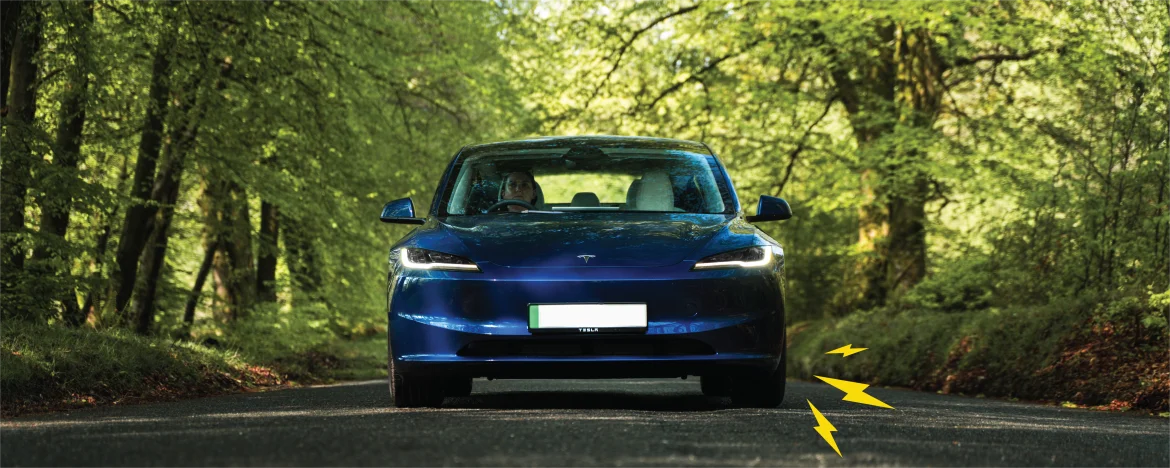
Tesla’s background

Tesla originates from America, where it also offers more models than the UK gets. There's the Model S, 3, X and Y — AKA S3XY — although the S and X have been discontinued.

There's also the Cybertruck, though this isn't currently available to buy or lease in the UK.

Rather than constantly launching new models to keep up with the times, Tesla relies on over-the-air (OTA) updates. This means the tech stays relevant and everything keeps working as it should.

Both the Model 3 and Model Y have had facelifts recently to keep them looking fresh and improve aerodynamics, boosting range in the process.

Tesla pioneered the EV market, and it's still doing a great job, but it has lost some ground thanks to Chinese brands like BYD coming in and beating it on price.

Tesla Model 3

Tesla Model 3

Tesla Model 3

Saloon with swagger

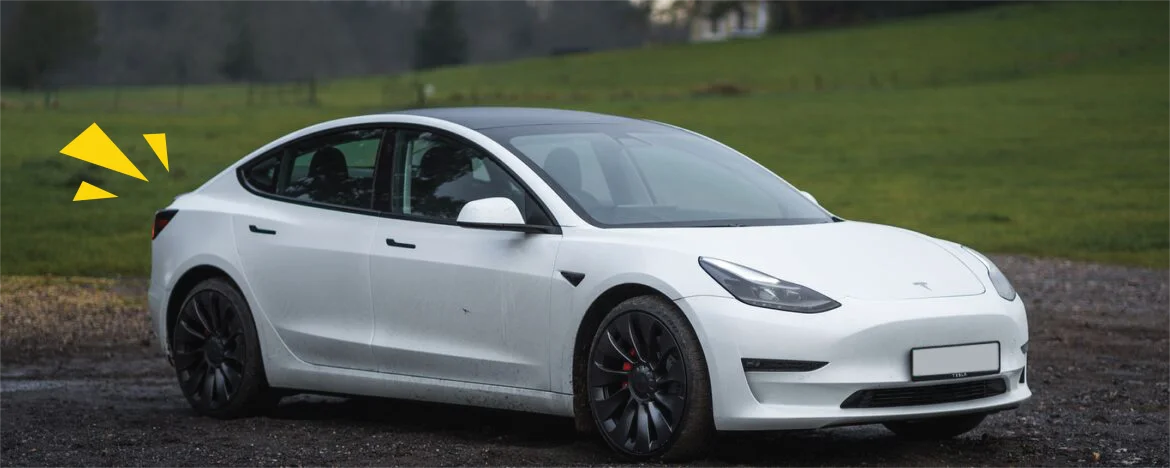
The smaller sibling: A sleek four-door saloon sharpened even further by the 2024 facelift, with a new front end, C-shaped tail-lights and more.

A satin black door handle finish replaced the old chrome. It's a subtle change, but it elevates the whole look.

It's more compact than the Model Y — narrower, lower, more executive saloon than SUV.

Minimalist’s heaven

Step inside and it truly is a minimalist's heaven. A 15.4-inch infotainment screen dominates the dash and controls nearly everything; no traditional dials or buttons here.

There's no Apple CarPlay or Android Auto, which is an odd omission.

But it does have wireless charging for two phones and four USB-C ports.

Interior quality improved noticeably with the 2024 facelift, though it's still a step behind German rivals.

In the back, the boot comes in at 682 litres — more than enough space for a saloon.

Quick off the mark

There are a few powertrain options, with the Performance dual motor having the fastest 0–60mph time: 2.9 seconds.

But the entry RWD is still quick at 6.2 seconds.

The ride is firm but controlled, and wind and road noise have been reduced by the facelift.

Tesla Model 3

Tesla Model 3, pre-facelift

Going the distance

With the Long Range model getting up to 466 miles of range (WLTP Comb), you're more than covered.

Even the entry model gets up to 332 miles (WLTP Comb) — range anxiety, who?

You also get access to Tesla's Supercharger Network, which isn't exclusive to Tesla drivers anymore, but you still get priority. You can add up to 175 miles of range in just 15 minutes.

A 7kW home charger gives you a full charge in roughly 8–12 hours.

Real-world range is usually 25–30% lower than the stated WLTP Comb figure, due to driving style, weather and other factors.

Best in class safety

The Model 3 received Best in Class 2025 for safety from Euro NCAP.

It has a five-star Euro NCAP rating:

  • Adult Occupant: 90%
  • Child Occupant: 93%
  • Vulnerable Road Users: 89%
  • Safety Assist: 87%
  • Tested variant: RWD, LHD, Sedan, 1,761kg kerb weight

Tesla backs the Model 3 with a four-year/60,000-mile basic vehicle warranty, plus an eight-year/100,000–120,000-mile warranty on the battery and drive unit (depending on trim) — reassurance to match the safety credentials.

Pros and cons of the Tesla Model 3

Pros of the Tesla Model 3

  • Blistering performance — 2.9 seconds 0–60mph on the Performance model, with a firm but controlled ride
  • Up to 466 miles of range (WLTP Comb) on the Long Range, plus priority Supercharger access
  • Best in Class 2025 for safety, with a five-star Euro NCAP rating across the board

Cons of the Tesla Model 3

  • No Apple CarPlay or Android Auto — an odd omission for the price point
  • Interior quality is improved but still trails German rivals
  • Saloon-style boot opening makes loading bulky items trickier than a hatchback or estate
Tesla Model Y

Tesla Model Y

Tesla Model Y

SUV stance, Tesla style

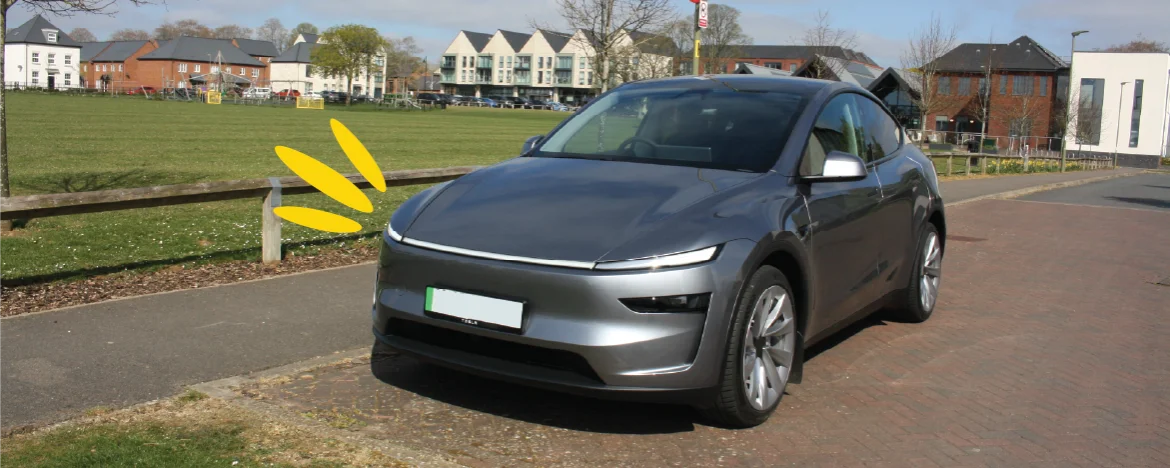
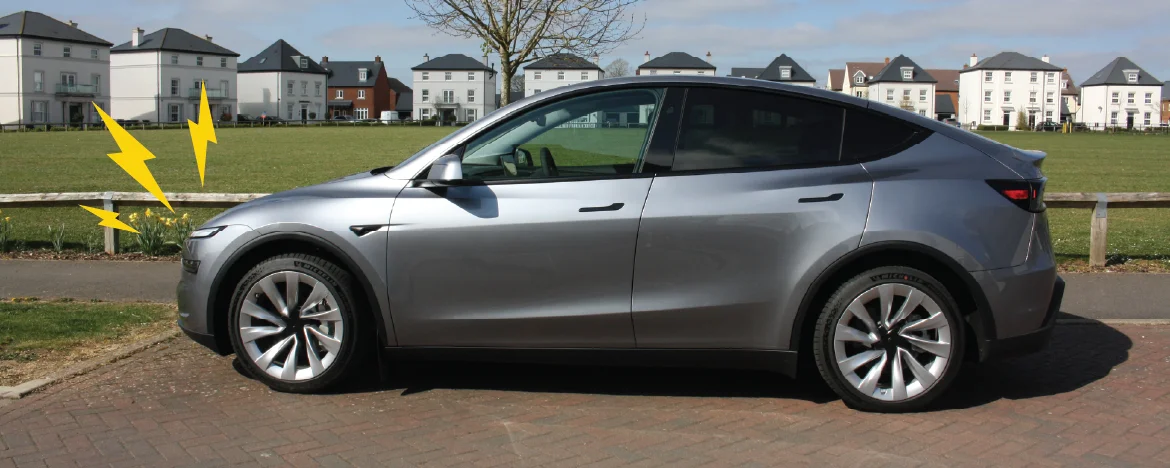
Taller and boxier body than the Model 3, but sharing the same underlying platform.

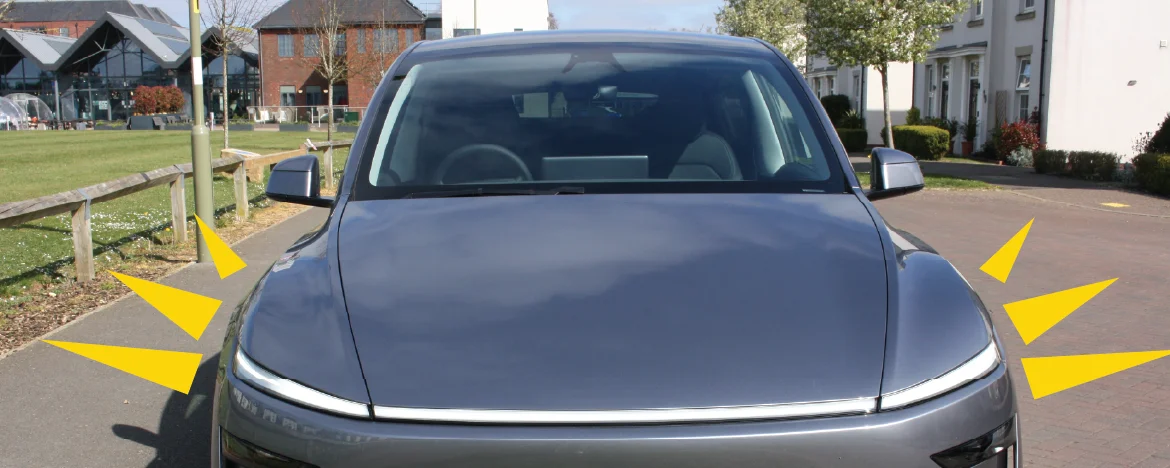
The 2025 Juniper facelift added some more pizazz: A light bar across the nose and a full-width rear light.

Standard trim skips these styling cues for a simpler look.

Room galore

The Model Y has the same minimalist, touchscreen-first approach, but with boatloads of rear space.

The boot comes in at 854 litres, rising to 2,138 litres with the rear seats down.

Still no Apple CarPlay or Android Auto, and the small rear window (thanks to the sloped roof) gives limited visibility.

Smooth operator

The 2025 facelift added acoustic glass and extra soundproofing, making it noticeably quieter at speed.

The standard model goes 0–60mph in 6.9 seconds, but get the Performance and you'll do it in 3.3 seconds — that's super speedy for an SUV.

The adaptive dampers and revised suspension on higher trims smooth out rough roads well too.

Tesla Model Y

Tesla Model Y

Built for the long haul

The Model Y comes with a heat pump as standard across the range, which helps cold-weather efficiency.

With a range of up to 387 miles (WLTP Comb), and even the standard model coming in at 326 miles (WLTP Comb), you're ready for the long haul.

Real-world range will once again be 25–30% lower, thanks to factors such as weather and driving style. But with the heat pump, cold weather will have less of an effect.

Best in class safety

The Tesla Model Y has also won Best in Class 2025 for safety, with a five-star Euro NCAP rating:

  • Overall: Best in Class 2025
  • Adult Occupant: 91%
  • Child Occupant: 93%
  • Vulnerable Road Users: 86%
  • Safety Assist: 92%
  • Tested variant: Dual Motor AWD, LHD, SUV, 1,979kg kerb weight

The Model Y comes with the same peace of mind: A four-year/60,000-mile basic vehicle warranty, alongside an eight-year/100,000–120,000-mile battery and drive unit warranty (depending on trim).

Pros and cons of the Tesla Model Y

Pros of the Tesla Model Y

  • Boatloads of boot space — up to 2,138 litres with the rear seats down
  • Up to 387 miles of range (WLTP Comb), with a standard heat pump for stronger cold-weather efficiency
  • Best in Class 2025 for safety, matching the Model 3's five-star Euro NCAP rating

Cons of the Tesla Model Y

  • No Apple CarPlay or Android Auto, same as the Model 3
  • Small rear window and sloped roofline limit rear visibility
  • Poor turning circle makes it less nimble than the Model 3 for tight, urban driving
Tesla Model Y

Tesla Model Y headlights

Comparing the Tesla Model 3 vs Tesla Model Y

Now lets put them head-to-head in some important categories to see who will come out on top.

Performance (0-62mph)

  • Model 3: 2.9 seconds
  • Model Y: 3.3 seconds

Model 3 takes the lead.

Range

  • Model 3: 466 miles
  • Model Y: 387 miles

Model 3 is the winner by a landslide.

Practicality

  • Model 3: 682 litres across boot and frunk
  • Model Y: 854 litres, increasing to 2,138 litres with rear seats down

Not much else can really beat the Model Y on space, it’s the winner across the segment.

Interior

  • Model 3: Minimalist but slightly less space, as expected in a saloon
  • Model Y: Minimalist, spacious and a rear touchscreen on higher trims

Model Y wins on this one.

Safety

  • Model 3: Best in Class, but wins on VRU
  • Model Y: Best in Class, but wins on Safety Assist

A genuine tie here.

Price

  • Model 3: From £37,990 (OTR)
  • Model Y: From £41,990 (OTR)

Model 3 is the cheaper entry point, but it's marketed as the more affordable option for a reason — the Model Y's higher price reflects its extra space and SUV body, which will justify the premium for plenty of buyers.

Driving character

  • Model 3: More agile, as you’d expect with its smaller size
  • Model Y: Poor turning circle due to its size, but still agile and nippy

Model 3 just tips the scales here.

So, which Tesla model is best for you?

It really depends on your priorities.

Going purely by the numbers above, the Model 3 edges it — three category wins to the Model Y's two, with one genuine tie on safety.

If performance, range and agility matter most to you, the Model 3 is hard to argue with. It's the quicker car, it'll take you further on a single charge, and it's the more nimble drive day-to-day.

But categories don't tell the whole story.

If you've got a growing family, need to haul bulky items regularly, or simply want the extra headroom and boot space that only an SUV can offer, the Model Y can't be beaten. No amount of range or 0–60mph bragging rights will fix a boot that's too small for the weekly shop or the school run.

The truth is, these aren't really two cars competing for the same buyer. They're two different answers to two different questions — "how efficient and agile can an EV be?" versus "how much can an EV do for my life?"

Either way, you're getting the same Tesla DNA underneath: Best in Class 2025 safety, over-the-air updates that keep the car improving long after you've picked up the keys, and access to one of the most reliable charging networks in the country.

So the real question isn't which Tesla is objectively better. It's which one fits the life you're actually living.

Ready to start browsing?