How to lease a car for the first time: A step-by-step guide

TL;DR: How do you lease a car for the first time?

Check you’re eligible, set a clear budget, and browse deals with an open mind (rather than searching for a specific car).

Once you’ve found the right deal, submit a finance application, sign your contract, and arrange delivery. Look after the car throughout your lease, and start planning your next one a few months before the end of your contract.

Leasing a car for the first time can feel like a lot – new terminology, financial decisions, and choices at every turn.

But the process is more straightforward than it looks, and once you understand how it works, you’ll wonder what all the fuss was about.

This guide walks you through every stage of your first car lease, from working out whether leasing is right for you, to taking delivery and planning for what comes next.

No jargon, no assumptions.

Just everything you need to know, in the order you need to know it.

What is car leasing?

Car leasing – or Personal Contract Hire (PCH) – is a long-term rental agreement.

You pay a fixed monthly payment to drive a brand-new car for a set term (typically two to four years), then return it to the finance provider at the end.

You don’t own the car, and there’s no option to buy either. But that’s the point.

For a full breakdown of how it works, check out our car leasing guide.

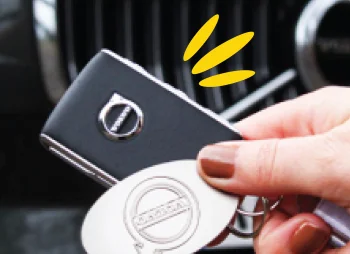
Hand holding keys in front of VW ID.5

A hand holding a key fob in front of a VW ID.5

Step one: Work out if leasing is right for you

Before you start browsing deals, it’s worth taking a moment to make sure leasing suits the way you use a car – and your financial situation.

Ask yourself the following:-

Do you like to change cars every few years?

Leasing is built for this.

Most agreements run between 24 and 48 months, so you’re always driving something relatively new, under the manufacturer’s warranty for the most part, and with the latest technology.

If you tend to buy a car and run it for a decade, leasing probably isn’t the right fit.

Are you comfortable not owning the car?

With a lease, the car belongs to the finance provider throughout. You’re paying to use it, not to own it.

If that doesn’t bother you, excellent. If ownership does matter to you, it’s worth looking at another finance option, like Personal Contract Purchase (PCP), which gives you the option to buy at the end.

Can you predict your mileage?

Every lease comes with an agreed annual mileage limit.

Exceed it, and excess mileage charges will apply at the end of your lease. If your driving patterns are unpredictable or you regularly clock high mileage, factor that in carefully before committing.

Is your credit in good shape?

Leasing is a form of credit, so you’ll need to pass a credit check to be accepted.

You’ll also need to be a UK resident with a permanent address and a valid driving licence.

Can you afford the monthly payments?

There’s usually an initial payment upfront – typically the equivalent of three, six, or nine months’ worth of the monthly cost – followed by fixed monthly payments for the duration of your contract.

Road tax is included (at the prevailing rate), which takes one cost off your plate, and an optional maintenance package can add in servicing costs too.

If you can answer yes to all, or most, of the above, leasing is likely a strong option over buying.

Step two: Set your budget

A good lease starts with a clear budget. And that means looking beyond the headline monthly cost.

Start with your finances

Note down your monthly income and your regular outgoings – rent or mortgage, bills, subscriptions, food shopping.

What’s left is your starting point.

From that, you can work out how much you can put towards a car without stretching yourself. A useful rule of thumb is to keep total annual car costs between 10-15% of your yearly income.

Don’t forget the full picture

The monthly cost is only part of it. Before you commit, make sure you’ve accounted for:

  • The initial payment: Most lease deals require an upfront sum equivalent to three, six, or nine months’ worth of the monthly cost. The more you put in upfront, the lower your monthly outgoing will be
  • Insurance: This is your responsibility and isn’t included in a lease. Costs vary depending on the car, your age, and your driving history, so you’ll want to get a quote before finalising your budget
  • Fuel or charging costs: Work out your typical monthly mileage and factor in the cost of running your chosen fuel type
  • Servicing and maintenance: If you take out a maintenance package, many of these costs will be covered by your monthly payment. If not, you’ll want to budget for it separately
  • Any location-specific costs: For example, parking permits, toll roads, or Clean Air Zone charges (if applicable)

Set a minimum and a maximum

It helps to go into your search with both a floor and a ceiling. That way, you can filter deals confidently and avoid being tempted by something that looks affordable on the surface, but stretches you once everything else is added in.

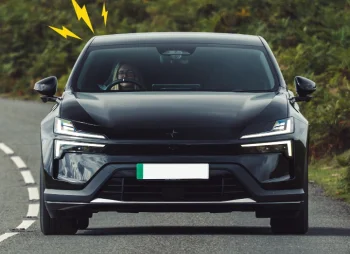
Polestar 4

Polestar 4

Step three: Search for your deal

In leasing, it’s often worth shopping for a deal first – not a specific car.

That might sound counterintuitive, but it can change how you approach the whole process. Unlike buying, where you often pick a car and then figure out how to pay for it, leasing rewards those who let their budget (and not their heart) lead.

For example, a premium car that holds its value well can often cost less per month than a cheaper model that depreciates faster.

You’ll also see ‘Carparison Exclusives’ on the site, which are deals where we’ve bought vehicles in bulk or have committed to volumes sales. You won’t find this pricing anywhere else, and it might be that you find a better deal on a car you’d not even considered before.

In the car leasing world, keeping an open mind pays off.

Start with fuel type

Before settling down for a good browse, you’ll want to work out which fuel type is going to suit you.

If you have a home charger – or the ability to install one, or easy access to public charging – and want to cut running costs, an electric vehicle (EV) could work well.

And electric leasing is one of the most affordable ways to get into the driver’s seat of one.

If you’re not quite ready to make the switch, petrol, diesel and hybrid options remain widely available. Getting clear on this first will save you time when filtering deals.

Let your budget do the searching

Once you know your fuel preference and monthly ceiling, you can head over to our lease deals page.

You can filter by budget, make, model, and fuel type – or browse by deal value to surface the strongest offers available right now. Sorting by deal value rather than price alone is worth doing, as it highlights where you’ll get the most car for your money.

Refine from there

Once you can see what falls within your budget, start narrowing by what matters to you – size, manufacturer, trim level.

You might find your original choice is comfortably in range.

You might also find something you hadn’t considered that represents much better value.

Either way, you’ll be making an informed decision rather than guessing.

Step four: Check your eligibility

For many first-time leasers, finance approval feels like the most daunting part of the process.

Here’s a run-down of whether you could be eligible to lease a car or not.

The basics

To be eligible for a car lease, you need to:

  • Be over 18
  • Be a UK resident with a permanent address
  • Hold a valid driving licence

You’ll also need to pass a credit check and demonstrate that you can afford the payments.

What you’ll need to provide

Leasing involves a finance application, similar in principle to applying for a mortgage.

The finance provider owns the car throughout your agreement, and takes the car back at the end, so they need to be satisfied that you can afford the payments.

Expect to provide:

  • Proof of identity and your driving licence
  • Your address history for the past three years
  • Details of your income and employment
  • Your bank details
  • Contact details and email address

If you’re applying for a business lease, you’ll also need company information including registration number, filed accounts, and director details.

What if my credit score isn’t perfect?

You can still lease with a less-than-ideal credit score – your options just might be more limited.

We work with a range of finance providers, so if one declines your application, another may approve it. A guarantor can also strengthen your application if needed.

What if I’m not employed?

Unemployment, or retirement, doesn’t automatically rule you out.

Savings, pension income, or other regular income streams can all be used to demonstrate affordability – you’ll just need to provide evidence.

For a full breakdown of eligibility requirements, see our complete car leasing eligibility guide.

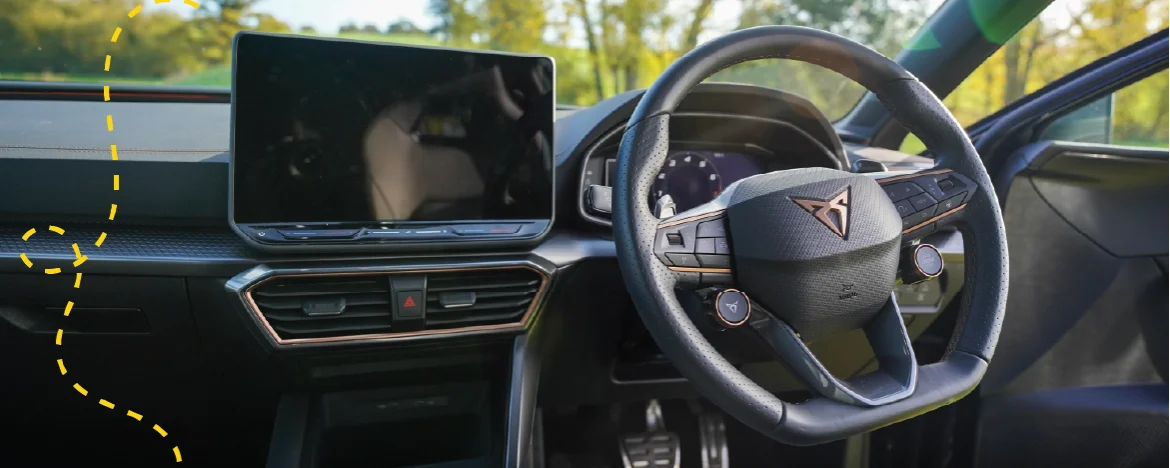
CUPRA Leon interior

CUPRA Leon interior

Step five: Place your order and take delivery

Once you’ve found a deal and had your finance application approved, the process moves quickly – especially if your deal is in stock.

Here’s what to expect from order to handover.

Placing your order

After approval, you’ll receive a customer order form outlining your vehicle details, contract term, and agreed monthly cost to sign and return.

You’ll also need to provide any further supporting documents, and pay a one-off arrangement fee. Once that’s done, your order is confirmed and your car is secured with the supplying dealership.

Your finance documents – the formal contract between you and the finance provider – will follow.

Read these carefully.

They set out the full terms of your agreement, including your mileage allowance and what happens if you need to exit early.

Before delivery

Make sure you have fully comprehensive insurance in place before your car arrives – this is your responsibility to sort.

Your Customer Experience Champion will liaise with you and the dealer to agree a delivery date. Lead times vary depending on the car and whether it’s a stock or factory order, so it’s worth checking at the point of order.

Delivery day

Your car will be delivered directly to your door by a driver from the supplying dealership.

You won’t get a specific time slot, but the driver should call when they’re around an hour away.

When the car arrives, don’t let the excitement of a new car on your driveway rush you through the inspection. This is your opportunity to flag any issues before you sign – anything not documented at this stage is difficult to dispute later.

Work through the following before you sign the delivery note:

  • Specification: Check the registration, engine size, fuel type, and trim level match your order
  • Exterior: Walk the full car and look for scratches, dents, scuffs, or paintwork issues
  • Windscreen and glass: Check for chips or cracks on all windows
  • Alloy wheels: Inspect for kerb damage or scuffs
  • Interior: Check seats, dashboard, carpets, and trim for any marks or damage
  • Lights and electrics: Test headlights, indicators, and infotainment
  • Charging cables: If you’ve ordered an EV, confirm the cables are present
  • Odometer: Take a photo on your phone for timestamped proof of delivery mileage

If you spot anything, write it down on the delivery note before you sign.

Delivery mileage accrued in transit won’t count towards your agreed allowance – your contracted mileage begins from the odometer reading at handover.

If you’re unsure, call us while the driver is still with you and we can help. 

Step six: Look after your car

Once your car is on your driveway, looking after it well throughout your lease protects you from unexpected charges when it’s time to hand it back.

Understand what’s expected

The British Vehicle Rental and Leasing Association (BVRLA) Fair Wear and Tear Guide sets the industry standard for the condition a lease car should be returned in – accounting for normal use over your lease term.

It covers everything from exterior paintwork and alloy wheels to interior upholstery and mechanical condition. Familiarise yourself with it early, so you know what’s acceptable and what’s not.

Keep on top of servicing

You’re responsible for maintaining the car while it’s in your possession – including any scheduled services and, if your lease runs beyond three years, an MOT.

Staying on top of servicing not only keeps the car running well, but it also minimises depreciation and reduces the risk of charges at the end of your contract. Make sure all services are carried out by an accredited outlet and properly recorded.

Consider a maintenance package

If you’d rather not think about maintenance costs separately, a maintenance package bolts them onto your lease deal with a second fixed monthly payment.

It typically covers scheduled servicing, tyre replacements due to fair wear and tear, MOTs, and consumables like wiper blades and brakes, as well as breakdown assistance.

It won’t cover bodywork damage, glass, or anything resulting from negligence, but for straightforward running costs it takes a lot of the admin off your plate.

Stay on top of condition throughout

Don’t leave a condition check until the end of your lease.

The BVRLA guidelines recommend assessing your car at least ten weeks before collection – giving you time to arrange any repairs before handover.

Any damage beyond fair wear and tear is likely to result in charges, and arranging repairs yourself ahead of collection will almost always be more cost-effective than the fees applied by the finance provider after the fact.

A thorough clean every few months, careful parking, and prompt attention to any issues will go a long way to keeping everything in order.

Step seven: Plan for the end of your lease

The end of your lease is one of its biggest advantages. 

No selling, no depreciation, no trade-in negotiations. Just hand the keys back and you’re done.

But a little planning ahead makes the whole process smoother.

Your finance provider will be in touch

You won’t need to chase anyone.

Your finance provider will contact you before your contract ends to arrange collection, and the car will be picked up from your home or work address.

As long as you’re within your mileage allowance and the car meets fair wear and tear standards, there’s nothing more to pay.

Have your paperwork ready

On collection day, you’ll want to have your full service history, all keys and key fobs, and a valid MOT certificate if the car is over three years old.

Make sure the car is empty of your personal belongings – while it’s easy enough to let life’s detritus build up over the lease term, it’ll be more hassle than it’s worth to try and get it back after the car has gone.

If you disagree with any charges

Read the report carefully before signing.

If you believe any charges are unfair, note your objections before you sign, not afterwards.

BVRLA members are obliged to offer an independent dispute process if needed.

Start thinking about your next lease early

It’s worth starting to think about your next car a few months before your lease ends.

Some vehicles have longer lead times, and giving yourself some breathing room means you can compare deals properly without the time pressure – and avoid any gap between cars.


Your first car lease doesn’t have to be daunting.

With the right preparation – a clear budget, an understanding of the process, and a little care throughout your contract – it’s one of the most straightforward ways to get behind the wheel of a new car.

And when the time comes to hand the keys back, you’ll already know exactly what to expect the next time around.

Ready to find your first lease?

Ryan Darby

Ryan Darby

Ryan takes the lead on all things 'wordy'. With a sports media background, a true passion for cars, and a LOT of driving experience under his belt, he'll make sure you have all the information you need, when you need it.