Why Chinese carmakers are taking the UK by storm

TL;DR: Which Chinese carmakers are worth knowing about?

More than you might think – and more than are on most people’s radars.

Brands like BYD, XPENG, JAECOO, and OMODA are already selling in the UK, with others set to follow. Chinese manufacturers built their edge by investing in electric vehicle (EV) technology, and they’re now bringing that advantage to market in the form of genuinely affordable, tech-forward cars.

Whether you’re in the market for an EV or just keeping an eye on where the industry is heading, Chinese carmakers are impossible to ignore.

China’s car industry has had one of the most remarkable turnarounds in automotive history

A country that was importing cars from Japan and the US as recently as the 1980s now has the largest automotive market in the world.

And it got there faster than almost anyone predicted.

The latest chapter in that story is electric vehicles. While established Western manufacturers debated whether EVs were a viable direction, China was already building them – backed by government investment, state-supported infrastructure, and a battery industry that had no equivalent elsewhere.

The result is a generation of Chinese cars that are competitive on price, technology, and electric range.

Some of those brands are already on UK roads.

BYD arrived in 2022, and has barely paused for breath since. JAECOO and OMODA launched in 2025 to a ready audience of drivers looking for well-specced SUVs at accessible prices. XPENG launched the G6 here in 2025 with a technology package that puts some established premium brands to shame.

And there are more on the way.

This guide covers who the main players are, how China built its automotive advantage, and why these brands deserve a place on your shortlist – whether you’re leasing your next car or trying to make sense of a rapidly changing market.
Dongfeng logo

Dongfeng branding

China’s automotive history

China’s route to the top of the global car market is one of the greatest underdog stories in the modern industry.

Though ‘underdog’ is a term that barely applies any more.

For much of the 20th century, private car ownership in China was almost non-existent. Domestic production was negligible, and what little existed was focused on commercial and state vehicles rather than passenger cars.

The second Sino-Japanese War and the Cultural Revolution effectively stalled any early ambitions to build a consumer motor industry from scratch.

But things began to shift in the 1980s.

Faced with a growing trade deficit driven by imported vehicles – largely from Japan and the US – China changed its approach. Rather than continuing to buy from abroad, it opened the door to joint ventures with major international manufacturers.

Volkswagen, American Motors Corporation, and others partnered with domestic players including SAIC, Dongfeng, and Changan, transferring technology and expertise in exchange for access to the Chinese market.

It was a deliberate, long-term strategy to build capability at home.

And it worked.

In the 1950s, China produced a few hundred cars a year. By 2001, China was manufacturing over two million annually. By 2008? It had the largest automotive industry in the world by volume.

And by the mid-2020s, it had overtaken every other country in terms of sales and ownership.

The joint ventures that once helped China catch up are now being renegotiated. This time, the Western manufacturers are seeking access to Chinese EV expertise rather than the other way around.

The dynamic has completely reversed.

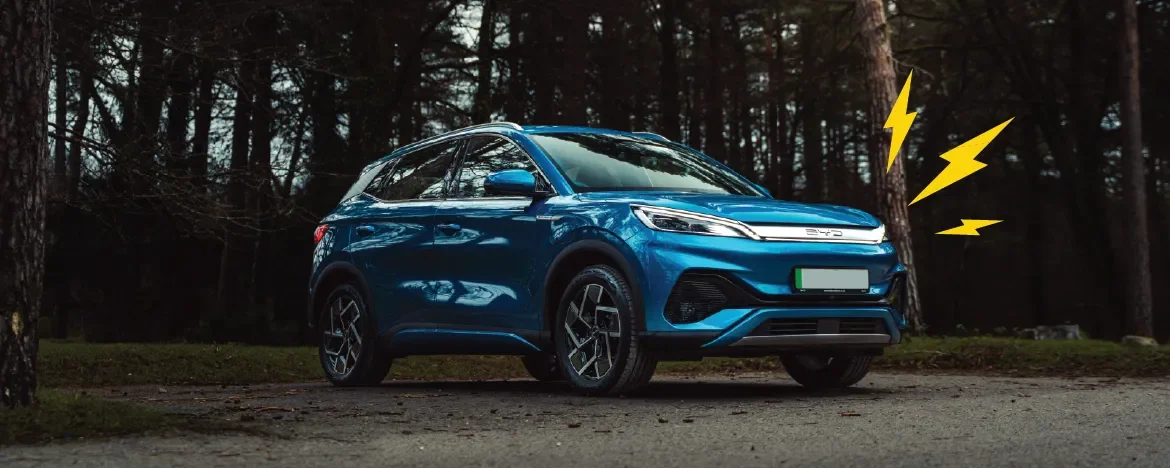
BYD ATTO 3 in wooded area

BYD ATTO 3

The EV advantage – why China got there first

The shift to electric vehicles didn’t catch China off guard. It was, in large part, something they helped engineer.

From the early 2010s, the Chinese government made EV adoption a national priority.

Subsidies for manufacturers and buyers, heavy state investment in battery research, and a rapid build-out of charging infrastructure created conditions that didn’t exist elsewhere. 

While European and American carmakers were still treating electrification as a long-term consideration, Chinese manufacturers were scaling production.

But the critical advantage?

Batteries.

Building an electric motor is a different engineering challenge to a combustion engine, and China had been developing battery expertise for years. 

BYD is the best example. The company started as a battery manufacturer in 1995, and when it pivoted to electric cars, it brought that deep technical foundation with it.

That head start is reflected in the quality and range of its current vehicles, and in the fact that BYD is now one of the largest EV manufacturers in the world.

The ripple effects are significant.

Manufacturers that once helped China build its automotive industry are now looking to Chinese firms for help with their own EV development. Ford, Renault, Stellantis, and Jaguar Land Rover have all entered new partnerships to access Chinese battery technology and manufacturing know-how.

The knowledge transfer that defined the joint venture era has changed direction.

There is a commercial dimension to this, too. Chinese manufacturers have managed to combine advanced EV tech with pricing that undercuts many established rivals – partly through lower manufacturing costs, partly through integration in the supply chain.

In a market where affordability is an increasingly important factor in EV adoption, that combination is difficult to compete with.

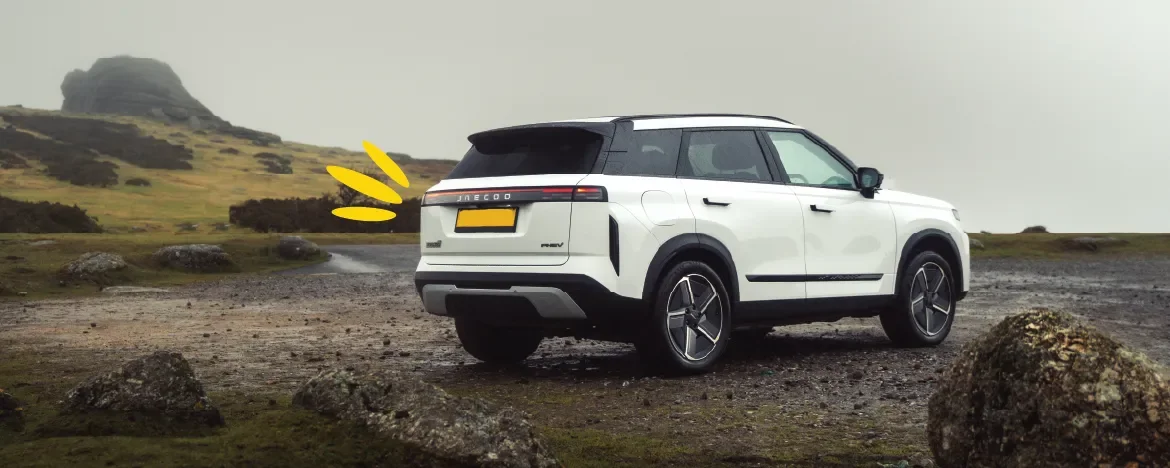
Jaecoo 7 on wet moorland

JAECOO 7

BYD and the big four

China’s automotive industry is dominated by four state-backed manufacturers – Dongfeng, FAW, Changan, and SAIC. So much so that between them, they account for a significant share of domestic production.

None of them are newcomers.

All four have been central to China’s automotive expansion since the joint venture era, and all four are now pushing into international markets with varying degrees of visibility in the UK.

SAIC is arguably already the most familiar to British drivers, but not under its own name.

MG – relaunched under SAIC ownership – has become one of the better-known EV brands on UK roads, with models like the MG4 EV establishing a strong foothold in the affordable electric car segment.

Maxus, also SAIC-owned, operates in the van and commercial vehicle space.

But the brand that has done the most to define perceptions of Chinese cars in export markets is BYD – and BYD sits outside the big four entirely.

Founded in Shenzhen in 1995 as a battery manufacturer, BYD made its move into passenger cars in 2003 and into EVs shortly after. Its UK arrival in 2022 brought three models – the ATTO 3, the DOLPHIN, and the SEAL – that were competitive on range, specification, and price in a way that surprised many.

The BYD ATTO 3 in particular drew favourable comparisons with established rivals.

Since its UK launch, BYD has continued to expand its lineup – adding plug-in hybrids to the mix – and shows no signs of slowing.

What BYD demonstrated is that Chinese manufacturers can compete with product, not just price. It shifted the conversation from ‘cheap alternative’ to ‘genuinely good contender’.

The new wave: Tech-first brands

Not every Chinese carmaker coming to market thinks of itself as a carmaker.

XPENG was founded in 2014 by a group of executives with backgrounds in technology rather than automotive manufacturing. From the off, it positioned itself as a tech company that just happens to make EVs.

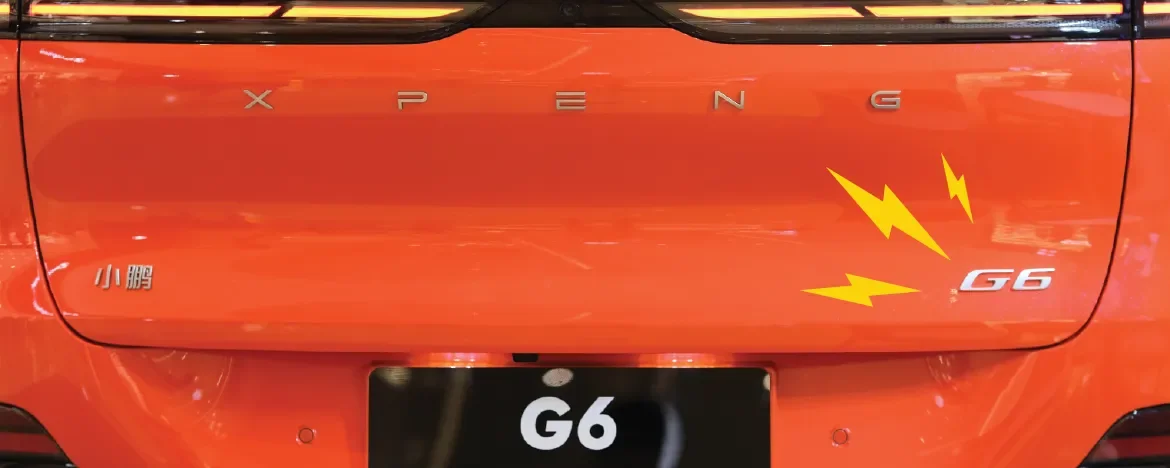
Its XPILOT driver assistance system, which features in the XPENG G6, uses a combination of lidar, radar, and cameras to deliver a level of autonomous capability that goes well beyond what most mainstream manufacturers offer as standard.

Leapmotor has a similar origin.

Founded in 2015 by the joint heads of a video surveillance technology company, it brings an engineering background rooted in image processing and AI rather than combustion engines.

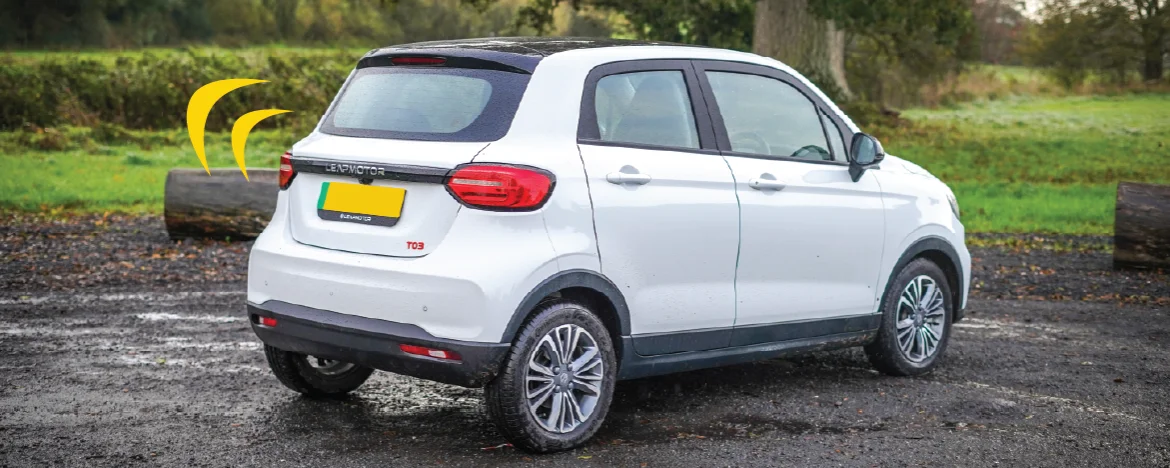
Its current focus includes integrating artificial intelligence across its vehicle lineup: The Leapmotor C10, Leapmotor B10, and Leapmotor T03.

What distinguishes these brands from the established Chinese brands is their starting point. They didn’t retool existing manufacturing lines or adapt combustion engines for electrification.

They were designed as software-led businesses from day one – which gives them a structural advantage in a segment where over-the-air updates, driver assistance systems, and onboard technology are increasingly the basis on which people make decisions.

Close up of XPENG G6 rear

XPENG G6

Which Chinese brands sell cars in the UK?

The list is longer than most people expect – and it extends well beyond the brands wearing Chinese badges.

The most visible recent arrivals are BYD, XPENG, JAECOO, and OMODA.

BYD has been here since 2022 and now offers several models across the electric and plug-in hybrid saloon, hatchback, and SUV segments.

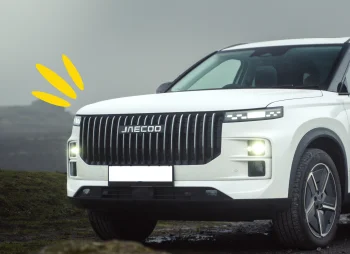
JAECOO and OMODA – both established by Chery, one of China’s largest independent manufacturers – have quickly built a presence in the UK SUV market. The JAECOO 7 has fast become one of the UK’s favourite cars, and is the third best-selling model this year so far.

And, more recently, Chery have launched three SUVs under their own name, the Chery Tiggo 7, Tiggo 8, and Tiggo 9.

XPENG launched with the G6, and is tackling the more premium, technology-led end of the Chinese import market.

Beyond those names – and trust us, they’re good ones – there are plenty of other Chinese cars making names for themselves, with or without a Chinese badge.

MG remains a British marque by heritage, but has been owned by SAIC since 2011, and its vehicles are designed and manufactured in China. 

Lotus and Volvo are both owned by Geely, the Hangzhou-based conglomerate that has recently launched a car under its own badge, the Geely EX5.

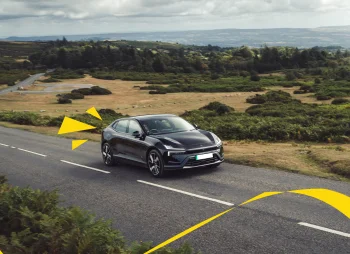
Even Polestar, which is Swedish in identity, is majority Geely-owned, and is manufactured in China.

Changan and Leapmotor have also entered the fray in recent months, Changan with the Deepal S07, and Leapmotor with the B10, C10, and T03.

For anyone leasing or buying a car in the UK, Chinese manufacturing is a big part of the 2026 landscape.

Leapmotor T03

Leapmotor T03

Why Chinese cars deserve your attention

The case for considering a Chinese car has strengthened considerably in a short space of time.

And there’s more to it than just price.

On electric range and battery technology, Chinese manufacturers have a lead that took years to build. The combination of in-house battery development, supply chain integration, and an early advantage in EV infrastructure means Chinese EVs consistently deliver competitive real-world range.

On technology, the newer brands are setting a standard that’s forcing other manufacturers to scramble to compete.

Driver assistance systems, onboard software, over-the-air update capability, and connectivity features that would be optional extras elsewhere frequently come as standard.

And on value, the numbers are straightforward.

Several Chinese models sit below the £40,000 Expensive Car Supplement (or ‘luxury car tax’) threshold – including the JAECOO 7, OMODA 5, Geely EX5, and BYD ATTO 3 – while offering spec levels that compare with pricier alternatives.

It’s worth noting that for zero-emission (i.e., electric) cars first registered after April 2025, the government announced an increase to this threshold from £40,000 to £50,000. This came into effect in April this year, and means EV buyers whose car has a list price below £50,000 will no longer face the additional VED charge.

A change that benefits many Chinese EVs sitting in that price bracket, including BYD, XPENG, and Changan models.

However, none of this means Chinese cars are the right choice for every driver.

Brand familiarity, residual values, and the maturity of UK dealer and service networks are still considerations, and ones that will evolve as the Chinese brands establish longer track records here.

But the notion that Chinese cars are just a compromise for the price?

That’s an idea that’s long gone.

For drivers approaching a lease decision with an open mind, they deserve a place on the shortlist.

Thinking about switching to an EV?

FAQs

Which Chinese car brands are available in the UK?

Several Chinese manufacturers are now selling in the UK, either under their own name or through subsidiaries.

BYD, XPENG, JAECOO, Changan, and OMODA are among the most prominent recent arrivals.

MG and Maxus are both owned by SAIC, one of China’s largest state-backed manufacturers. Lotus, Volvo, and Polestar are all owned by Geely.

The number of Chinese brands with a UK presence is growing, and the list is likely to look different again within the next few years.

Are Chinese cars any good?

The short answer is yes.

The longer answer is that the gap between Chinese cars, both electric and plug-in hybrid, and their rivals has closed faster than most industry observers expected. Models like the BYD ATTO 3, JAECOO 7, and XPENG G6 have all received broadly positive reviews.

The JAECOO 7 in particular has become a firm UK favourite, rising through the ranks to become the third best-selling car in 2026.

As with any manufacturer, individual models vary – but the assumption that Chinese cars are just a cheap compromise is fast becoming outdated.

Why are Chinese electric cars so affordable?

Chinese manufacturers benefit from the sort of integration most Western manufacturers can’t match.

BYD, for example, produces its own battery cells, which removes one of the most significant cost variables in EV manufacturing.

Combined with lower labour costs, scaled domestic production, and years of government-backed investment in EV infrastructure, Chinese manufacturers can bring cars to market at prices that established rivals have found difficult to compete with.

Chloe Allen

Chloe Allen

Our Digital Marketing Executive Chloe is in charge of our e-newsletter. There's no one better placed to inform and delight you every month, so keep your eyes peeled for her newsletter hitting an email inbox near you soon.