New Euro NCAP rules favouring tactile controls could mean a rethink for modern car design

TL;DR: What do the new Euro NCAP rules mean? 

Euro NCAP — the independent body that sets the safety benchmark for new cars across Europe — has just launched its biggest overhaul in 15 years. The new rules assess how easy a car's controls are to use while driving, which means manufacturers chasing a five-star rating will need to rethink their reliance on touchscreens. 

Physical buttons, climate dials and tactile controls could all be making a comeback, with Volkswagen, Mercedes-Benz and Hyundai already confirming changes — and new scores landing as early as July 2026.

Good news for anyone who misses the feel of a button in their cabin: Physical controls could be making a swift return to the modern car.

From 2026, the European New Car Assessment Programme (Euro NCAP) have revised their safety rating system in the biggest overhaul since 2009 – and some of these new changes are a direct response to consumer feedback.

Your frustration with the lack of tactile controls in recent years? It’s been heard. And more than that, it’s been completely taken on board by the one organisation that has a chance of rewriting the motor design playbook.

Because when Euro NCAP sets its sights on something, you can bet the motor industry sits up and takes notice.

So, what does the restructure mean for the future of car design?

We’ve been through the new methodology with a fine-tooth comb, so you don’t have to.

Let’s break down exactly what the new changes mean, and how soon we could see them taking effect.
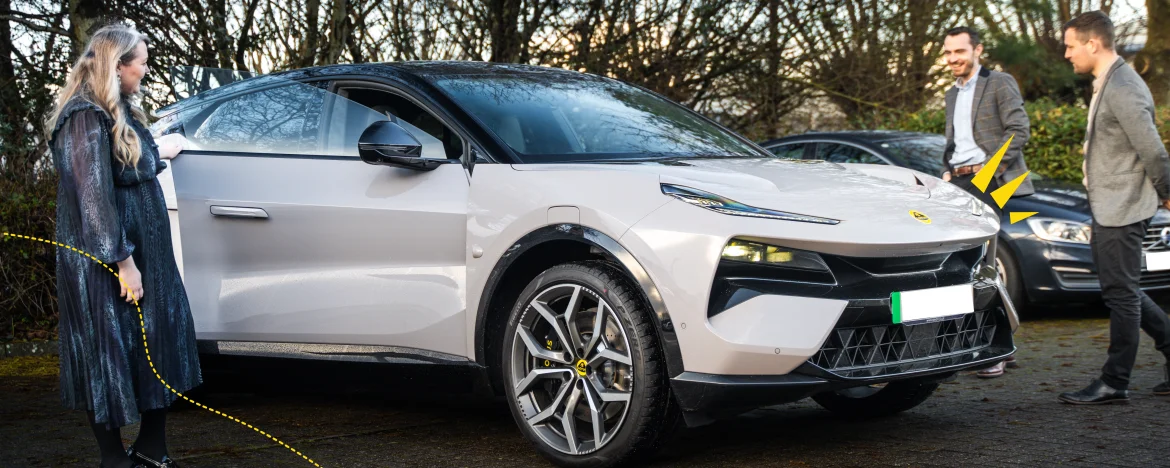
Carparison leadership inspecting a new Lotus Eletre

Car safety assessments have a new methodology

Who are Euro NCAP?

Picture this: It’s 1996 and Wannabe is unironically playing on every radio station as the Spice Girls rocket to stardom. Princess Diana is living it large as the world’s most glamorous – and photographed – divorcee.

Future global superstar Zendaya is born.

But bubbling away under all that is growing public concern about the safety of brand-new cars.

In 1996, technology was developing so rapidly that safety regulations just couldn’t keep pace with it, or with the real-life risks faced by drivers, passengers and all other road users.

It turns out Zendaya wasn’t the only superstar born that year; it’s also the year the European New Car Assessment Programme came into being.

Its mission? To set the standard for modern vehicle safety through vigorous testing – across all areas of car safety, and across all vehicle segments. All to help customers make informed choices when the time comes to select a new car.

After thirty long years of rigorous testing, today the Euro NCAP rating is a safety benchmark that’s trusted worldwide.

Not just for consumers.

But for carmakers too. 

When Euro NCAP integrated Autonomous Emergency Braking (AEB) for pedestrians and cyclists into the core five-star rating back in 2016, carmakers were forced to standardise advanced sensors and pedestrian-friendly designs.

It turned pedestrian safety into a central pillar of automotive design. And it compelled manufacturers to innovate, rather than settling for the minimum legal standards.

If that’s not superstar power, what is?

Why has Euro NCAP changed the rules? 

History is a funny thing: It repeats itself.

And in 2026, we find ourselves in much the same position we were 30 years ago. Dealing with tech advancements that are genuinely exciting, but also increasingly complex and interconnected.

We’ve seen some cracking new features in new cars recently; a fatigue detector that literally tells you to have a nap, AI driving assistants that make you feel more connected than ever, and an HD rearview camera that replaces the entire rear windscreen on the Polestar 4, just to name a few.

The possibilities truly feel endless. But something we’ve discovered during our many test drives is that some of these new tech developments work better in theory than real world application.

Like the infotainment screen controlling literally everything from your aircon settings to to your hazard warning lights.

Excitingly futuristic, but perhaps a tad impractical in practice when you’ve blown a tyre on the motorway and really really need to quickly put your hazards on.

This is where Euro NCAP’s overhaul is so crucial. It’s not just the vehicle testing and scoring procedures which are updating, it’s the methodology underpinning the entire rating system itself.

The new approach tests safety technologies by four stages, while still making space to evaluate solutions that aren’t limited to one area of safety:

  • Safe driving - Considers the tech and features assisting with a safer driving experience, including ease of access to essential controls
  • Crash avoidance - Assesses the crash avoidance systems that help prevent critical incidents through warning and autonomous intervention
  • Crash protection - Performance of traditional crash protection elements like vehicle structure, seatbelts, airbags, head restraints etc.
  • Post-crash safety - Looks at the 'golden hour' of emergency response through post-crash rescue information and assistance systems

In keeping with the rapid pace of advancement, these test protocols will be reviewed and updated every three years.

But the fact that this change is happening in the first place? It’s partially in response to consumer feedback. Stage one (safe driving) is addressing concerns about increasingly intrusive driver assistance systems and the loss of tactile controls.

And it could have a real trickle-down effect for manufacturers around the globe, as they rethink exactly what they need to do to get a five-star rating.

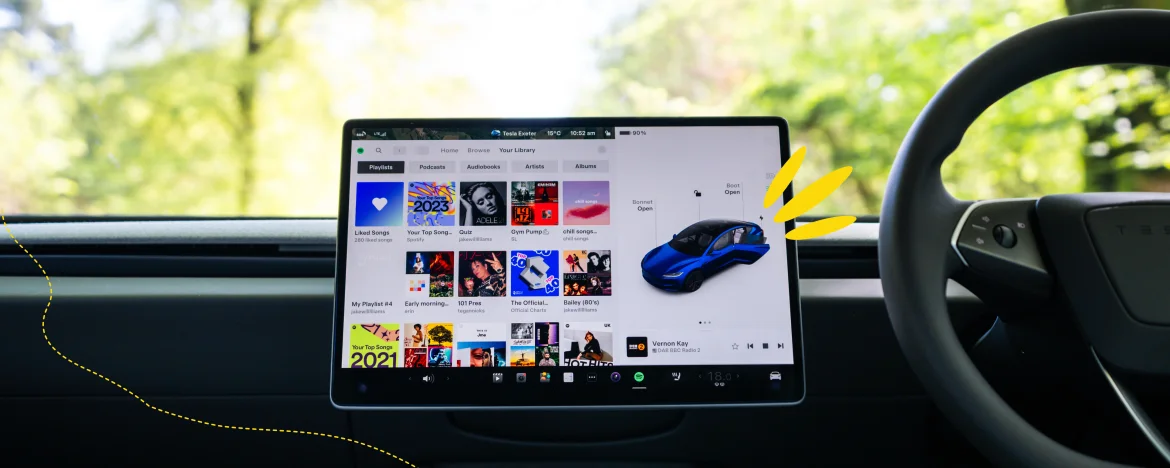
Tesla Model 3 interior with yellow accents

Tesla helped popularise fully digital controls

When will the new scores become available?

The good news? You won’t have to wait a whole year.

Euro NCAP tends to publish new scores periodically throughout the year, so you could start seeing the latest results using the new methodology as early as July 2026.

It’s the annual reports like the ‘Best in Class’ and ‘In Review' that will come later, giving a broader overview of the market to consumers.

What does the new Euro NCAP protocol mean for car design?

The button debate

You’ve probably noticed fewer and fewer physical buttons in brand-new cars – and how it’s happened right around the time the infotainment screen has become a staple feature.

If you’ve read any of our recent test drive reviews, you’ll have noticed the buzzword when it comes to the interior is definitely ‘minimalist’.

We’ve got fewer buttons and tactile controls, with a lot of functionality now going through the touchscreen instead. And feedback has been mixed.

On one hand, the tech advancement is genuinely exciting. Cars are better equipped and more cutting-edge than they’ve ever been before.

On the other, some find the growing dependence on screen-related functionality distracting. Though the design varies across the market, in some models the infotainment screen is essentially just a big iPad sitting in the middle of the dashboard.

And having to scroll through menu after submenu for something as basic as demisting your windscreen?

It’s not just annoying. It’s genuinely distracting drivers from what matters most: Paying attention to what’s happening on the road.

That’s where the new protocols come in.

The Safe Driving category includes new assessments of human-machine interface, evaluating the placement, clarity, and ease of use of essential controls.

In short: Euro NCAP is looking at how easy it is to use these controls when you’re actually driving.

Under the new rules, cars that rely solely on touchscreens for essential controls will struggle to achieve a five-star safety rating. Which makes the consensus clear. Cars that have readily accessible controls are the safest to drive.

And we predict that’s going to have a big impact on how car manufacturers design things in the near future.

While a few outliers have caught our attention recently – the Suzuki e Vitara for one – most of the new cars we’ve test driven in the last year have sported the minimalist look made popular by big brands like Volvo and Tesla.

But this new approach by Euro NCAP could see that minimalist design go out the window as manufacturers chase top scores.

In practice that could mean the return of: 

  • Physical climate controls: Including fan speed and temperature dials, and aircon buttons
  • Defogger/defroster buttons: These critical safety features that should be quickly accessible
  • Audio controls: Volume knobs, tuning dials, and radio preset buttons
  • Driving controls: Turn signal and windscreen wiper stalks, hazard buttons, and (possibly) physical handbrakes

And that's just the potential of assessment phase one. 


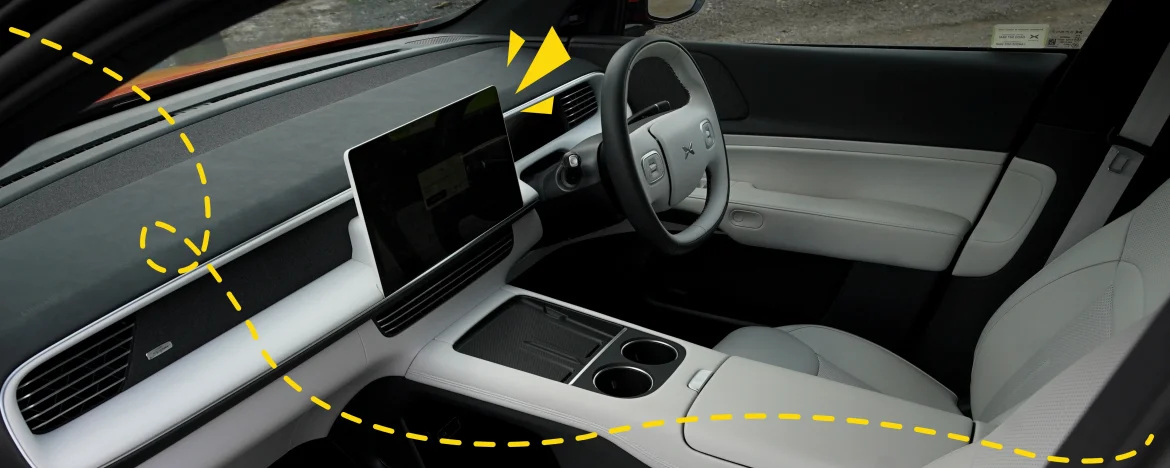
XPENG G6 interior with yellow accents

Cars that lack physical controls will have to work harder for top safety ratings

What about flush door handles? 

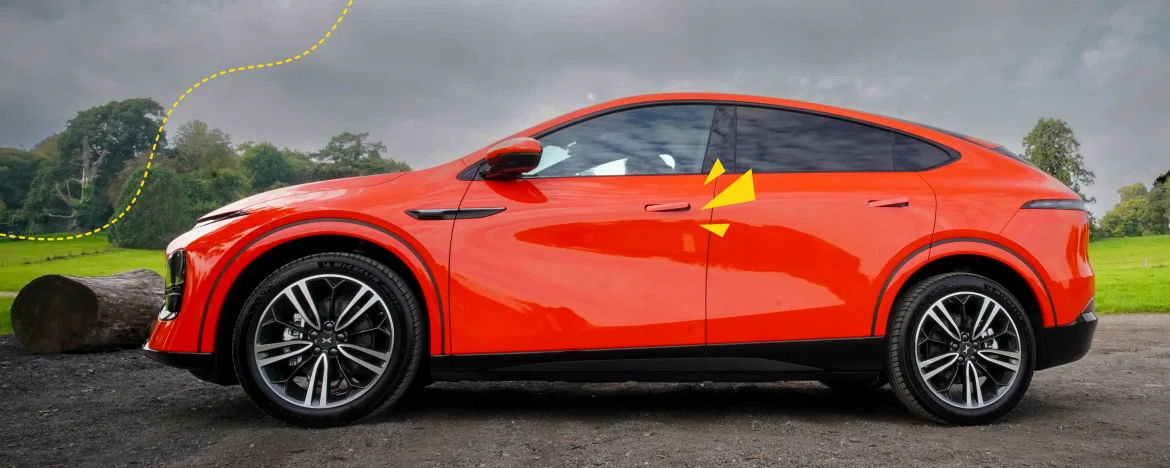
Assessment phase four – post-crash safety – has implications of its own. Specifically, for the flush or ‘pop-out’ electric door handles that’s basically synonymous with electric vehicle (EV) design.

Popularised by the Tesla Model Y and Model 3, it’s a design cue that’s really taken off, with flush door handles featuring on a wide range of models, including the Hyundai IONIQ 6, the Changan Deepal S07, and the XPENG G6

And with good reason: They look really sleek, they improve aerodynamics by reducing drag, and they’ve become a design staple that makes a statement. It’s a visual shorthand for customers that says Buy me, I’m the shiny new thing on the market.

But Euro NCAP says these types of handles need a rethink when it comes to post-crash safety. While these door handles look and feel really sophisticated, carmakers need to plan better for situations where power to the handle is lost after a collision.

And this demand isn’t exclusive to Europe. China has just passed a groundbreaking ban on use of these press-to-release electronic door handles if a mechanical backup isn’t included with it.

The handles themselves aren’t banned outright, but manufacturers must make sure a mechanical release is also available inside and outside the door, from 1st January 2027.

Given how big the Chinese foothold is growing in the global car market, we anticipate we’ll be seeing the ripple effect play out in brands like BYD, XPENG, Chery, Geely and Changan.

And the carmakers trying to keep up? We think they’ll follow suit to stay relevant.

Pop-out handles won’t disappear. But between Euro NCAP’s assessments and China’s new ban, they’ll definitely get some welcome refinement.

XPENG G6 exterior with yellow accents

Electronic 'flush' door handles are a popular EV design cue

What the new rules mean for you

Car lease coming to an end?

Or perhaps you’re thinking of dipping your toe in these waters for the first time. Either way, if you’ve a need for a new motor in the near future, there’s no need to worry.

The scores given by Euro NCAP are generally valid for up to six years. And these ratings don’t expire because the car becomes less safe, but to show that safety standards have moved on since the original test.

So, a car that got a five-star rating last year? It’s still a really good choice for your next car lease.

And between facelifts and new generations of their existing models, carmakers are always making updates to their lineup. Car leasing gives you access to these updates every two, three, or four years: You’ll never be far behind any changes that come about because of new safety regulations.

If in doubt, you can check the equipment and specification of any car you like on the manufacturer’s website. And if research is important to you, why not take it a step further by visiting a showroom and test driving any motor you’ve shortlisted for your next car lease?

There’s no better way to test out the cabin – and the digital interface – than by literally getting into the driver’s seat.

You’ll know very quickly if it’s the one, or if you need to keep looking.

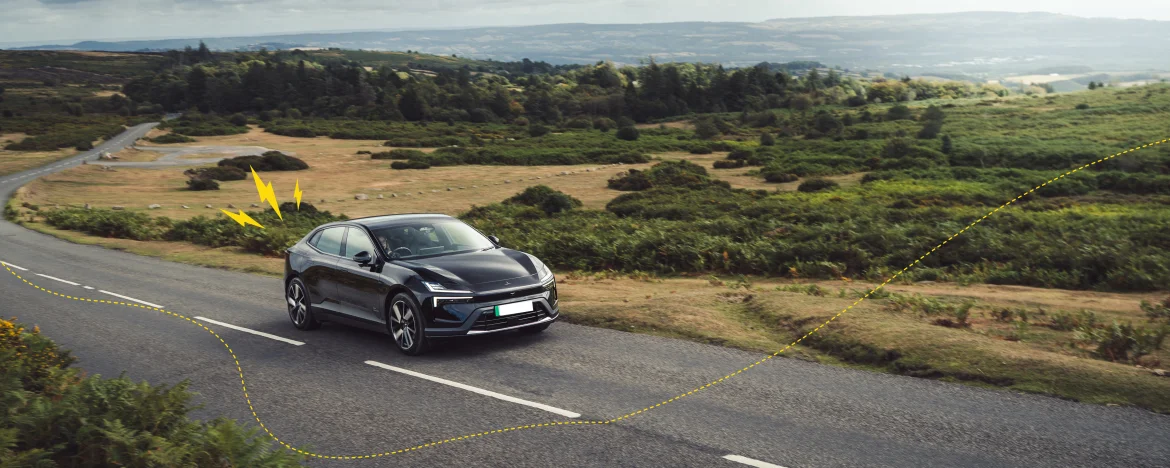
Polestar 4 on the road with yellow accents

The Polestar 4 achieved a five-star safety rating in 2025

A roundabout turn: The carmakers bringing buttons back

We're living in an increasingly digital world — and it makes complete sense that our cars are keeping pace.

But the best innovations are all about balance: Taking a genuinely exciting idea, and making it work in real life.

And that’s exactly what the new Euro NCAP rules aim to do.

It’s not about making things go backwards, or uninventing the wheel. It’s about finding the right balance between cutting-edge tech, and how manufacturers should apply it in real world driving.

Because there’s absolutely a place for things like Leapmotor’s AI driving assistant, and Polestar’s groundbreaking HD rearview camera. There’s also, clearly, still a place for analogue features like indicator stalks, hazard buttons, and gear selectors.

Even, it seems, for mechanical door releases.

Euro NCAP’s new rules only came into effect a few months ago, but manufacturers are already making changes, with the following carmakers already indicating a return to physical controls: 

  • Volkswagen - Has confirmed physical controls for audio, climate, fan, seat heat and hazards will appear in all future models
  • Mercedes-Benz - Remains committed to infotainment screens, but will bring back physical controls for key functions
  • Hyundai - Expected to return to buttons for the Santa Fe and IONIQ 9
  • MG - The revamped MG4 now features physical knobs for climate control, and a volume dial
  • Nissan - The new Micra and Leaf both combine physical controls with a screen-based interface

Keep an eye on our test-drive reviews in the coming year or so, and we bet you’ll start seeing cabins that balance the proper controls we all want with the digital interfaces that carmakers love.

Miss the days before digital?

Chloe Allen

Chloe Allen

Our Digital Marketing Executive Chloe is in charge of our e-newsletter. There's no one better placed to inform and delight you every month, so keep your eyes peeled for her newsletter hitting an email inbox near you soon.