Join us as we take a closer look at the Tesla Model 3, but is it really Britain’s best car to own?

The Tesla Model 3 made electric vehicles (EVs) mainstream.

It made them attainable and usable, with a decent range to boot.

And Tesla’s efforts have paid off. The Model 3 was crowned Britain’s best car to own in the Driver Power 2026 survey. It was also the UK’s second best-selling EV in 2025, behind only its larger sibling, the Model Y.

It arrived in the UK in 2019 and was facelifted in 2024, with a focus on build quality, refinement and efficiency. It now offers up to 466 miles of range (WLTP Comb), and the new entry-level RWD makes it more affordable than ever, coming in under the Expensive Car Supplement.

But the landscape is changing. Globally, newer brands are climbing the sales charts, with BYD leading the charge, and Chinese rivals keep arriving with more kit for the money.

So how does the Model 3 hold up? Its drivers clearly love it, but will they be tempted elsewhere?

We first got behind the wheel of the Model 3 Performance back in 2020, so we’ve revisited it to see what’s changed and whether it still deserves that crown.

Let’s take a look.
What we drove?

  • Model: Performance Dual Motor All-Wheel Drive
  • Acceleration: 0-62mph in 3.2 seconds
  • Range: Up to 466 miles (WLTP Comb)
    • Our model: Up to 329 miles (WLTP Comb)
  • Colour: Pearl White Paint
  • Interior: All Black Premium
  • Wheels: 20" Silver Performance Wheels 

Specifications correct at the time of publication.

Or watch our video review over on YouTube:

Tesla Model 3 side profile

Familiar, sharp lines

Familiar face, sharper edges

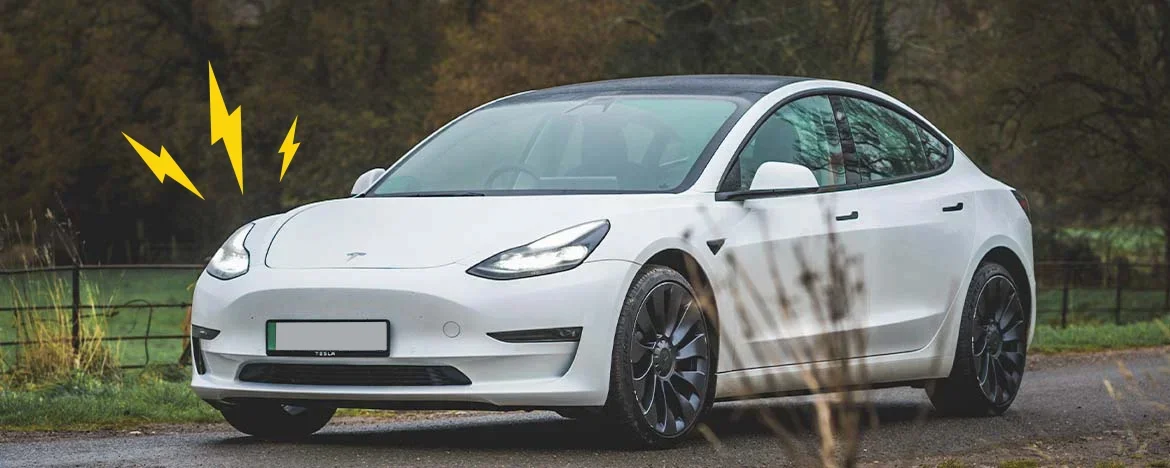
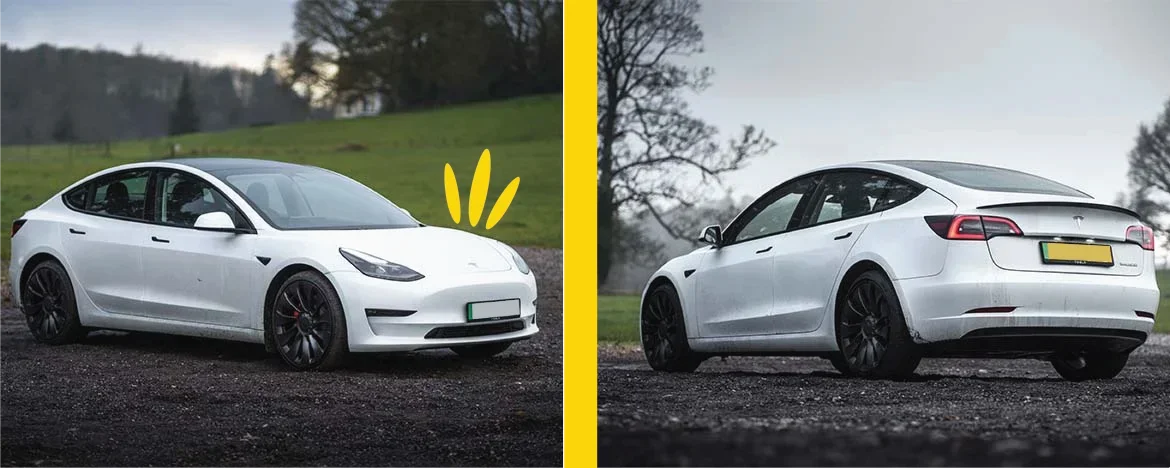
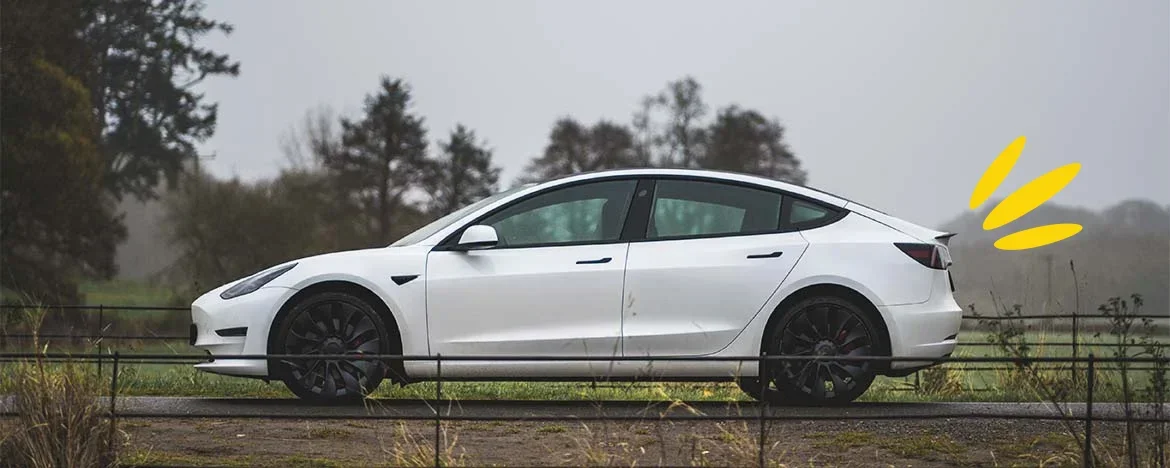
Our Model 3 came in Pearl White on 20-inch silver Performance wheels. And back then, we couldn’t shake the feeling there was a hint of Ford Fiesta about the face (just us?).

Fast forward to today, and the Tesla Model 3 is a familiar sight on UK roads. It no longer turns heads; it blends into the crowd.

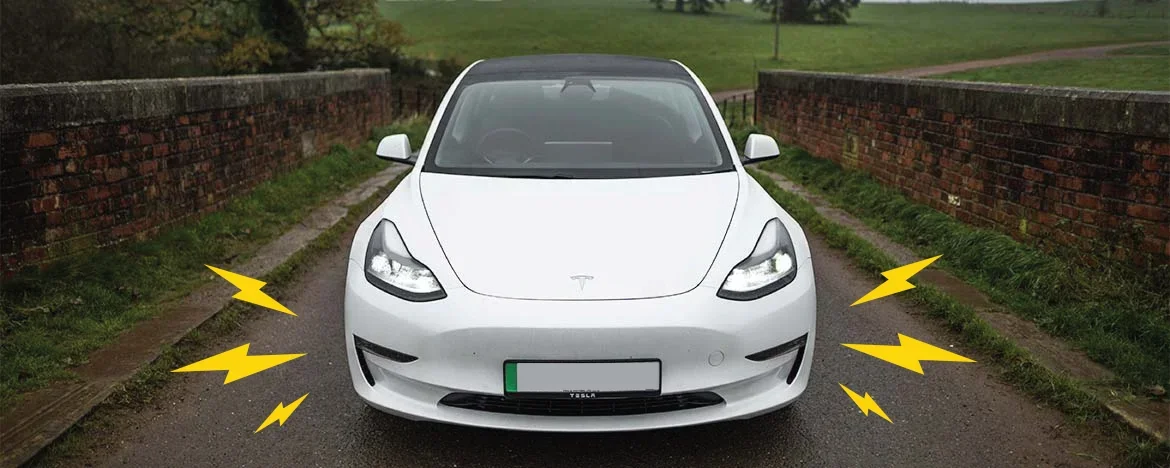
The 2024 facelift sharpened things up with a sleeker front end, slimmer headlights and C-shaped tail lights. Goodbye, Fiesta.

But the overall shape has barely changed. This is evolution, not revolution.

The sloping roofline, flush door handles and clean lines are all undeniably Tesla. Together, they add up to a sleek, minimalist and aerodynamic silhouette.

Not everyone’s sold, mind.

Exterior styling is the Model 3’s lowest score in the Driver Power survey (34th). It’s the car’s Achilles’ heel, according to the people who own it.

Tesla Model 3 interior

Minimalist's heaven

Minimalism taken to the max

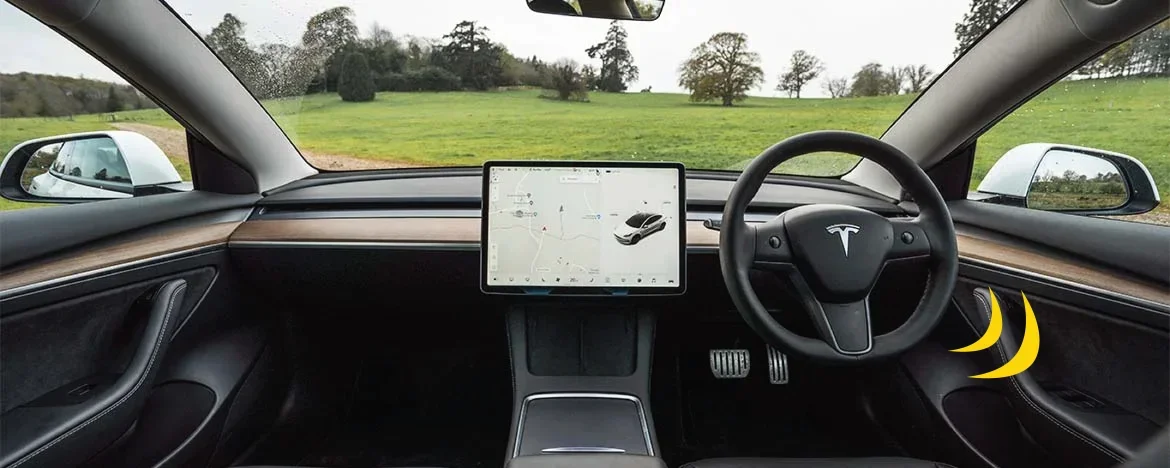
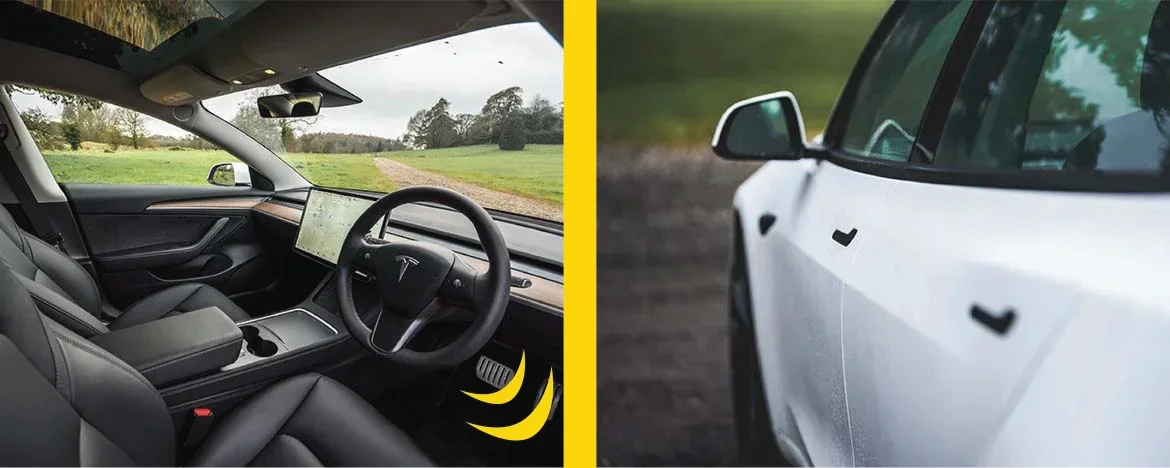
Step inside, and the Tesla Model 3 is a minimalist’s heaven.

Our 2020 car felt a step behind its German rivals on quality, but it still felt premium in its own right.

That’s clearly something Tesla has worked on. Since the facelift, owners rate its quality fifth in Driver Power, up from last place in previous years. A huge turnaround.

The 15.4-inch touchscreen controls almost everything: Mirrors, steering wheel position, the glovebox, and even seat adjustment on the RWD. There’s no driver’s display either, so your speed and driving info sit in a corner of the main screen.

Having to glance away to check your speed takes some getting used to.

So few physical controls can make things fiddly on the move, but voice control saves the day. You can do a lot just by asking, without taking your eyes off the road.

And when we say almost no physical controls, we mean it. The hazard switch lives up by the rear-view mirror, and there’s no physical button to open the glovebox.

There’s no Apple CarPlay or Android Auto either. That’s because Tesla built its own system, and it has everything you need. Owners rated the infotainment second in Driver Power, so it’s clearly doing something right. You can even watch Netflix or play games while you’re parked up or charging.

A glass roof comes as standard, keeping the cabin light and airy. Two wireless charging pads mean no squabbling over who gets to top up.

Easy entry is a clever touch too. It moves the seat and steering wheel automatically as you get in and out, which is great news for shorter drivers.

The entry-level RWD makes a few cuts: Part-fabric seats, no rear screen, no ambient lighting and uncovered cupholders. They’re smart places to save, though, because you don’t lose any of the Model 3’s key strengths.

Step up to Premium and you’ll get an 8-inch rear screen, heated rear seats, ambient lighting and an upgraded sound system.

In the back, a flat floor means three adults can sit side by side. The rear seats are set low, though, so under-thigh support is limited on longer journeys, and the ISOFIX points are awkward to reach.

Tesla Model 3 boot

Plenty of space

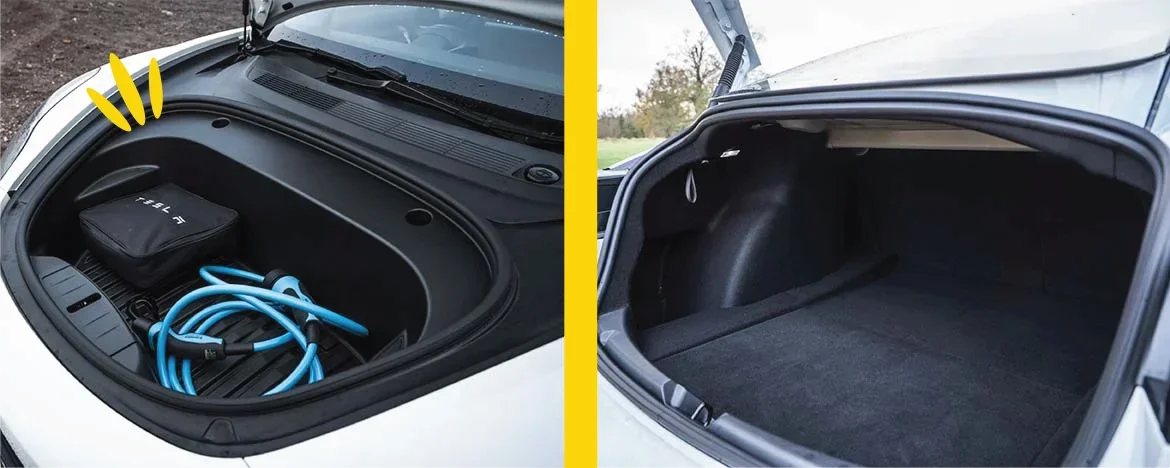
The boot is a real highlight. At 594 litres, it’s bigger than both the BYD SEAL (485 litres) and the Mercedes-Benz CLA (405 litres), plus there’s an 88-litre frunk under the bonnet.

The narrow saloon opening does make bulky items trickier to load, mind.

Tesla Model 3 driving

A smooth drive

Smooth? Owners say perfect

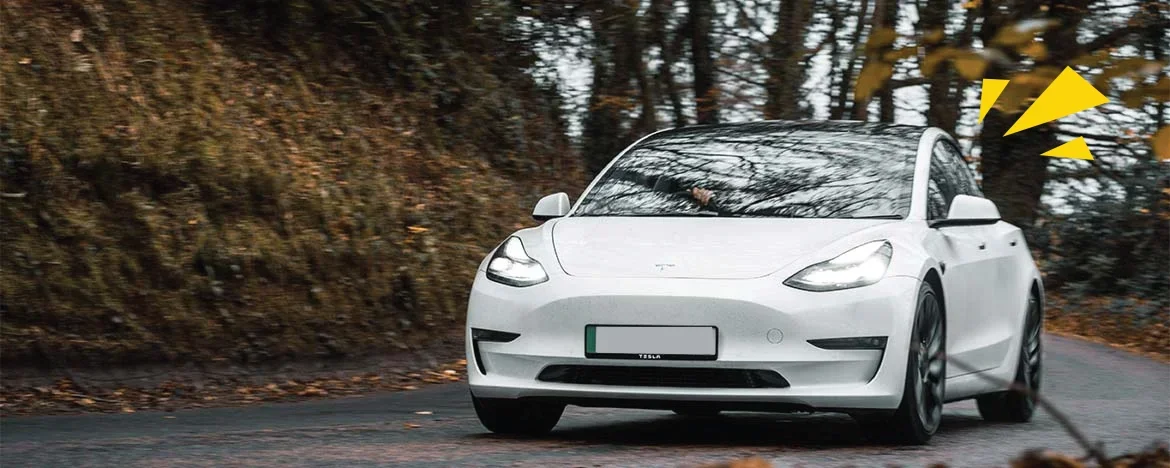
Put your foot down in the Tesla Model 3 Performance, and it’s seriously impressive. Eerily quiet, no lag, just instant power.

Overtaking is a breeze. The quick steering and sharp handling make it one of the best-driving EVs you can lease.

And it’s not just us. Driver Power owners gave its drivetrain smoothness a perfect 100%, the only perfect score in the entire survey. They also rated it first for acceleration and second for driving pleasure.

Today’s Performance is even quicker. It sprints from 0-62mph in 2.9 seconds, tops out at 163mph and gets adaptive suspension, making it the most fun Model 3 yet.

Some controls have moved since our drive.

The indicators went to haptic buttons on the steering wheel before Tesla brought back a physical stalk. And the Mercedes-style gear stalk we had is gone entirely: You now swipe the edge of the screen to select drive or reverse.

It’s not the most intuitive at first, but it soon becomes second nature.

The facelift also added acoustic glass and extra insulation, with Tesla claiming 30% less wind noise. Tyre noise is still noticeable on the motorway, though.

If you opt for the RWD, its cheaper dampers can make it jiggly over potholes and rough town roads.

The brake pedal is on the soft side too. Owners agree, rating brake responsiveness only 31st in Driver Power. Thankfully, the strong regenerative braking means you rarely need the physical brakes at all.

Chill mode softens the throttle response, which is handy when roads turn slippery in the winter months.

There’s even a built-in dashcam, which uses the cameras already fitted to the car.

Tesla Model 3 driving

Can it go the distance?

Going the distance? Easily

The Tesla Model 3 RWD offers up to 332 miles of range (WLTP Comb). The Long Range RWD stretches that to a whopping 466 miles (WLTP Comb), while the Performance manages up to 354 miles (WLTP Comb).

Efficiency is its superpower. The RWD returns 4.78 miles per kWh, which is class-leading and makes it the most efficient Tesla on sale.

In the real world, Auto Express managed 264 miles in the RWD on a mixed route of rural roads and motorways. Even in cold weather, the Long Range AWD still achieved around 300 miles.

Owners back it up too, giving it the highest range score of any EV in Driver Power.

One owner, district nurse Charlotte, typically gets around 270 miles per charge and covers up to 200 miles in a single night. She doesn’t even have a home charger, relying on a 50kW public charger nearby. Proof the Model 3 works without a wallbox.

When it’s time to top up, the RWD charges at up to 175kW, while the rest of the range takes up to 250kW. Either way, 10-80% takes under 30 minutes, and the RWD can add over 160 miles in just 15 minutes.

The Supercharger network makes life even easier. Payment is handled through the car, and the battery preconditions automatically when you set a Supercharger as your destination, so it’s ready to charge as quickly as possible.

At home, a 7.4kW wallbox fully charges the RWD in around nine hours, and the Long Range in just under 13. Plug in overnight, wake up to a full battery.

Company car drivers benefit from the lowest Benefit in Kind (BiK) rate thanks to its zero-emission status. And the RWD sits below the £50,000 expensive car supplement threshold.

Interior and exterior details of Tesla Model 3

How safe is it?

Safety and warranties

The Tesla Model 3 scored the full five stars when Euro NCAP retested it in 2025:

  • Adult occupant: 90%
  • Child occupant: 93%
  • Vulnerable road users: 89%
  • Safety assist: 87%

Our 2020 car carried the original 2019 five-star rating, which has since expired. So it’s reassuring to see it still hitting top marks under today’s tougher testing.

Blind-spot warning, lane departure avoidance, the built-in dashcam and Sentry Mode all come as standard. Full Self-Driving is available via subscription, but UK regulations limit what it can actually do.

Tesla backs the Model 3 with a four-year, 60,000-mile warranty, which comfortably covers a typical lease term.

The battery and drive unit get their own cover: Eight years or 100,000 miles on the RWD, and eight years or 120,000 miles on the Long Range and Performance. Tesla also guarantees the battery will keep at least 70% of its capacity over that period.

On top of that, there’s five years of cover for the seat belts and airbags, plus a 12-year, unlimited-mileage warranty against rust.

Reliability worries are largely a thing of the past too. Owners rate it third for reliability in Driver Power, and first overall for Quality and Reliability and Safety Features.

Tesla Model 3 parked up

Pros and cons

What’s good, and what’s not

The good bits

  • Up to 466 miles of range (WLTP Comb)
  • Crowned Britain’s best car to own (Driver Power 2026)
  • Class-leading efficiency and Supercharger network access
  • 594-litre boot plus 88-litre frunk
  • Five-star Euro NCAP rating (2025)
  • Silky-smooth powertrain, rated a perfect 100% by owners

The not-so-good bits

  • No Apple CarPlay or Android Auto
  • Most controls buried in the touchscreen, hazard switch included
  • Firm, jiggly ride on the RWD
  • Soft, unresponsive brake pedal
  • Narrow boot opening
Tesla Model 3 side angle

What's the verdict on the Tesla Model 3?

What’s the verdict?

So, is the Tesla Model 3 really Britain’s best car to own? Owners say yes, and it’s easy to see why.

It’s still the benchmark for range, efficiency, charging and tech. And the facelift fixed our biggest gripe from 2020: Build quality. Owners agree, lifting it from last to fifth for quality.

Rivals have caught up in places. The BMW i3 and Mercedes CLA Electric offer more comfort and plusher interiors, and Chinese brands keep piling on the kit.

But with the new RWD undercutting the likes of the BYD SEAL, the lure of cheaper rivals isn’t quite what it was. And the RWD is arguably the sweet spot for value.

No longer untouchable, but still very hard to beat.

Five reasons to lease the Tesla Model 3:

  1. Over-the-air updates mean the car improves during your lease rather than ageing
  2. Up to 466 miles (WLTP Comb) takes the stress out of long trips
  3. Lowest BiK rate for company car drivers
  4. A four-year warranty covers a typical lease term
  5. 594-litre boot plus frunk for real everyday practicality

Should you lease the Tesla Model 3?

Absolutely. Especially if you want premium tech and long range at a sensible monthly cost.

It’s ideal for company car drivers and high-mileage commuters. If Charlotte can cover 200-mile nights without a home charger, it’ll handle your commute with ease.

Families after a practical saloon with a big boot will love it too.

Yes, the ride is firm. And yes, there’s no CarPlay. But for most drivers, it’s a brilliant all-rounder that’s earned its crown.

Does the Tesla Model 3 sound like your cup of tea?

Ryan Darby

Ryan Darby

Ryan takes the lead on all things 'wordy'. With a sports media background, a true passion for cars, and a LOT of driving experience under his belt, he'll make sure you have all the information you need, when you need it.