
Author: Finley Vile | Reading Time: 13 minutes | Published 29/09/2025 | Edited: Finley Vile 18/03/2026
Author: Finley Vile
Reading Time: 13 minutes
Published 29/09/2025
Edited: Finley Vile 18/03/2026
TL;DR: How do you find cheap car lease deals?
To find a cheap car lease, focus on models with strong residual values — brands like Dacia, MG, and Honda tend to depreciate slowly, which keeps monthly payments lower.
Timing matters too: end-of-quarter deals and in-stock vehicles often come with better rates. Always calculate the true total cost of your lease, factoring in insurance, mileage, and any maintenance package, not just the headline monthly figure.
And using a broker like Carparison means you're comparing deals across multiple funders, rather than settling for whatever one dealership offers.
How to find a cheap car lease deal
The cost-of-living crisis is putting restraints on many household budgets, but our need for reliable transportation rolls on regardless.
When it comes to getting behind the wheel of a new car, you've got options. Buying outright means a significant upfront investment. Finance plans spread the cost but still leave you managing depreciation when you eventually own the vehicle.
Leasing, however, puts you in the driving seat with manageable monthly payments and none of the headaches about resale value. Add a maintenance package, and you won't need to worry about unexpected repair bills throwing your budget off course.
The beauty of leasing isn't just about affordability — it's about accessibility.
Those premium models that might seem out of reach? Leasing can make them attainable. And if you're looking to keep costs even lower, there are some genuine bargains to be found.
So how do you track down the best cheap car lease deals and get the most miles for your money?
Here's everything you need to know.
Prices correct at time of publishing.
Your ultimate guide to finding a cheap car lease

Tesla driver
What is car leasing — and is it worth it?
Car leasing is essentially a long-term rental that gives you access to a brand-new vehicle without the commitment of ownership. You'll make an initial payment followed by fixed monthly instalments over two-to-four years, and at the end, you simply hand the keys back.
The difference between leasing and other finance methods is that you pay for how much the car depreciates over the term of your lease, not the cost of the car itself.
Why it makes financial sense
- Lower monthly payments: You're only paying for the car's depreciation, not its entire value
- No depreciation worries: The average new car loses 40% of its value in three years — that's the finance company's problem, not yours
- Predictable budgeting: Fixed payments with no surprise repair bills, when you have a maintenance package
- Drive newer cars more often: Upgrade to the latest models every few years
- Road tax included: One less expense to worry about
- Warranty coverage: Most leases fall within the manufacturer's warranty period
The trade-offs
We believe in transparency, so consider these factors:
- You won't own the car at the end
- Exceeding your mileage limit incurs charges
- You'll pay for excessive damage beyond fair wear and tear
- Early termination can be costly
For many drivers, those trade-offs are worth it.
Leasing puts you in the driving seat of a reliable, modern vehicle with manageable, predictable costs.
How to get a cheap car lease: Seven expert tips
Looking for ways to keep your car lease affordable without compromising on quality?
Our leasing experts have put together their top tips for finding those deals that still deliver a great driving experience.
1. Understand what affects lease prices
Lease prices aren't pulled out of thin air — they're calculated based on several key factors:
- Residual value: The projected worth of the car at the end of your lease term. The higher this is, the lower your monthly payments
- Depreciation rate: How quickly the car loses value. Slower depreciation means cheaper leasing
- Interest rates: Known as the money factor in leasing terms, this affects your monthly payments
- Manufacturer incentives: Special promotions that can significantly reduce costs
Understanding these elements puts you in the driving seat when comparing lease deals.
For a deeper look at how to get the most car for your money, our complete guide to getting the best value lease car is worth a read.
2. Choose models with strong residual values
Some cars simply hold their value better than others, making them naturally cheaper to lease. Brands with particularly strong residual values include:
When it comes to premium brands, you can find excellent value lease deals too.
While these won't be "cheap" (and will come with higher insurance costs), they offer impressive value for the quality you receive:
Vehicles from these manufacturers typically depreciate more slowly, which often translates to more competitive monthly lease payments.
3. Look for special offers and in-stock deals
One of the fastest routes to a bargain is through special offers and in-stock vehicles:
- In-stock lease cars: These vehicles are already built and ready to go, meaning suppliers are keen to move them quickly — often at discounted rates
- Limited-time promotions: Manufacturers regularly run special lease offers to boost sales of certain models
- Carparison's buying power: We work with dealers and funders countrywide, leveraging our purchasing volume to secure preferential rates that we pass directly to you
4. Consider the total cost, not just monthly payments
That eye-catching low monthly payment might not tell the whole story. To truly find a cheap car lease, calculate the total cost over the entire term:
- Initial payment: A larger upfront payment reduces monthly costs, which can lead to savings
- Maintenance packages: Can save money long-term by covering service costs
- Insurance requirements: Some vehicles cost significantly more to insure than others
- Fuel economy: A more efficient car (or going electric) could save hundreds in running costs over your lease term
Add these figures together to get the true cost of your lease before making a decision.
5. Time your lease right
Some timing factors can affect lease pricing:
- End of quarter/year deals: Dealerships and manufacturers often have targets to hit, leading to promotional offers in March, June, September, and December
- Manufacturer incentives: Carmakers occasionally offer special lease rates or contributions on certain models to boost their registration numbers
- Stock availability: In-stock vehicles may come with more competitive lease rates as suppliers look to move existing inventory
6. Adjust your mileage to what you need
Mileage allowance has a direct impact on your monthly payments — the higher the mileage, the more expensive the lease. Be honest about your driving habits:
- Track your current mileage: Check your annual mileage from MOT certificates or service records
- Consider future changes: Will you be moving house or changing jobs during the lease term? Either could affect how many miles you cover each year
- Find the sweet spot: Don't pay for miles you won't use, but avoid setting the limit too low and risking excess charges
7. Compare deals across different providers
Not all leasing providers are created equal, and prices can vary significantly for identical vehicles:
- Broker vs direct: Leasing through a broker like Carparison gives you access to multiple funders, increasing your chances of finding a bargain
- Different funders: Each has their own appetite for certain vehicles and may offer varying rates
- Carparison's comparison service: We do the legwork for you, finding the best deals from our panel of funders before you even start your search
Our transparent approach means you can be confident you're getting a competitive rate — without spending hours searching yourself.
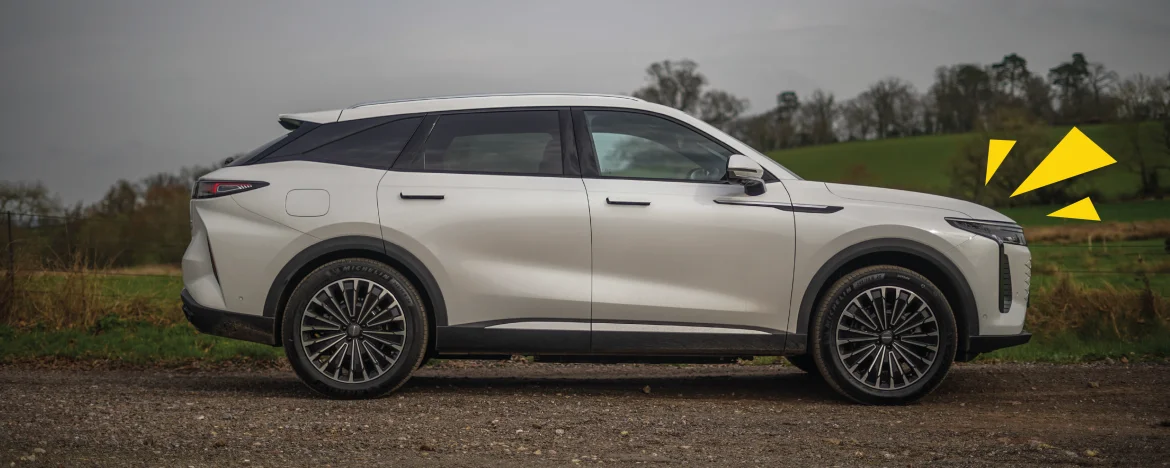
OMODA 9
What is the cheapest car to lease in the UK?
Looking for an affordable lease deal?
Here's our breakdown of the most budget-friendly options available right now.
Current top five cheapest lease deals
Based on Carparison's current offers (all prices including VAT):
- Vauxhall Frontera: From £143.24 a month
- Dacia Spring: From £161.70 a month
- Citroen C3 Aircross: From £178.43 a month
- Hyundai i10: From £180.30 a month
- Kia Picanto: From £206.40 a month
These represent some of the most affordable monthly payments currently available, but deals change regularly, so it's worth checking our cheap car lease page for the latest offers.
Affordable family options
Need more space without the premium price tag?
- Nissan Qashqai: From £239.21 per month
- Citroen C3 Aircross: From £178.43 per month
- Renault Symbioz: From £195.61 per month
- Dacia Duster: From £249.54 per month
- MG ZS: From £194.51 per month
These models give you the space and practicality families need without commanding top-tier lease prices.
Budget-friendly electric and hybrid options
Going green without breaking the bank:
- Dacia Spring: Our second cheapest electric option starting at £161.70 per month
- Vauxhall Frontera: Our cheapest EV starting from £143.24
- Renault 4: Stylish new electric car from £188.90 per month
- Leapmotor T03: New EV with tonnes of tech starting from £199.68
- Renault Symbioz: Stylish hybrid from £216.12 per month
While electric vehicles often have higher monthly payments, their reduced running costs can make them economical over the full term of your lease.
Why cheapest isn't always best
Being transparent matters to us, and there are a few things to consider rather than just going for the lowest monthly cost:
- Consider the total cost including fuel, insurance, and maintenance
- The lowest monthly payment might mean basic trim levels lacking essential features
- Reliability differences can affect your experience and potential costs
- The right car for your lifestyle might not be the absolute cheapest option
Sometimes paying slightly more for a car that better suits your needs provides greater value over the full term of your lease.
Understanding leasing
Navigating the world of car leasing can feel like learning a new language.
Let's demystify some of the key terms and rules to help you feel confident when searching for your next affordable lease deal.
Common leasing jargon demystified
Understanding these key terms will help you navigate lease agreements with confidence:
- Residual value: The projected worth of the car at the end of your lease term – higher residual values mean lower monthly payments
- Initial payment: An upfront sum equal to multiple months of your regular payment (not a refundable deposit)
- Excess mileage charge: The fee you'll pay per mile if you exceed your agreed mileage limit
- Maintenance package: An optional add-on that covers servicing and wear items for a fixed monthly cost
For a comprehensive A-Z guide to car finance terminology, check out our complete jargon-busting blog, where we break down everything from accommodation to the Fair Wear and Tear guidelines.
Understanding these basics puts you in a stronger position to find a cheap car lease that offers genuine value for money and fits your specific needs.
Factors that affect your lease price
Understanding what influences your lease cost can help you find better deals. Here are the key factors to consider:
Credit score requirements
Your credit profile impacts approval odds and rates:
- Excellent credit (700+): Best rates and highest approval chances
- Good credit (650-699): Competitive rates with good approval odds
- Fair credit (600-649): Higher rates or larger initial payments
- Poor credit (below 600): More challenging but still possible
Don't panic if your credit isn't perfect – we work with a range of funders who specialise in different credit profiles.
While leasing typically requires a stronger credit history than some finance options, our team can often find solutions for various financial situations.
Mileage limits
Annual mileage directly affects your monthly cost:
- Low mileage (5,000-8,000): Lowest payments, but be realistic
- Average (10,000): Popular middle ground
- High (12,000-15,000): Higher payments but avoid excess charges
- Maximum (20,000-30,000): Highest allowance available
Exceeding your limit triggers excess mileage charges (3p-30p per mile). You won't get refunds for unused miles, but most agreements consider total mileage across the entire term rather than year by year.
This means that if you have a 30,000-mile limit on a three-year term, you don’t have to do exactly 10,000 miles each year.
One year you could do 8,000 miles, while the next you do 12,000 miles, followed by 10,000 – it’s all about the total mileage at the end.
Lease term length
Contract duration affects monthly payments:
- 24-month: Often higher monthly cost but frequent vehicle changes
- 36-month: Most popular balance of cost and commitment
- 48-month: Often the lowest monthly payments but with longer commitment
Cars depreciate faster initially and slower later, so longer terms often mean lower payments. However, special offers sometimes make shorter terms more economical.
Initial payment
Your upfront payment directly impacts monthly costs:
- 1-month initial: Lowest upfront cost, highest monthly payments
- 3-month initial: Balanced approach
- 6-month initial: Lower monthly payments, moderate upfront cost
- 9-month initial: Even lower monthly payments
- 12-month initial: Lowest monthly payments, highest initial payment
For example, on a £249 monthly payment with a 9+23 profile, you'd pay £2,241 upfront (9 × £249), followed by 23 payments of £249.
Vehicle specification
The car itself significantly affects lease costs:
- Depreciation rate: Cars that hold value well cost less to lease
- Trim levels: Sometimes higher specs offer better value
- Vehicle type: Electric, hybrid vehicles and SUVs currently tend to depreciate less
Remember, leasing is based on depreciation—you're paying for the value the vehicle loses during your contract. A car with strong residual value will typically cost less to lease, even if its purchase price is higher.
Understanding these factors helps you tailor your lease to find the perfect balance between affordability and your specific needs.

Polestar 4
What are some of your options?
Looking for an affordable way to drive a new car?
Here are three alternatives to traditional leasing that might work better for your situation:
No deposit car leasing
Pay just one month's rental upfront, instead of the traditional 3-12 months:
- Higher monthly payments but minimal initial cost
- Same total lease cost over the term
- Requires good credit but preserves your cash flow
- Perfect if you don't have savings but can manage monthly payments
Business car leasing
Designed specifically for companies and self-employed individuals:
- Reclaim up to 100% VAT on commercial vehicles (50% on mixed-use cars)
- Offset lease costs against corporation tax
- Fixed costs improve cash flow and budgeting
- No depreciation concerns or residual value risk
- Available for sole traders through to large corporations
The ‘hidden’ costs of leasing
While monthly lease payments are clear, several other expenses need consideration.
Here's what to watch for:
Insurance requirements
Insurance is not included in your lease. You must arrange:
- Fully comprehensive coverage
- Policy in the leaseholder's name
- Coverage from day of delivery
Maintenance packages
Optional packages cover servicing and wear items for a fixed monthly fee, such as:
- All scheduled servicing
- Replacement parts (batteries, wipers, etc.)
- MOTs when applicable
- Tyre replacements may be included depending on provider
It’s worth considering if you want predictable costs with no surprise bills, especially for premium vehicles or high-mileage drivers.
Excess mileage charges
Exceeding your agreed mileage limit incurs charges of 3p-30p per mile.
These charges account for extra depreciation affecting the car's value. The exact charge appears in your order documentation and finance contract.
Mileage is calculated across your entire lease term, not yearly, giving you flexibility to go over in some periods if you're under in others.
End-of-lease inspections
When your lease ends, a trained assessor will inspect your vehicle following the BVRLA Fair Wear and Tear guidelines. These guidelines outline what condition is considered acceptable, based on your car's age and mileage.
To avoid charges, check your vehicle thoroughly about two months before collection, giving you time to fix any issues that might exceed the standards.
Early termination fees
Ending your lease early typically costs around 50% of remaining payments.
Example, a £250 monthly payment with 12 months left = approximately a £1,500 termination fee.
Understanding these potential costs helps you budget effectively and avoid surprises throughout your lease.
Drive away with a great deal
We've given you the low-down on how to get yourself a steal when it comes to car leasing.
Let's quickly recap the key points to help you drive away with the perfect deal:
- Know the factors that affect pricing - from residual values to mileage limits, understanding what drives costs helps you make smarter choices
- Choose vehicles with strong residual values - brands like MG, Dacia and Honda typically depreciate more slowly, making them cheaper to lease
- Consider the total cost of leasing - look beyond the monthly payment and factor in insurance, maintenance, and running costs
- Be flexible with your timing - taking advantage of end-of-quarter or year deals can lead to significant savings
- Be honest about your mileage needs - avoid costly excess charges by setting realistic expectations from the start
- Compare deals across providers - using a broker like Carparison gives you access to multiple funders, increasing your chances of finding that perfect bargain
- Explore alternative options like no deposit leasing or business contract hire if they suit your circumstances
Remember, the cheapest deal isn't always the best value. Sometimes you need to look at the big picture, and all the costs involved.
Ready to put this knowledge into action?
FAQs on finding cheap car lease deals
Can you haggle on a lease deal?
Unlike buying from a dealership, leasing prices are typically fixed – but that doesn't mean you can't optimise your deal:
- Adjusting terms: Changing your contract length or mileage allowance can significantly impact your monthly payments
- Exploring different models: Some trim levels or engine options may offer better value
- Timing your lease: Taking advantage of special offers at month/quarter-end can lower costs
- Colour choices: Some colours may be priced lower than others
- In-stock vehicles: Ready-to-go vehicles often come with more competitive rates
While you can't typically negotiate the headline rate down, these customisation options give you flexibility to find a deal that fits your budget.
Do note that while in-stock vehicles won’t necessarily be customisable, there’ll be certain colours and set trims available for the deal.
What credit score do I need to lease a car?
While higher scores (700+) get the best rates, we work with funders who specialise in different credit profiles. Don't panic if your credit isn't perfect - we can often find solutions.
Is insurance included in car leasing?
No. You'll need to arrange your own fully comprehensive insurance before delivery.
What is the 1.5 rule when leasing a car?
A quick way to assess value - multiply the car's retail price by 1.5%. If your monthly payment is equal to or less than this amount, it's generally considered good value.
What is the biggest downside to leasing a car?
The main trade-off is that you won't own the car at the end of your lease. Other considerations include mileage restrictions and potential charges for excessive wear and tear.