Small city cars are back in vogue – and the resurgence has come at the perfect time

There’s something to be said for the small but mighty city car.

They’re cheap. They’re easy to drive.

And best of all? An itty-bitty city car is basically the ideal when it comes to squeezing into equally itty-bitty parking spaces.

But with the SUV reigning supreme, it feels at times like manufacturers have totally overlooked the benefits of the city car. And the race to electrify existing lineups in time for the 2030 ban has left little room for assessing what consumers actually want from an electric car (EV).

Until now.

With the cost of living still sky high, new taxes on ‘expensive’ cars hitting consumers, and increasing running costs eating into the purse strings, manufacturers are finally clueing in to one very important fact: not everyone wants to drive an SUV around town.

Or down a narrow country lane, for that matter.

There are some truly stupendous electric SUVs on the market (we’re big fans of the new Ford Capri and the Polestar 4), but alternatives aren’t just welcome – they’re necessary. And in recent years, we’ve seen the proof.

Last year, the Volkswagen ID.7 Tourer skyrocketed in popularity, becoming one of our best-selling deals in 2025. The CUPRA Born proved the family hatchback can do electric well, too.

More recently though? We’ve seen a real shift in appetite for that product of a by-gone era in this new age of electric motoring: the humble city car.

We’re talking electric cars that are cheap, cheerful and wonderfully compact. Yes, finding one used to be like hunting for gold at the end of the rainbow. But a wave of new models (and carmakers) hitting the UK in 2025 has made this quest a whole lot more achievable.

From newcomers like Leapmotor offering the T03, to the return of iconic classics like the Renault 5, the city car is poised to make a comeback for the electric age.

(Spoiler alert: there’s a Ford-shaped surprise coming that we think you’ll love).

If you’re looking for an EV of a smaller size, read on – and find out exactly why we’re thrilled the electric city car is finally catching on.
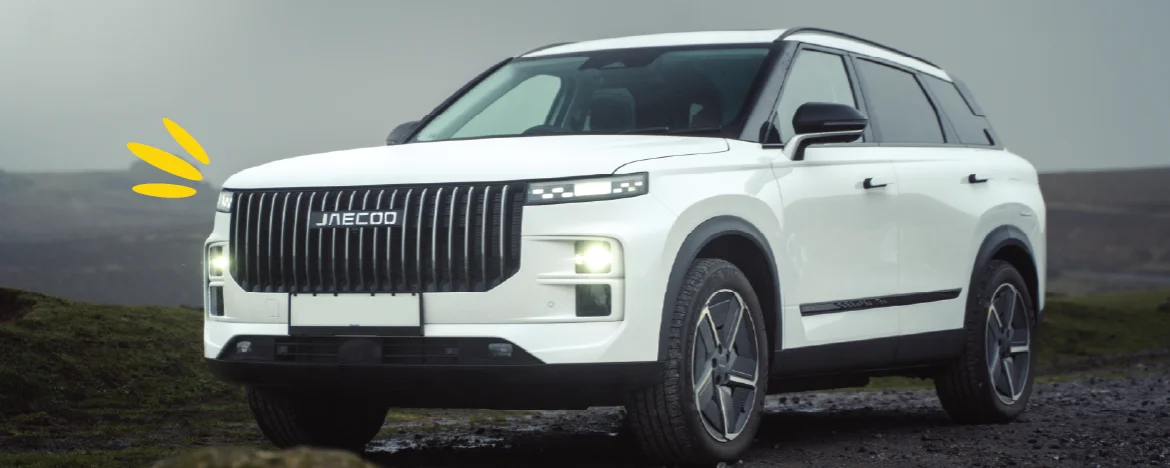
 

JAECOO 7 on Dartmoor

JAECOO 7 SUV

Why have SUVs dominated the EV market recently?

Let’s be honest, with SUVs you do get a lot for your money; they’re comfortable, they’re spacious, and the added boot space is a real win for practicality.

And with the benefits of EV development, they’re increasingly rammed with all the latest cutting-edge tech money can buy.

All this makes the SUV a very attractive prospect.

No wonder, then, that faced with a big 2030 ban on new petrol and diesel vehicles, many of our familiar favourite carmakers have concentrated on converting their existing line up to electric power, rather than building from the ground up.

Think Peugeot 3008 becoming the E-3008, or the Volvo XC40 becoming the EX40, and you’ll start to see a trend: most EVs on the market have been SUVs. Because when things are new or uncertain, we stick to what we know works.

And electric SUVs? They really work: 

  • Battery integration: EV platforms are well suited for the skateboard-style chassis configuration, allowing for larger batteries and better range
  • Performance: Instant torque paired with the low centre of gravity improves handling
  • Tech: Loaded with driver-assistance systems to optimise experience behind the wheel
  • Space and practicality: Boxy shape means a spacious cabin and generous cargo capacity
  • Comfort: Elevated driving position and ample legroom makes for more comfortable journeys
  • Versatility: SUVs can handle city driving, motorway cruising, and sometimes even light off-roading

You get all the benefits of the classic SUV, but with electric power backing it up.

With the EV market still in its infancy, it makes sense that early efforts to electrify have focused on a product carmakers know appeals to a broad market.

But consumer demand is starting to shift – and it’s clear EVs need to diversify to meet the demands of the 2030 ban. And a wider range of budgets.

Cue: the city car stepping forward for its moment in the sun.

What is a city car?

It’s not a body style, but it is a classification.

The city car is basically as small as a passenger car can get. It’s the A-segment, the super-compact, the closest thing you’ll find to a clown car outside the circus, but designed specifically for urban driving.

In other words, if you’re navigating narrow streets and tight parking spots on the daily, the city car could be right up your alley.

Plus, agile handling and easy manoeuvrability make them surprisingly practical, even if they lack a bit in the boot department.

Some classic examples from history include:

  • Mini Cooper (1959-2000)
  • Fiat 500 (1957-1975)
  • Austin Metro (1980-1990)
  • Renault 5 (1972-1996)

If you’re looking to spot one at a glance, size is definitely the biggest giveaway. But body style is a clue too. As a general rule, a city car is usually a hatchback, but not all hatches are city cars.

Do your research though, and you’ll find it’s not all about size. City cars have traditionally been designed to be fuel efficient, with smaller engines (usually ranging from 1.0-1.4 litres). This makes them cheap to build, cheap to buy and cheap to run.

That’s the kind of market appeal which will always find its audience. And it’s exactly what the EV market needs more of if it’s going to succeed.

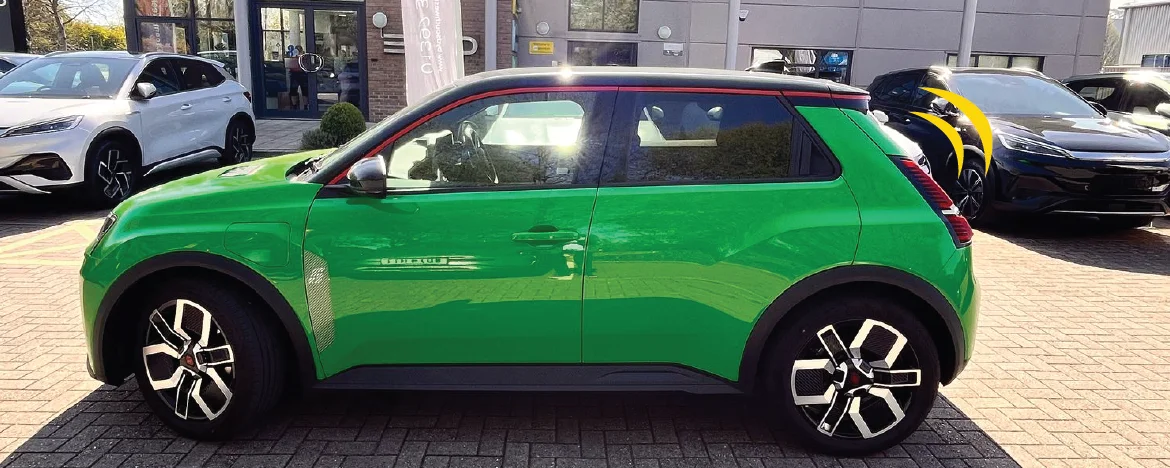
The new Renault 5 EV

The new Renault 5 EV

City cars for the modern day

Despite the dominance of the impressive SUV in recent years, and rising manufacturer costs for the small car segment, city cars have never really gone away.

There’s just fewer of them on the market.

You probably won’t find one the size of the OG Mini in today’s world, but the core attraction remains unchanged: petite proportions and a small price tag.

Recent models include the Toyota Aygo, Hyundai i10, and Volkswagen UP. But with the UP no longer in production and the Aygo being replaced by the Aygo X, some of our best city cars are being phased out in favour of SUV or crossover models.

Luckily, we’ve got a new generation of supermini-style cars coming in. And they’re better equipped to deal with the demands of modern motoring; still cheap, still compact, but with greener credentials and more tech than you can wave a gearstick at.

These are some of the best electric city cars on the UK market.

Renault 5

Let’s start with Renault. This iconic French brand has brought back a compact car legend, but with a twist. The new Renault 5 is a little bigger, a little bolder, and has a great big battery under the bonnet.

The original 5 was the ‘70s answer to an oil crisis; today, it’s helping smooth the transition to electric power as an honestly affordable compact EV. All while keeping the same French flair as its predecessor.

(Speaking of flair - we’re obsessed with the baguette holder in the cabin).

The new 5 has been a smash hit, winning Car of the Year in its first year of production and rounding up a plethora of glowing reviews.

Zippy, nippy and with a max range of 252 miles (WLTP (Comb) range, the new Renault 5 may just define exactly what the modern city car should be.

A compact car with character – and it’s cheap as chips too.

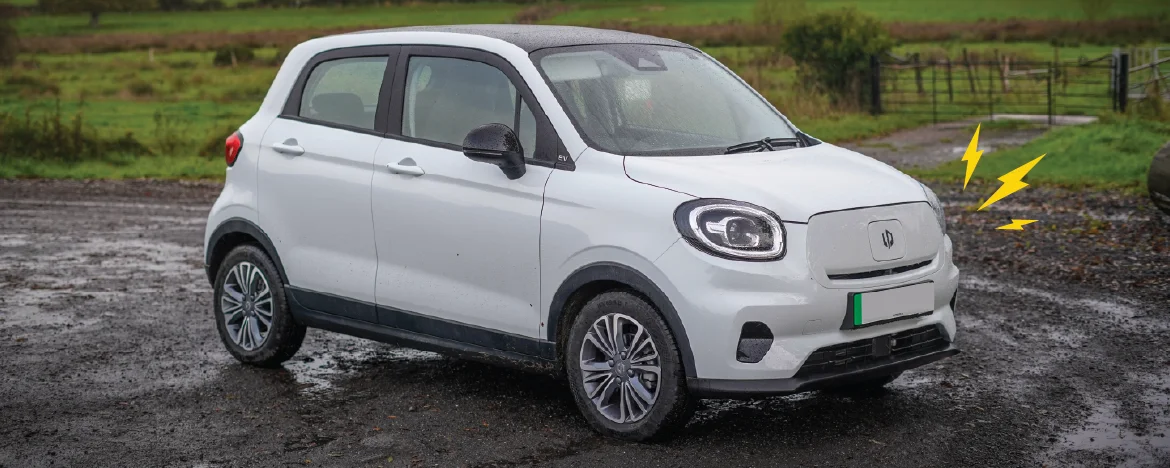
Leapmotor T03

If the Renault 5 cuts a familiar (if updated) look on our roads, the T03 is something entirely new. But then again, so is Leapmotor: this Chinese carmaker only launched in the UK last year.

And one of their flagship UK models? A humble city car.

While Leapmotor are keeping things simple with one spec, it’s a spec that includes everything.

Intuitive infotainment system? Blind-spot detection? Intelligent speed assistance? The T03 has all this and so much more, which is a genuinely impressive offering at such a tiny price point. 

It’s no wonder this boxy little EV is making waves; it’s proof that EVs don’t need to be big to make a big impact.

Leapmotor T03

Leapmotor T03

Hyundai Inster 

We say this with all the affection in the world, but the Hyundai’s smallest EV is a bit of an oddball.

If a car could do impressions, the Inster would be doing a convincing job of pretending to be the TARDIS. It certainly feels bigger on the inside than it looks on the outside.

That’s probably because it’s been designed to sit smack between the A and B segments, which is unusual for a city car. But it works – and it gives the best of both worlds.

A concave roof provides plenty of headroom, but it’s still a shorter and narrower car than its French rivals.

So, on one hand, compact dimensions and nimble driving; on the other, proper cabin comfort and a truly competitive price point when you consider the equipment levels included.

The range isn’t bad either, with a maximum of 229 miles (WLTP Comb) on the Long Range spec.

It’s a very smart little car with a unique proposition.


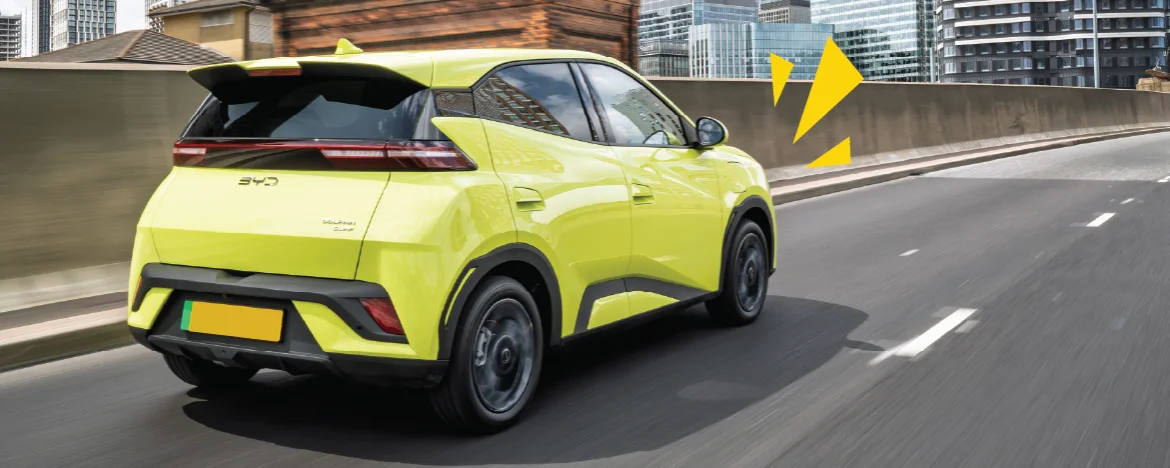
BYD DOLPHIN SURF

Affordable EVs are BYD’s bread and butter, so it’s only fitting they’ve turned their very capable design team to the small car class.

And the DOLPHIN SURF is a fab small car.

Decent boot, decent tech, and a really decent range (200 miles WLTP Comb) make it excellent value for money. It’s nimble enough for city driving, while still coping with the weekly shop and those slightly longer journeys out of town.

It’s got all the efficiency and power of BYD’s Blade Battery tech, all wrapped up in a smaller, stylish package.

BYD DOLHIN SURF

BYD DOLHIN SURF

New city cars arriving soon

Renault Twingo 

In recent years, the small car landscape has felt sparser than the vegetarian menu at a steakhouse.

But Renault aren’t putting up with that nonsense. Not content with just the new-and-improved 5 in their lineup, they’re bringing back the Twingo too.

Because why have one superstar supermini when you can have two?

The new Twingo will be cheaper than its award-winning sibling and the remaining ICE competitors remaining on sale, like the Kia Picanto, predicted to come in under £20,000. That’ll make it one of the cheapest EVs on the market.

And with some serious throw backs to the original '90s Twingo in the design, it’s clear Renault are banking on nostalgia to win out over similarly priced rivals.


MG MG2

While their recent releases might be considered more ‘upmarket’, MG are back to what they do best – making affordable, but highly capable EVs.

So, we’re genuinely excited to see MG’s take on the electric supermini. We don’t know much about the upcoming MG2 yet, but sneak peeks show a blending of MG4 and MG3 styling elements.

While lacking other details, the price point is a big selling point. It’s likely to come in around the £20,000 mark, making it a very close competitor for the Twingo and other rivals.

Considering the huge and versatile range of options in the SUV class, it’s nice to see MG throw their hat in the supermini ring.


The new Nissan Micra

The new Nissan Micra

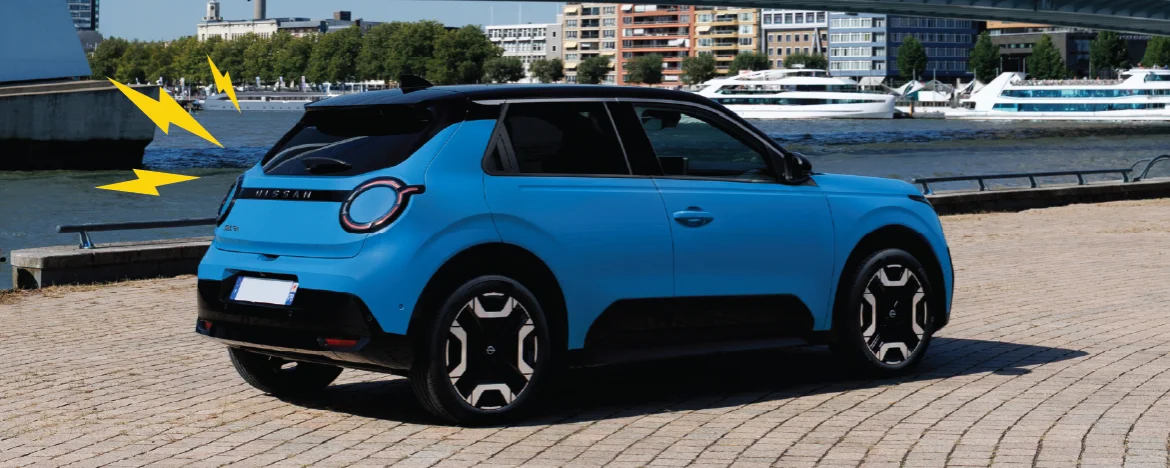
Nissan Micra

Raise your hand if your very first car was a Nissan Micra. It was the compact car of the 2000s and they’re so hard-wearing, you’ll still see those older models on the road today.

But the new Nissan Micra is nobody’s old banger. This may actually be the best Micra in generations; the design is cute and quirky, the claimed range tops its closest French rival (looking at you, R5), and most of all, it’s still a supermini.

Just with a new electric battery underpinning it.

Instead of taking an older Micra model and sticking a battery under the bonnet, Nissan have redesigned the Micra as an EV from the ground up. And the options are simple: one five-door body, two battery options, and two power outputs.

We can’t wait to get our hands on one.

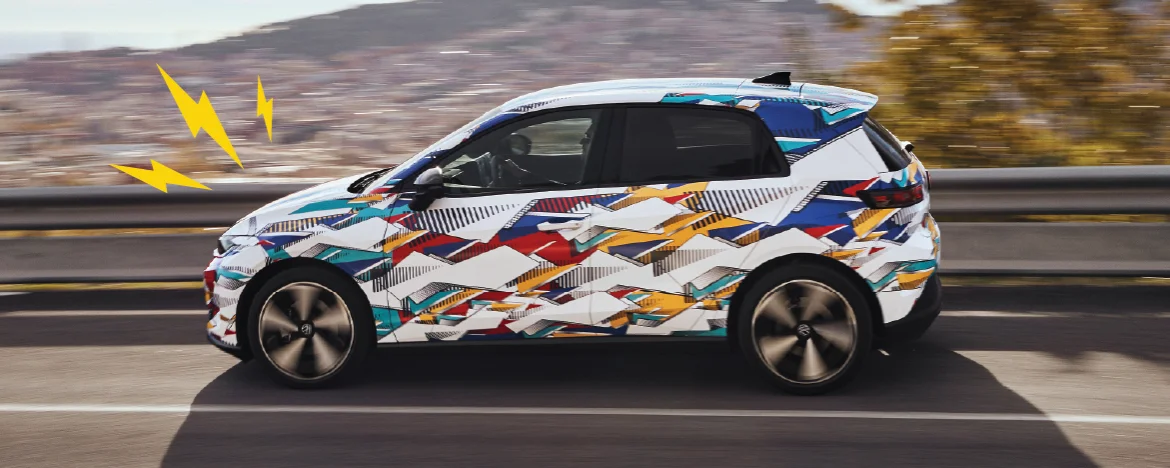
VW ID.Polo

It might’ve left production, but the petrol Polo has long been one of the best small cars on the market – and clearly Volkswagen know it, because despite a comprehensive ID range in their line up, they’ve still opted to give this beloved hatch a hot electric makeover.

And with nostalgia at the wheel, we think it could leave the ID.3 in the dust (early reviews certainly seem to think so). It may even give the Renault 5 a run for its money.

Alongside clever design cues that references the VW models of old, the ID.Polo should have 280 miles of range (WLTP Comb) alongside a competitive price tag.

Is it groundbreaking? Maybe not.

But with VW’s excellent reputation, it’s clearly a top contender for drivers who want a small, inexpensive EV with high build quality behind it.

Volkswagen ID.Polo

Volkswagen ID.Polo

Ford Fiesta

If you want further proof the city car is back in business, look no further than the triumphant return of the Ford Fiesta.

Yes, it’s official. The iconic supermini is coming back – and this time, it’ll be electric.

Ford have struck a deal with Renault to use their EV-platform, alongside battery and motor tech. It’s the same small-EV architecture underpinning the award-winning Renault 5, so we’re hoping for a straight rebirth, rather than a reimagining in the style of the new Capri.

The original Fiesta was the best-selling UK car of all time for a reason. And if Ford have any business sense, they’ll tap into exactly what made it great.

Because the appeal isn’t about the name, it’s about the value proposition of a small car that delivers big on its promises. 

We’re hoping it will stay the same – just with a cleaner, greener engine.

Why size matters

It’s not just about lifestyle and driving preferences.

It’s also about budget. The fact that carmakers are finally able to make viable small EVs that don’t cost an arm and a leg is a crucial step forward for the EV market.

Because with the 2030 petrol and diesel ban approaching, EVs need to cater to all budgets instead of taking the one-size fits all wallets approach of recent years.

The return of the city car class will make electric driving more affordable and more accessible – no matter what your lifestyle is.

And we think that’s a huge step forward for a cleaner, greener future.

Looking for a small electric car?

Chloe Allen

Chloe Allen

Our Digital Marketing Executive Chloe is in charge of our e-newsletter. There's no one better placed to inform and delight you every month, so keep your eyes peeled for her newsletter hitting an email inbox near you soon.